Comparing Molecular Weights: Why Most Anti-Aging Creams Never Reach the Dermis

If you are over 55 and wondering why your anti-aging cream feels amazing… but your crepey skin keeps thinning, this article will change how you look at skincare forever.
The truth is not about price. It is not about luxury packaging. And it is not about how thick or rich a cream feels.
It is about molecular weight.
More specifically — it is about something called The 500 Dalton Rule.
The 500 Dalton Rule: Why Skin Is a Shield — Not a Sponge

Your skin was not designed to absorb everything placed on it. It was designed to protect you.
The outermost layer of skin — the stratum corneum — acts like a biological brick wall. Dead skin cells are the bricks. Lipids are the mortar. Together, they create a barrier specifically engineered to keep foreign substances out.
In dermatological science, there is a well-known principle called the 500 Dalton Rule. It states that molecules larger than 500 Daltons generally cannot penetrate through the skin barrier.
Most anti-aging ingredients? Far larger.
That means many creams are physically incapable of reaching the dermis — the deeper layer where collagen, elastin, and structural integrity actually exist.
Your skin is not failing.
Your cream is.
Why Standard Collagen and Heavy Ingredients Can’t Pass the Barrier
Let’s talk about collagen creams.
Collagen molecules are massive. Traditional collagen used in skincare can weigh 300,000 Daltons or more. Compare that to the 500 Dalton penetration threshold.
That is like trying to push a basketball through a keyhole.
When collagen is applied topically in high molecular weight form, it sits on the surface. It may feel hydrating. It may create temporary smoothness. But it does not rebuild structural support in the dermis.
This is why many women over 55 feel moisturized… yet still see thinning, sagging, and crepey texture progressing underneath.
The Deception of Surface Hydration
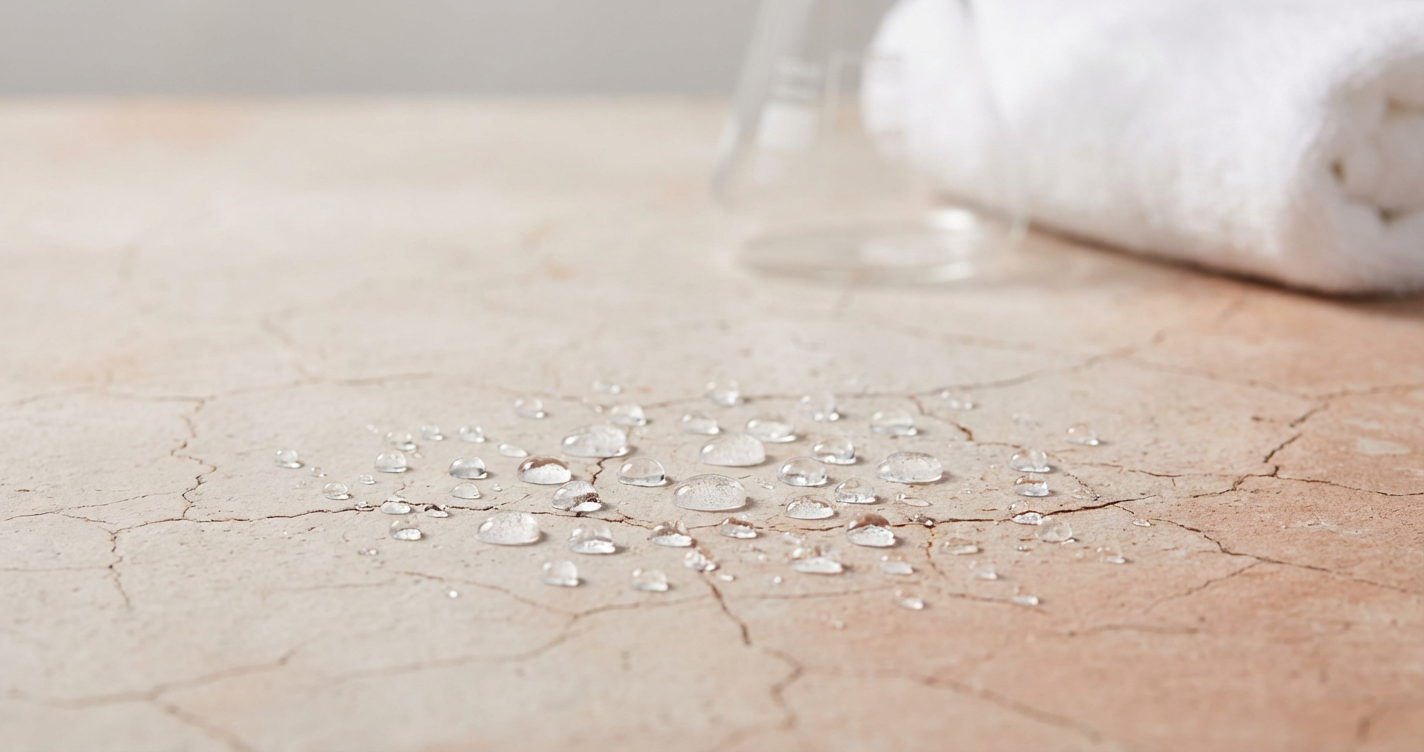
Surface hydration can be misleading.
High molecular weight hyaluronic acid and heavy emollients trap moisture on the outer layer. This plumps the skin temporarily. Fine lines appear softer. Makeup applies more smoothly.
But underneath?
The dermal matrix continues to thin.
Heavy creams often function like plastic wrap — sealing in moisture without repairing structural weakness.
This is the difference between looking moisturized and rebuilding density.
Crepey skin is not just dryness. It is structural collapse.
Engineering Deep Penetration: The Science of Liposomal Encapsulation
If the skin blocks most molecules larger than 500 Daltons, how do you deliver powerful antioxidants deep enough to matter?
The answer is liposomal encapsulation.
Liposomes are microscopic lipid spheres that mimic your own cell membranes. Because they resemble the skin’s natural lipid barrier, they can fuse with it and transport active ingredients through.
Think of liposomes as a Trojan Horse.
Instead of forcing large molecules through the barrier, liposomes merge with it. Once inside, they release low molecular weight active compounds exactly where they are needed — in the dermis.
This is how modern high-performance skincare bypasses the 500 Dalton limitation.
Why Idebenone Is Different From Standard Antioxidants
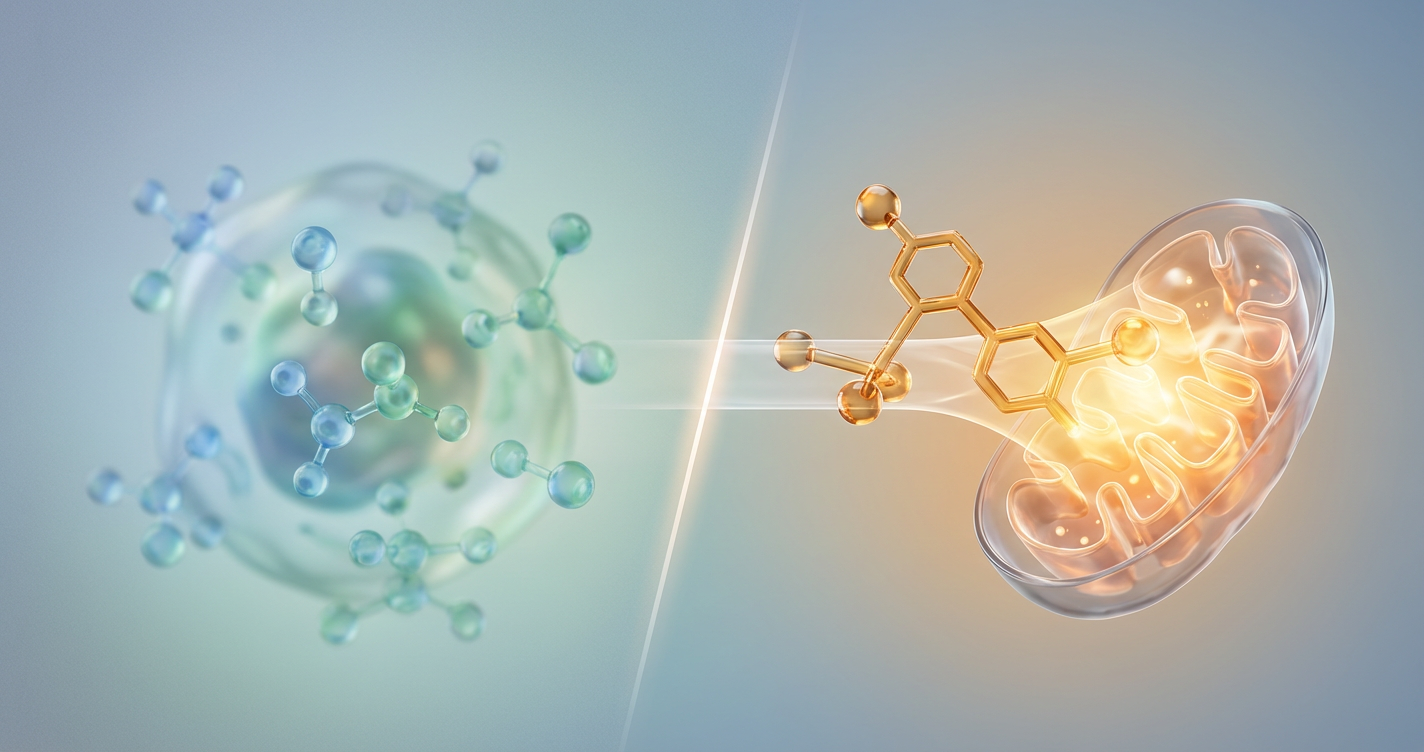
Not all antioxidants are created equal.
Vitamin C and Vitamin E are widely used, but they are unstable and often oxidize before delivering full benefits.
Idebenone is considered one of the most powerful synthetic antioxidants available in dermatology. Clinical research has demonstrated improvements in fine lines, roughness, and hydration at concentrations as low as 0.5–1.0%. :contentReference[oaicite:0]{index=0}
But potency means nothing if it cannot reach the dermis.
When encapsulated in liposomes, Idebenone can penetrate deeper layers where oxidative stress damages collagen-producing fibroblasts.
This is where real structural repair begins.
Dermal Targeting vs Surface Sitting
There is a critical difference between formulas that sit in pores and those that integrate into living tissue.
Surface-level creams improve texture for hours.
Dermal-level delivery improves density over months.
When active ingredients reach the dermis:
Collagen synthesis increases
Elastin integrity improves
Skin thickness stabilizes
Fragility decreases
This is the difference between “moisturized” skin and remodeled skin.
Realistic Timeline for Structural Change
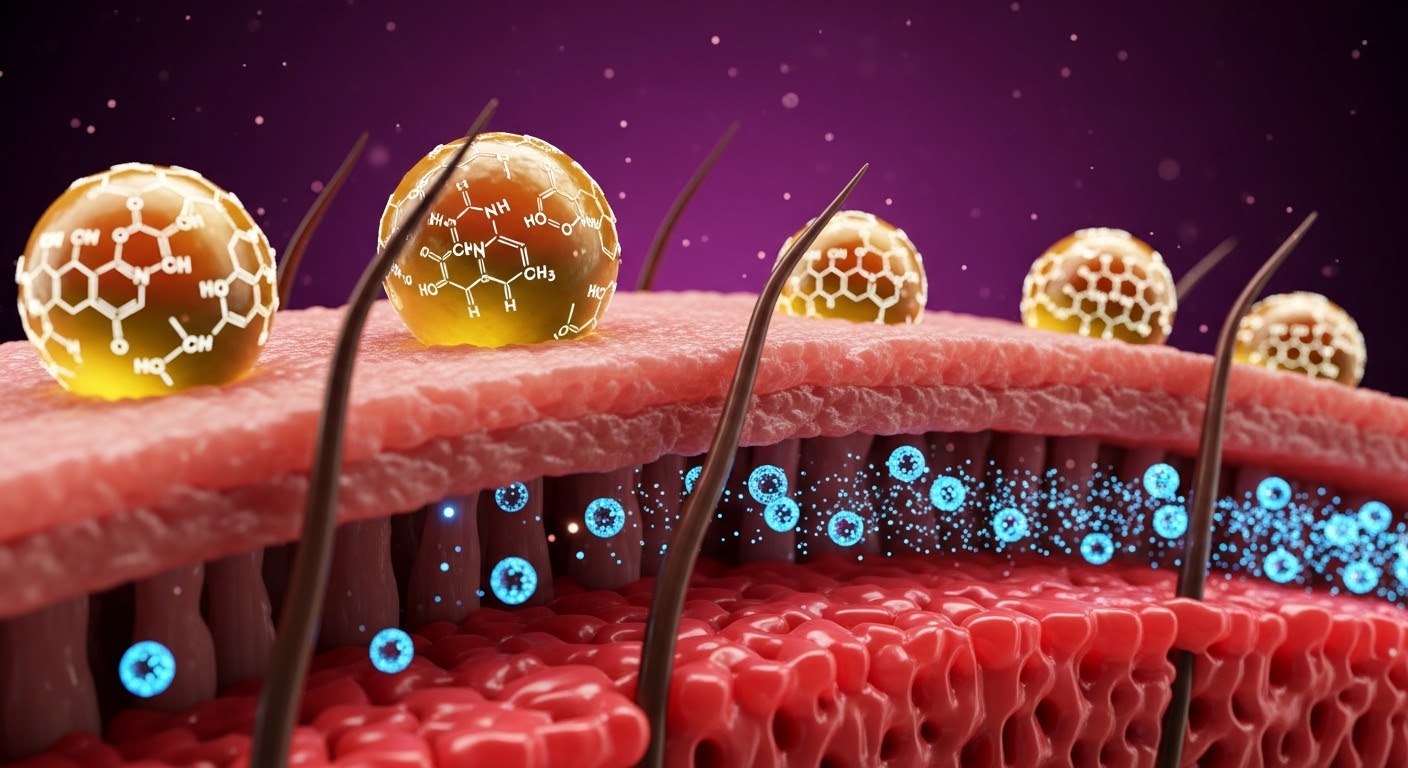
Structural dermal remodeling is not overnight.
Week 1–2: Improved surface hydration.
Week 3–6: Fine lines soften as antioxidant protection reduces ongoing oxidative damage.
Week 8–12: Visible improvement in density and crepey texture as fibroblast activity increases.
Consistency matters. Daily delivery maintains an antioxidant shield that prevents further collagen breakdown.
How to Audit Your Current Skincare Routine
Ask yourself:
Are the active ingredients below 500 Daltons?
Does the formula use liposomal or nano-encapsulation technology?
Is the antioxidant stable and clinically supported?
Is the goal surface plumping or dermal repair?
If your cream simply feels thick… it may simply be sitting there.
The Bottom Line
Most anti-aging creams never reach the dermis.
Not because they are poorly marketed. But because physics prevents them from doing so.
The future of anti-aging — especially for women over 55 experiencing crepey thinning — depends on:
Low molecular weight actives
Liposomal delivery systems
Deep antioxidant protection
Dermal remodeling, not surface masking
Your skin deserves more than temporary hydration.
It deserves structural support from within.
That is the Hygieia difference.


