Smooth Crepey Neck & Chest Skin After 50 with Body Tools

If you’ve ever looked down at your neck or chest and thought, “This doesn’t match how young I feel,” you are in very good company. After 50, that delicate skin can start to look a little crepey—thin, lined, and less bouncy—no matter how faithful you are with your moisturizer.
The encouraging news: while we cannot turn back the clock, simple at‑home body tools used correctly—like gua sha for neck, body rollers, and dry brushes—can help your skin look smoother, brighter, and more supported over time. The key is technique and consistency, not force.
Why Neck & Chest Skin Gets Crepey After 50
Understanding what’s happening under the surface helps you use your tools more intentionally.
- Collagen and elastin decline: After menopause, estrogen drops, and so does your production of these “scaffolding” proteins. Skin looks looser and less resilient.
- Thinner, drier skin: The neck and chest have fewer oil glands, so they tend to get dry, which exaggerates fine lines and that tissue‑paper look.
- Sun and side‑sleeping: Years of UV exposure and “folding” in bed create vertical chest lines and etching across the neck.
- Sluggish circulation and lymph: Poor blood flow and fluid buildup can make skin look dull and uneven in texture.
Body tools target that last piece—improving circulation and lymphatic flow—which supports healthier, more radiant, and smoother chest skin over time. Early studies on facial massage and gua sha suggest increased microcirculation and improved skin appearance when used regularly, but it is still considered a complementary, not stand‑alone, treatment.
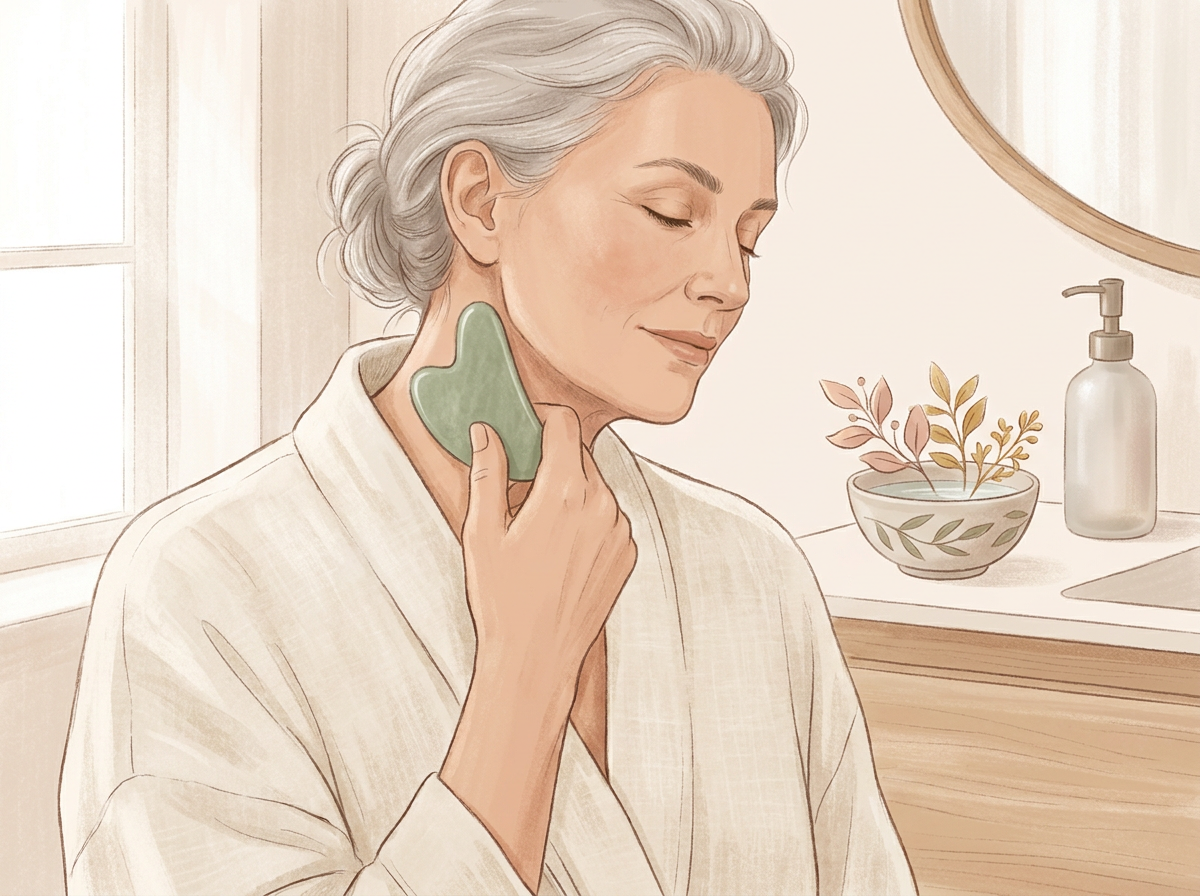
Tool #1: Gua Sha for Neck & Chest (Gentle Sculpting & De-Puffing)
Gua sha is a smooth stone tool traditionally used in East Asian medicine. For the neck and chest, we use a very light, gliding version—no redness, no scraping.
How to prep your skin
- Start with clean, dry skin on neck and chest.
- Apply a thin layer of slip—like a nourishing serum plus a few drops of face or body oil—so the tool glides without tugging.
- Support the skin with your opposite hand to keep it gently taut.
Step‑by‑step gua sha for neck and chest
Use the long, flat side of your tool and keep it almost flat to the skin (about 15–30 degrees) with light to medium pressure.
- Activate drainage: Place your fingers above your collarbones and gently massage in small circles for 15–30 seconds to “wake up” lymph nodes.
-
Neck (priority area):
- Start at the base of the neck near the collarbone and glide the tool upward to just under the jawline on one side.
- Repeat 5–8 times per section, working from the outer neck toward just beside the throat. Avoid going directly over the center of the throat.
-
Chest center:
- Place the tool flat in the center of your chest.
- Glide outward toward the shoulder and underarm in broad strokes, 4–6 times per side.
-
Collarbone sweep:
- Follow along the collarbone from the midline out toward the shoulder to encourage drainage.
How often: 3–5 minutes, 3–4 times per week is plenty. More pressure or more time does not equal better results—in fact, too much can irritate mature skin.
Think of gua sha as “teaching” your neck and chest to circulate and drain better, not forcing them into submission.
Tool #2: Body Rolling for Crepey Skin on Neck & Chest
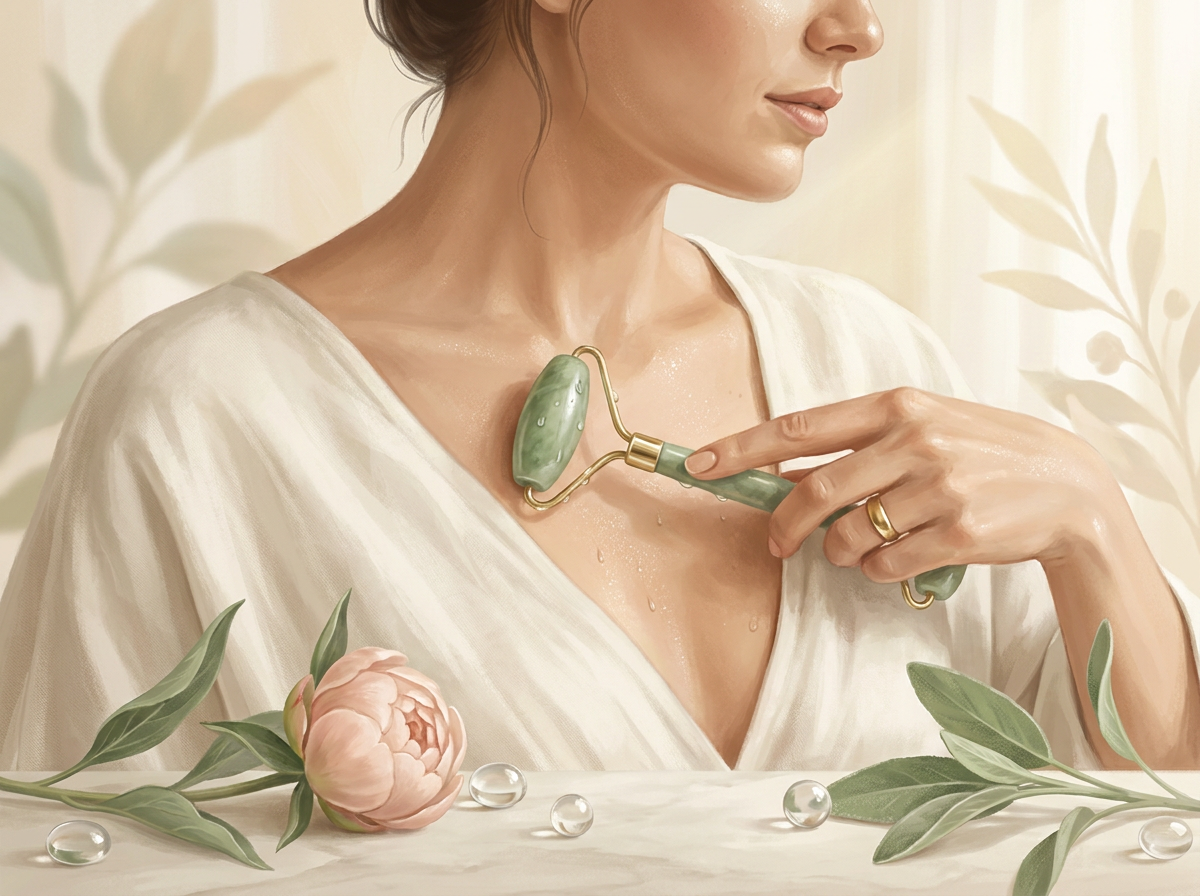
Body rolling for crepey skin uses a smooth or textured roller (not a microneedling roller) to gently stimulate circulation and enhance product absorption.
Choosing the right roller
- Material: Jade, stainless steel, or smooth stone. Avoid rough, spiky, or very heavy rollers on the neck and chest.
- Size: A slightly larger roller head works well for the décolletage; a smaller one can target the neck contours.
Simple rolling routine for smoother chest skin
Always work on moisturized skin—this could be your evening serum and cream for neck and chest.
- Neck: Starting just above the collarbone, roll upward toward the jaw using gentle pressure. Do 5–10 passes on each section of the neck.
-
Chest / décolletage:
- From the center of the chest, roll out diagonally toward each shoulder.
- Then roll horizontally along the top of the chest where vertical lines tend to form.
- Finish with downward sweeps: To encourage lymph drainage, finish by rolling lightly down the sides of the neck toward the collarbone several times.
Pro tip: Keep a stainless steel roller in the fridge. A cool roller in the morning can help calm redness, bring a subtle “lifted” look, and make the skin appear less crepey temporarily.
Tool #3: A Gentle Dry Brushing Tutorial Over 50
Dry brushing is often used for the body, but with a few adjustments, it can also support smoother‑looking neck and chest skin by buffing away surface dryness and stimulating circulation.
How to dry brush mature neck & chest safely
- Choose a super soft, fine‑bristled brush—nothing scratchy.
- Always work on completely dry skin before showering.
- Use very light pressure—think “dusting,” not scrubbing.
Try this quick dry brushing tutorial over 50:
- Chest: With feather‑light strokes, move the brush from the center of your chest outward toward each shoulder 5–10 times.
- Lower neck: Start above the collarbones and brush upward toward the jawline in short, soft strokes. Avoid the very front of the throat.
- Rinse & replenish: Shower as usual, then apply a hydrating, barrier‑supporting neck and chest cream or serum while skin is still slightly damp.
Limit dry brushing for this delicate area to 2–3 times per week to avoid irritation.
How to Maximize Results (Without Overdoing It)
Tools work best as part of a bigger, loving routine for your neck and chest.
- Be consistent, not aggressive: Gentle, regular practice will always beat one intense session.
- Pair tools with actives: Use your gua sha or roller after applying products with peptides, niacinamide, or gentle retinoids designed for the neck and chest to support collagen over time.
- Protect your investment: Daily broad‑spectrum SPF on neck and chest is non‑negotiable if you want smoother chest skin long‑term.
- Work with your body, not against it: If you tend to sleep on your side and notice chest lines, try a soft pillow that keeps your chest more open at night.
If you are also noticing crepey texture on your arms or lower chest, you may love our step‑by‑step routines in 5 Ways to Fix Crepey Neck & Chest Skin After 50 Fast and our bedtime guide for arms in 4-Step Bedtime Routine for Smooth, Firm Arms After 50.
Your Next Step: Turn Tools into a Daily Ritual
Think of body tools as a chance to reconnect with your skin—not just fix it. Pick one technique to start with: a 3‑minute gua sha for neck, a cool body rolling for crepey skin on your chest after your evening serum, or a once‑or‑twice weekly dry brushing ritual before your shower.
As you glide the tool over your skin, notice how it feels to care for this often‑ignored area. With patience, protection, and the right support products, your neck and chest can look more radiant, smoother, and more aligned with how vibrant you feel inside. You absolutely deserve that kind of care, and your daily ritual can begin the very next time you step in front of the mirror.


