Layering Creams & Serums for Crepey Skin Repair

You have a beautiful collection of bottles and jars sitting on your bathroom counter. There’s the silky serum that promises radiance, the rich cream that feels like a hug for your skin, and a targeted treatment you bought with high hopes. You’re diligent, applying them morning and night. Yet, when you look at your skin—especially that delicate skin on your inner arms, neck, or above your knees—you still see that fine, tissue-paper-like texture you know as crepey skin. It can be frustrating, leaving you to wonder, “Am I doing this right? Am I just wasting these precious products?”
If this sounds familiar, please know you're not alone. The secret to truly transforming your skin and effectively treating crepey skin over 50 often lies not just in what you’re using, but in how you’re using it. The order in which you apply your products is one of the single most impactful changes you can make to your routine. Think of it as conducting an orchestra; each instrument is wonderful on its own, but when played in the right sequence, they create a beautiful symphony. Your skincare is no different. This comprehensive cream and serum application guide is designed to demystify the process and turn your daily routine into a powerful ritual for maximum repair and radiance.
The Science of the Skincare Symphony: Why Layering is Crucial
Before we dive into the step-by-step process, let’s talk about the “why.” Understanding the science behind layering empowers you to make intuitive choices for your skin’s unique needs. It’s not an arbitrary set of rules; it’s based on simple chemistry and physiology, especially important for a skincare routine for mature skin.
Crepey skin, at its core, is a result of the thinning of the epidermis (the outermost layer of skin) and the dermis (the layer beneath). This is caused by a significant breakdown in its support structure: collagen, which provides firmness, and elastin, which provides bounce. As we mature, and with cumulative sun exposure, the production of these vital proteins slows dramatically. The skin becomes less resilient, less hydrated, and more fragile, leading to that characteristic crinkled appearance.
This is where layering comes in. The cardinal rule is simple:
Apply your products from the thinnest consistency to the thickest.
Here’s why it works. Products with a thin, watery consistency, like toners and serums, are generally made of smaller molecules. Their main job is to deliver potent, active ingredients—like antioxidants, peptides, and hydrating agents—deep into the skin where they can communicate with your cells to trigger repair and rejuvenation. If you were to apply a thick, heavy cream first, its larger molecules would form a barrier on the skin’s surface, preventing those smaller, hard-working serum molecules from ever reaching their destination. You would essentially be blocking your most powerful products from doing their job.
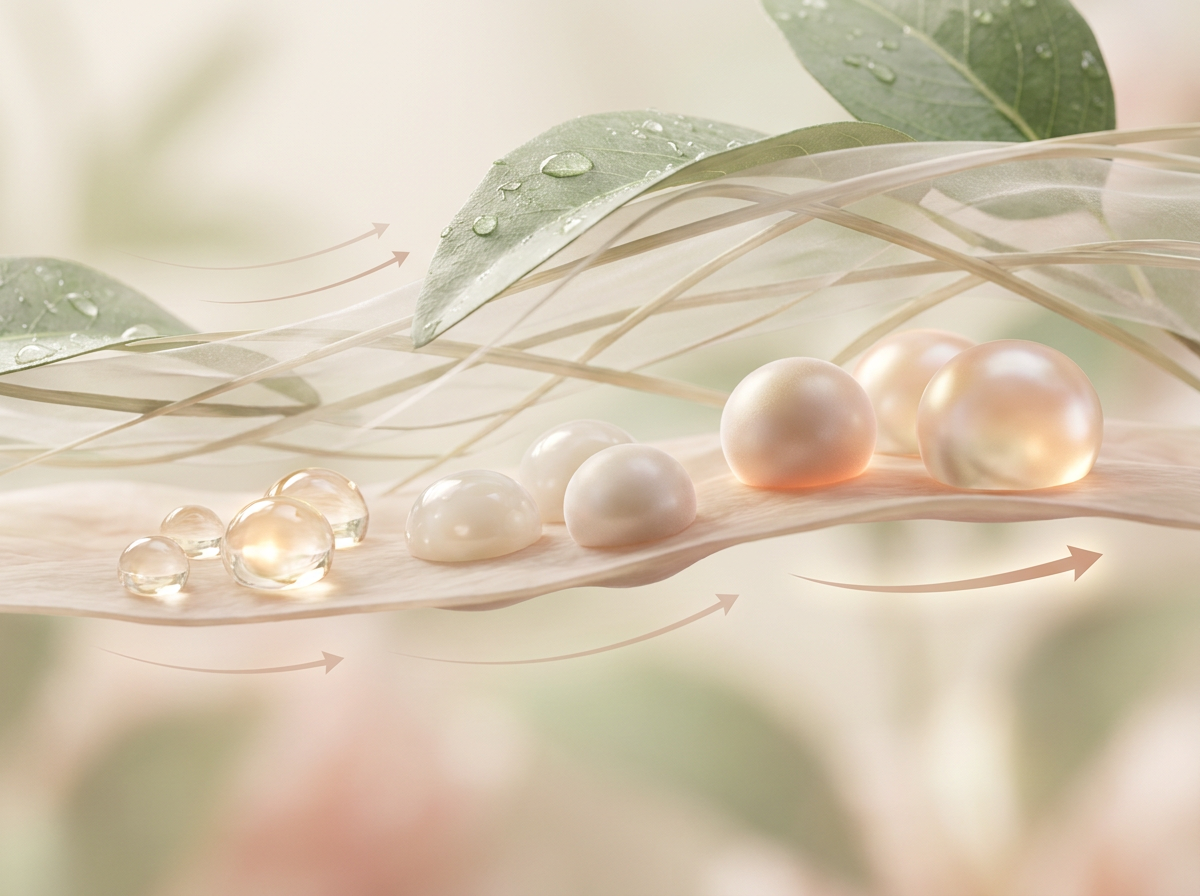
Think of it like watering a plant. You water the soil first to nourish the roots, then you might add a layer of mulch on top to lock the moisture in. Your serum is the water, feeding the deeper layers of your skin. Your cream is the mulch, sealing in all that goodness and protecting the surface. For mature skin, which often struggles with dryness and a compromised moisture barrier, this two-part strategy of "delivery and defense" is the key to creating a plump, hydrated, and resilient complexion.
Your Definitive Cream and Serum Application Guide
Let's build your perfect skincare routine for mature skin, layer by layer. We’ll break it down into a morning (AM) and evening (PM) ritual, as your skin’s needs change throughout the day and night.
The Morning (AM) Routine: Protect & Preserve
Your morning routine is all about shielding your skin from the environmental aggressors it will face all day, namely UV radiation and pollution, which are major contributors to the breakdown of collagen and elastin.
-
Step 1: Gentle Cleanse
Start with a clean canvas, but don't strip it. Use a creamy, hydrating, or milky cleanser that respects your skin’s natural moisture barrier. A harsh, foaming cleanser can leave mature skin feeling tight and dry, making it more difficult for subsequent products to work effectively. Pat your skin dry, leaving it ever so slightly damp. -
Step 2: Hydrating Toner or Essence (Optional)
Think of this as a "drink of water" for your skin. A modern, alcohol-free toner or essence isn’t for "stripping" the skin like the astringents of the past. Its purpose is to add a first layer of hydration, balance your skin's pH, and prime it to better absorb what comes next. Look for ingredients like glycerin, aloe, or hyaluronic acid. -
Step 3: Antioxidant Serum
This is your daytime power player. An antioxidant serum works to neutralize free radicals—unstable molecules from UV rays and pollution that wreak havoc on your skin cells and accelerate aging.
What to use: A Vitamin C serum is the gold standard. It not only protects but also helps to brighten the skin and supports collagen production.
How to apply: Dispense 3-4 drops into your palm. Gently press or pat the serum onto your face, neck, and chest. Avoid aggressive rubbing. Give it a full minute to sink in. -
Step 4: Moisturizer
Now it's time to hydrate and lock in that serum. Your daytime moisturizer should feel comfortable, provide lasting hydration, and create a smooth base for sunscreen. We often talk about humectants, emollients, and occlusives in moisturizers. In simple terms, humectants (like hyaluronic acid) pull moisture into the skin, while emollients and occlusives (like shea butter and ceramides) soften the skin and seal that moisture in. This dual-action is vital for plumping up fine lines and improving the texture of crepey skin. -
Step 5: SPF 30 or Higher (The Non-Negotiable)
If you do only one thing for your skin in the morning, let this be it. Sunscreen is your single most effective anti-aging and anti-crepiness product. All the hard work of your serums and creams is completely undermined by unprotected sun exposure. Sunscreen always goes last in your skincare routine (before makeup) because it's a shield. It is designed to sit on top of everything else and block or deflect harmful UV rays. Apply it generously to your face, neck, chest, and the backs of your hands.
The Evening (PM) Routine: Repair & Regenerate
As you sleep, your skin enters its natural repair cycle. Your nighttime routine is your opportunity to supply it with the active ingredients it needs to rebuild, restore, and rejuvenate.
-
Step 1: Double Cleanse
Your first cleanse, using an oil-based or balm cleanser, is to break down and melt away makeup, sunscreen, and surface oils. The second cleanse, with your gentle morning cleanser, is to wash the skin itself. This ensures your skin is perfectly clean and ready for treatment. -
Step 2: Toner or Essence (Optional)
As in the morning, a quick swipe of a hydrating essence can rebalance the skin after cleansing and prepare it for your serums. -
Step 3: Treatment Serum(s)
Nighttime is primetime for potent, restorative ingredients. This is where you bring in the heavy lifters for collagen stimulation and cellular turnover.
What to use: This is the perfect time for peptides or retinoids. Peptides are amino acid chains that act as messengers, signaling your skin to produce more collagen. Retinoids (a class of Vitamin A derivatives) are famed for their ability to speed up cell turnover and stimulate collagen synthesis. Unsure which is right for you? Our deep dive on Peptides vs. Retinoids: Treating Crepey Skin After 50 can help you decide.
How to apply: Pat your chosen serum onto dry skin. If using a retinoid, start slowly (2-3 nights a week) to allow your skin to acclimate. You can even layer a hydrating peptide serum *before* your retinoid to buffer any potential irritation. -
Step 4: Targeted Body & Neck Treatments
The skin on your neck and body is thinner and has fewer oil glands than your face, making it highly susceptible to crepiness. This is the ideal time to apply a dedicated treatment formulated for these areas. As we explore in our guide to 7 Nighttime Rituals for Crepey Neck & Chest Skin, a dedicated cream with potent ingredients can make a world of difference. Don't forget other areas prone to crepiness, like above the knees, the inner arms, or even around the bra-line, a topic we cover in our Bare Shoulders & Confidence: Bra-Line Wrinkles Guide. -
Step 5: A Richer Night Cream
Your final step is to seal everything in with a nourishing moisturizer. Your night cream can be richer and more emollient than your day cream. Look for ingredients like ceramides, fatty acids, and niacinamide. These ingredients work overtime to repair your skin’s moisture barrier while you sleep, which is fundamental to improving skin texture. A strong, healthy barrier holds onto water more effectively, leading to plumper, smoother, and less crepey-looking skin by morning.
Common Layering Pitfalls & Expert Tips
Knowing how to layer skincare is a game-changer, but it's easy to make a few common missteps. Here’s how to troubleshoot and get the most out of every single drop.
Mistake #1: Rushing the Process
Have you ever applied your products only to have them "pill" up into little balls? This often happens when you don't give each layer enough time to absorb before applying the next.
The Fix: Be patient. Give each layer, especially your serums, at least 60 seconds to penetrate the skin fully. Use this time for a moment of mindfulness. Take a few deep breaths, gently massage your hands, or prepare the next step. This small pause transforms your routine from a race into a ritual.
Mistake #2: Layering Incompatible Ingredients
While most products play well together, some active ingredients can be antagonistic or increase irritation when combined. For example, using a potent retinoid, an exfoliating acid (like glycolic acid), and a high-concentration Vitamin C serum all in the same PM routine can be too much for many skin types, especially mature skin.
The Fix: Keep it simple. Use your Vitamin C in the morning and your retinoid or peptide serum at night. If you want to use exfoliating acids, consider alternating nights with your retinoid. It's not about using everything all at once, but about using the right things at the right time.
Mistake #3: Applying Too Much Product
It's tempting to think that more product equals better results, but your skin can only absorb so much. Over-applying not only wastes your precious formulas but can also lead to pilling, clogged pores, and a greasy feeling.
The Fix: A little goes a long way. For most serums, 3-5 drops are sufficient for the face and neck. For creams, a pea-to-dime-sized amount is plenty. The product should absorb fully and leave your skin feeling hydrated, not slick.
Pro-Tip: Damp Skin is Your Best Friend. For an extra hydration boost, apply your hyaluronic acid serums and moisturizers to slightly damp skin. Water acts as a carrier, helping the product spread more easily and pulling that extra moisture deep into the skin for a plumping effect you can see and feel.
Beyond the Bottle: A Truly Holistic Routine
An effective cream and serum application guide is a cornerstone of healthy skin, but it's one piece of a beautiful puzzle. At Hygieia, we believe in a holistic approach where what you put on your skin works in harmony with how you nourish your body from within. Remember that supple, hydrated skin starts on your plate. Incorporating water-rich foods can dramatically improve your skin's hydration levels from the inside out, a philosophy we share in our post on 5 Hydrating Foods for Crepey Summer Skin Over 50. Staying well-hydrated by drinking plenty of water throughout the day is equally essential. This internal hydration provides the foundation that allows your topical products to work their magic most effectively.
Embrace the Ritual, Love the Results
Learning how to layer your skincare is more than just a technical skill; it is an act of self-care. It’s about transforming a hurried task into a mindful moment of connection with yourself. It’s about honoring the investment you’ve made in your products and, more importantly, in yourself. By understanding the why and the how, you are no longer just applying creams and serums; you are creating a personalized, high-performance system designed to deliver visible results.
Your skincare routine is a daily promise to yourself—a commitment to nourish, protect, and celebrate the skin you are in, at every age.
By following this guide, you can finally unlock the full potential of your skincare and feel confident that every drop is working its hardest for you. You can move from frustration to empowerment, watching as that crepey texture softens and your skin rediscovers its smoothness and radiance. This is the art and science of beautiful skin, and it is completely within your reach.
Are you ready to build your perfect layering ritual? At Hygieia Skin Care, we formulate our products with clean, potent, and bio-compatible ingredients that work in synergy to restore and strengthen mature skin. Explore our collection of targeted serums and nourishing creams, and discover the difference that a thoughtful, science-backed routine can make. Your journey to smoother, more luminous skin starts here.


