Peptides vs. Retinoids: Treating Crepey Skin After 50

There’s a moment that happens for many of us, often past the celebrated milestone of 50. It’s not about a new laugh line or a distinguished silver strand of hair. It’s subtler. You’re moisturizing after a shower, and you notice the skin on your inner arms, above your knees, or across your décolletage has a new texture. It’s thin, finely crinkled, a little like cherished tissue paper. This is crepey skin, and while it’s a natural part of our skin’s story, it often sends us searching for solutions that truly work.
In the world of high-performance skincare, two ingredients consistently rise to the top of the conversation: Retinoids and Peptides. They are both heralded as anti-aging powerhouses, but they operate in beautifully distinct ways. Think of them not as rivals in a competition, but as two highly specialized experts you can hire for your skin. One is a master architect, capable of a full-scale renovation. The other is a team of brilliant cellular communicators, orchestrating repairs with precision and grace.
So, when it comes to the specific challenge of crepey skin, which expert do you call? Or could the secret lie in hiring them both? Let’s delve into the science and uncover the strategic approach to reclaiming your skin's smooth, firm, and radiant appearance.
Understanding the "Why" Behind Crepey Skin
Before we can choose our tools, we must first understand the landscape. Crepey skin is different from a simple wrinkle. While a wrinkle is a crease or fold, crepiness is a widespread change in surface texture. It’s a sign that the underlying structure of your skin is becoming compromised.
The primary causes are twofold:
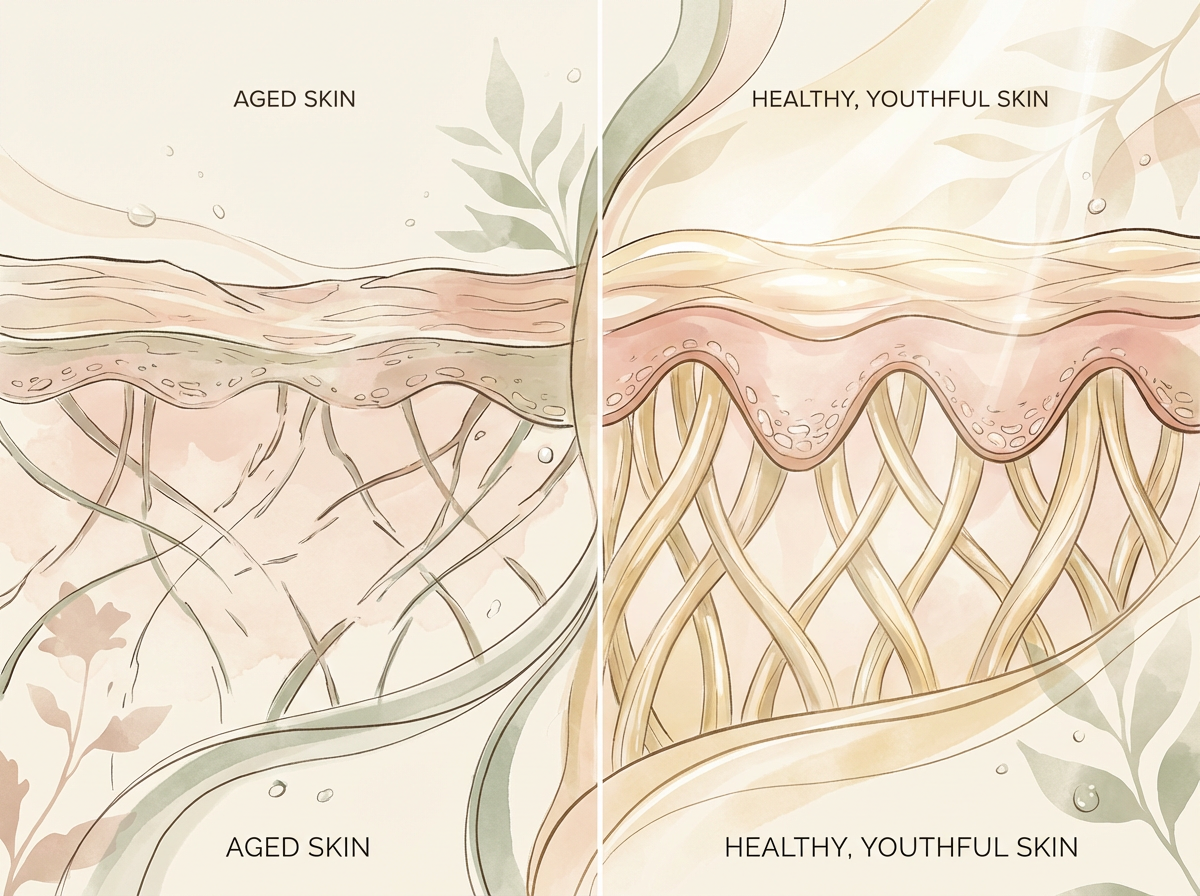
- The Breakdown of Structural Proteins: Deep within your skin, cells called fibroblasts are responsible for producing collagen and elastin. Collagen provides firmness and scaffolding, while elastin allows your skin to snap back into place. Over time, and especially with sun exposure, fibroblast activity slows, and existing collagen and elastin fibers degrade. The skin loses its density and cushion.
- Thinning at a Critical Junction: Between your top layer of skin (epidermis) and the deeper layer (dermis) lies a crucial anchor called the dermal-epidermal junction (DEJ). This wavy, protein-rich layer is what keeps your skin taut. As we age, the DEJ flattens and weakens, causing the epidermis to appear loose and crinkled on the surface.
Years of sun exposure are the biggest accelerator of this process, a topic we explore more deeply in our post on sun-smart summer habits. When you add in lifestyle factors like dehydration and rapid weight loss, which we discuss in "5 Habits Making Crepey Skin Worse," you have the perfect storm for this textural change. To effectively treat it, we need ingredients capable of what is known as topical skin remodeling—prompting the skin to rebuild and restructure itself from within.
Retinoids: The Architects of Skin Remodeling
When dermatologists talk about reversing the signs of photoaging, retinoids are consistently named the gold standard. A retinoid is simply a derivative of Vitamin A, a nutrient essential for healthy cellular function. Think of it as the master architect for your skin, capable of overseeing a major structural renovation.
The family of retinoids includes everything from prescription-strength Tretinoin to more cosmetic-friendly forms like retinol, retinaldehyde (retinal), and retinyl esters. They all work toward the same goal, just at different speeds and potencies. Their power lies in their ability to bind to receptors in your skin cells and issue a series of profound commands.
A comprehensive 2023 review in the journal Molecules confirms that topical retinoids like retinol are masters of topical skin remodeling. [9, 12] They work by:
- Waking up sluggish fibroblasts: Retinoids are exceptional at fibroblast stimulation, encouraging these cellular factories to ramp up the production of new, healthy collagen.
- Thickening the skin: They promote cellular turnover in the epidermis and increase the density of the dermis, effectively adding back the “cushion” that has been lost.
- Improving overall texture: By accelerating the shedding of old, damaged surface cells and promoting the growth of new ones, they visibly smooth the skin.
The clinical evidence for retinoids is robust and long-standing. A recent review in the International Journal of Cosmetic Science highlighted the strong evidence supporting cosmetic retinoids (like the retinol you find in serums and creams) for their ability to remodel sun-damaged skin with good tolerability. [14] In fact, a landmark 2010 controlled trial in the British Journal of Dermatology established the prescription retinoid tretinoin as the benchmark for wrinkle reduction, finding it superior to a regimen that included peptides. [1, 2]
The Caveat: The "Retinization" Period
This powerful remodeling process doesn't come without a potential initiation phase. Many users experience a period of adjustment often called "retinization," which can include dryness, redness, and peeling. This is a sign that the retinoid is working—speeding up cell turnover so rapidly that the skin temporarily struggles to keep up. While this phase typically subsides, it’s why retinol for crepey skin should be introduced slowly (starting with 1-2 nights a week) and always paired with excellent moisturizers and sun protection.
Who are retinoids best for? They are an unparalleled choice for those with moderate to significant crepiness and textural damage from sun exposure. If your skin is resilient and you’re committed to working through a potential adjustment period for dramatic results, the architect is ready to get to work.
Peptides: The Cellular Communicators for Repair and Resilience
If retinoids are the architects, think of peptides as the project managers and skilled artisans. Peptides are short chains of amino acids, which are the fundamental building blocks of proteins. Since collagen and elastin are proteins, you can immediately see the connection. But peptides don't just provide raw materials; they are highly intelligent messengers that give skin cells specific instructions.
The science of peptide skincare science is fascinating because different peptides have different jobs. A 2023 review in the journal Biomolecules classifies them into several categories, including "signal peptides" that directly tell fibroblasts to synthesize more collagen, and "carrier peptides" that deliver essential minerals for enzymatic processes. [4] This targeted communication is what makes them so elegant and effective.
Instead of forcing a massive overhaul like retinoids, peptides gently coax and encourage the skin to perform its functions more optimally. And the results are compelling:
- Improved Elasticity: A 2020 open observational study in Theoretical and Experimental Dermatology found that a synthetic peptide formulation increased skin elasticity by an impressive 11% after just 30 days of use, along with significant improvements in brightness and hydration. [5]
- Strengthened Skin Structure: Remember that critical dermal-epidermal junction (DEJ)? A 2020 in vitro study in the International Journal of Molecular Sciences discovered that certain peptide complexes directly stimulate the production of key anchoring proteins (like collagen XVII and laminins) right at the DEJ. [6] This is crucial for tackling crepiness, as it helps re-anchor the epidermis to the dermis, creating a tighter, smoother surface.
- Reduced Wrinkles and Sagging: A 2022 clinical study from the Journal of Cosmetic Dermatology focusing on a multi-peptide eye serum demonstrated its ability to restore elasticity and reduce wrinkles and sagging, showcasing their power in targeted treatments. [8]
The Advantage: Potency Meets Gentleness
The single greatest advantage of peptides is their exceptional tolerability. They work in harmony with the skin’s biology, delivering noticeable results without the irritation, redness, or peeling associated with retinoids. This makes them a fantastic option for everyone, but especially for those with sensitive or reactive skin, or for delicate areas like the neck and chest.

Who are peptides best for? They are ideal for those starting to see the first signs of crepiness, anyone with sensitive skin, or those who want to focus on improving elasticity and resilience without any downtime. They are the smart, gentle choice for strengthening skin from the inside out.
The Ultimate Strategy: Retinoids, Peptides, or Both?
Now for the most important question: which one belongs in your routine? The answer isn't a simple "this one is better." The best strategy depends entirely on your skin's needs, history, and tolerance. However, the most cutting-edge approach often involves using them both, synergistically.
Choose Retinoids for a Primary Focus if:
Your main concern is reversing visible, established texture changes and sun damage. You're looking for the most powerful tool for collagen synthesis and skin restructuring, and you're prepared to introduce it carefully to allow your skin to acclimatize.
Choose Peptides for a Primary Focus if:
Your main goal is improving firmness, bounce, and elasticity. You have sensitive skin, or you want to fortify your skin barrier and prevent future damage without the risk of irritation. You value a gentle, supportive approach.
The Power of Synergy: A Perfect Partnership
The most exciting developments in skincare science show that retinoids and peptides work beautifully together. They complement each other’s actions and can even mitigate each other’s downsides.
- Remember the 2010 *British Journal of Dermatology* study that crowned a retinoid as the benchmark? It also noted that adding peptides to a regimen could help improve tolerability. [1, 2]
- Even more compelling is a recent study in the Journal of Cosmetic Dermatology. Researchers tested a blend containing retinol, pea peptides, and antioxidants. They found it delivered significant improvements in the signs of dermal aging—like wrinkles and poor texture—without the irritation often seen with retinoids alone. [3]
This reveals the ultimate strategy: use the architect and the communication team together. The peptides can help calm and support the skin, rebuild the barrier, and enhance elasticity, while the retinol gets to work on the deeper structural remodeling. This synergistic approach gives you comprehensive results with a much lower chance of irritation.
Actionable Tip: You can incorporate both by using a peptide serum in the morning to hydrate and firm, and a retinol cream at night a few times a week to remodel. Or, look for advanced formulas that, like the one in the study, combine gentle forms of retinol with powerful peptide complexes in a single product for a streamlined, effective routine.
Your Hygieia Action Plan for Radiant Skin
At Hygieia, we believe that caring for your skin after 50 is an act of empowerment. It’s about understanding the "why" behind your skin’s changes and choosing intelligent, science-backed solutions to nurture its health for the long term. Whether you choose the architectural power of retinol, the communicative grace of peptides, or a synergistic combination of both, the goal is the same: skin that feels as healthy, resilient, and vibrant as you do.
And remember, these active ingredients are just one part of a holistic path to gorgeous skin. Ensure you are supporting their work from the inside out by eating hydrating, nutrient-rich foods and protecting your investment with daily sun protection. For areas beyond the face, like crepey skin that can appear under the arms or on the chest, applying these same principles can help you feel confident in everything from a t-shirt to a sundress, a feeling we celebrate in our guide to baring your shoulders with confidence.
Navigating the world of active ingredients can feel overwhelming, but it doesn't have to be. By understanding the distinct and powerful roles that retinoids and peptides play, you are perfectly equipped to make the best, most informed choice for your skin. It’s not about turning back the clock, but about embracing a future of healthy, radiant skin that beautifully reflects your inner vitality.
References
- Fu, J. J., Hillebrand, G. G., Raleigh, P., Li, J., Marmor, M. J., Bertucci, V., ... & Oblong, J. E. (2010). A randomized, controlled comparative study of the wrinkle reduction benefits of a cosmetic niacinamide/peptide/retinyl propionate product regimen vs. a prescription 0.02% tretinoin product regimen. British Journal of Dermatology, 162(3), 647-654. [1, 2]
- Levin, J., Momin, S. B., & Del Rosso, J. Q. (2024). Efficacy and tolerability of a facial serum with a blend of retinol, pea peptides, and antioxidants for moderate to severe signs of dermal aging. Journal of Cosmetic Dermatology. [3]
- Bielak-Żmijewska, A., Grabowska, W., Czuwara, J., & Stirk, A. (2024). The Role of Peptides in Skin Senescence and Prevention of Their Degradation. Biomolecules, 14(9), 1059. [4]
- Crisan, M., Crisan, D., & Lupsor, M. (2020). The role of a new synthetic peptide in the management of skin photoaging – An open, observational, prospective study. Theoretical and Experimental Dermatology, 2(1). [5]
- Miyazato, P. K., Bardasson, T. C. V. S., Almeida, T. D. C., & Correa, M. A. (2020). Peptide-Based Complexes Stimulate the Synthesis of Basement Membrane Proteins in Human Keratinocytes. International Journal of Molecular Sciences, 21(1), 73. [6]
- Park, J. H., Kim, M. A., Hwang, J., Seo, E., & Bae, I. H. (2023). Multi-peptide containing eye serum reduces facial wrinkles and sagging by restoring elasticity in aging skin: Evidence from a clinical study. Journal of Cosmetic Dermatology, 22(1), 329-336. [8]
- Zasada, M., & Budzisz, E. (2023). Retinoids in the Care of Photoaged Skin. Biomolecules, 13(11), 1614. [9, 12]
- Zasada, M., Budzisz, E., & Erkiert-Polguj, A. (2020). A Clinical anti-ageing comparative study of a cosmetic skin care regimen with a cosmetic retinoid vs. a cosmetic retinoid-free regimen. International Journal of Cosmetic Science, 42(1). [14]


