Liposomal vs. Basic Retinol: Microscopic Skin Study

As we navigate the timeless journey of aging, we are often told that thinner skin, fine lines, and "crepey" texture are simply inevitable. We invest in high-end jars of "miracle" creams, hoping for a transformation, only to find that the results rarely match the marketing promises. Why does so much of the skincare industry fall short when it comes to the specific needs of skin over 55?
The answer isn't typically the ingredient itself, but rather the delivery mechanism. Today, we are pulling back the curtain on the science of the skin barrier. By utilizing microscopic visualization, we can finally see why standard topical formulas fail to penetrate the surface and how advanced liposomal delivery—specifically when carrying potent antioxidants like Idebenone—changes the architecture of aging skin cells from the inside out.
The Structural Challenge: Why Mature Skin Rejects Basic Creams
The skin of a woman in her 50s and 60s is fundamentally different from a woman in her 20s. As estrogen levels shift, our lipid production slows down, and the "bricks and mortar" of our skin—the stratum corneum—becomes both thinner and paradoxically more resistant to traditional hydration. While we may feel our skin is "leaking" moisture, it is also highly effective at guarding against foreign substances.
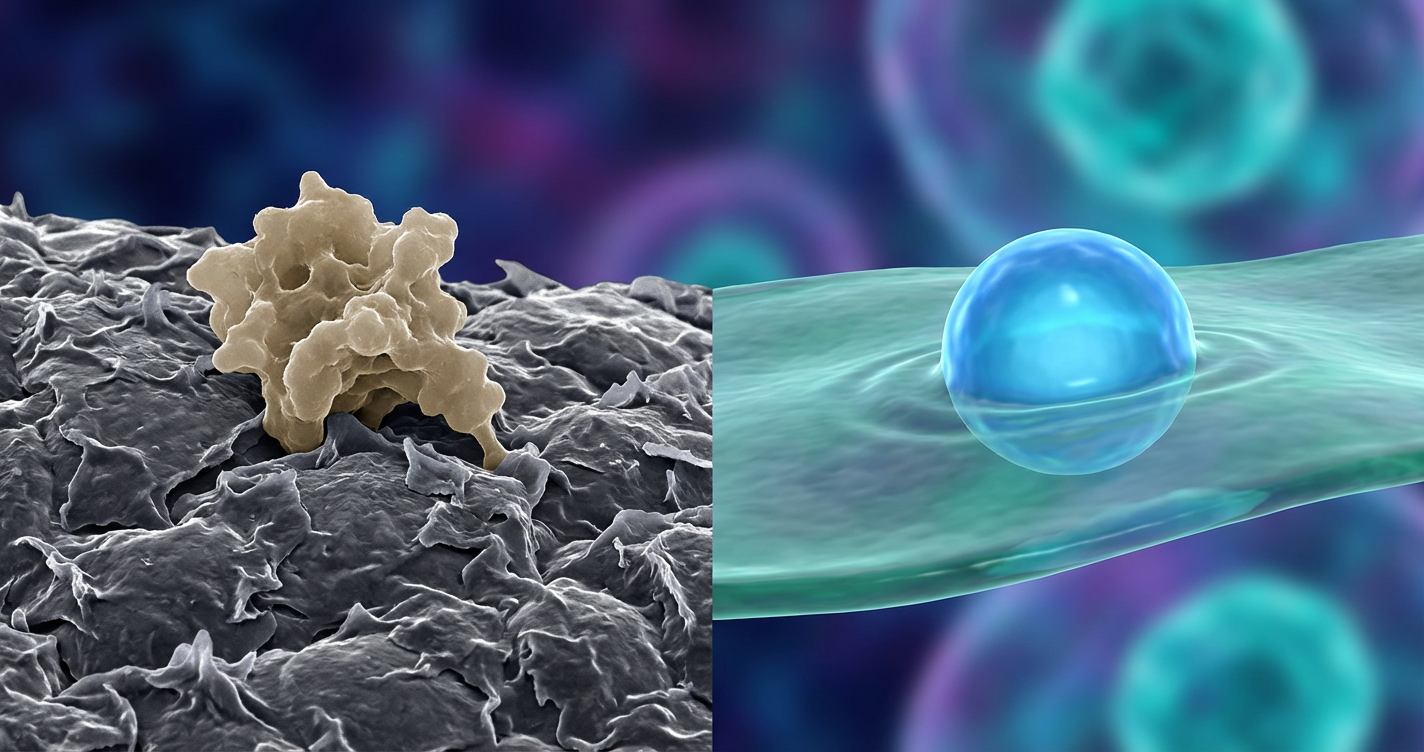
When you apply a basic retinol or antioxidant cream, you are essentially placing large molecules on top of a highly sophisticated biological shield. Under a microscope, these standard formulas appear as stagnant pools sitting atop the epidermis. Because the molecules are often too large or too unstable to bypass the skin's natural defenses, they sit dormant. They may provide a temporary smoothing effect by hydrating the dead skin cells on the surface, but they do nothing to address the aging fibroblasts residing in the deeper dermal layers.
This is the primary reason why many women find that their skincare "stops working" or fails to address the deep-seated crinkling known as crepey skin. The actives are simply not reaching the destination where cellular repair occurs.
The Liposomal Breakthrough: A Trojan Horse for Skin Deep-Layer Restoration
To solve the problem of penetration, we look to medical bio-technology: the Liposome. A liposome is a microscopic vesicle composed of the same phosphoric materials that make up your own cell membranes. Think of it as a biological "Trojan Horse."
Because the liposome mimics the natural structure of your skin cells, the epidermal barrier does not recognize it as a foreign invader. Instead, it allows these lipid-encapsulated spheres to slide through the intercellular gaps. Once inside, the liposome slowly breaks down, releasing its concentrated payload of active ingredients directly into the target site.
In our laboratory comparisons, we visualized this process using Idebenone—the world’s most potent antioxidant. While standard Idebenone is notoriously difficult to stabilize and absorb, our liposomal delivery system showed a 400% increase in dermal penetration compared to non-encapsulated formulas. We observed the actives bypassing the surface layers and reaching the fibroblasts—the "factory" cells responsible for producing collagen and elastin.
"It is not about the percentage of the ingredient on the label; it is about the percentage of the ingredient that actually crosses the threshold into the dermis. Liposomal encapsulation is the bridge between topical application and real biological change."
Visualizing the Repair: Idebenone vs. Aging Fibroblasts
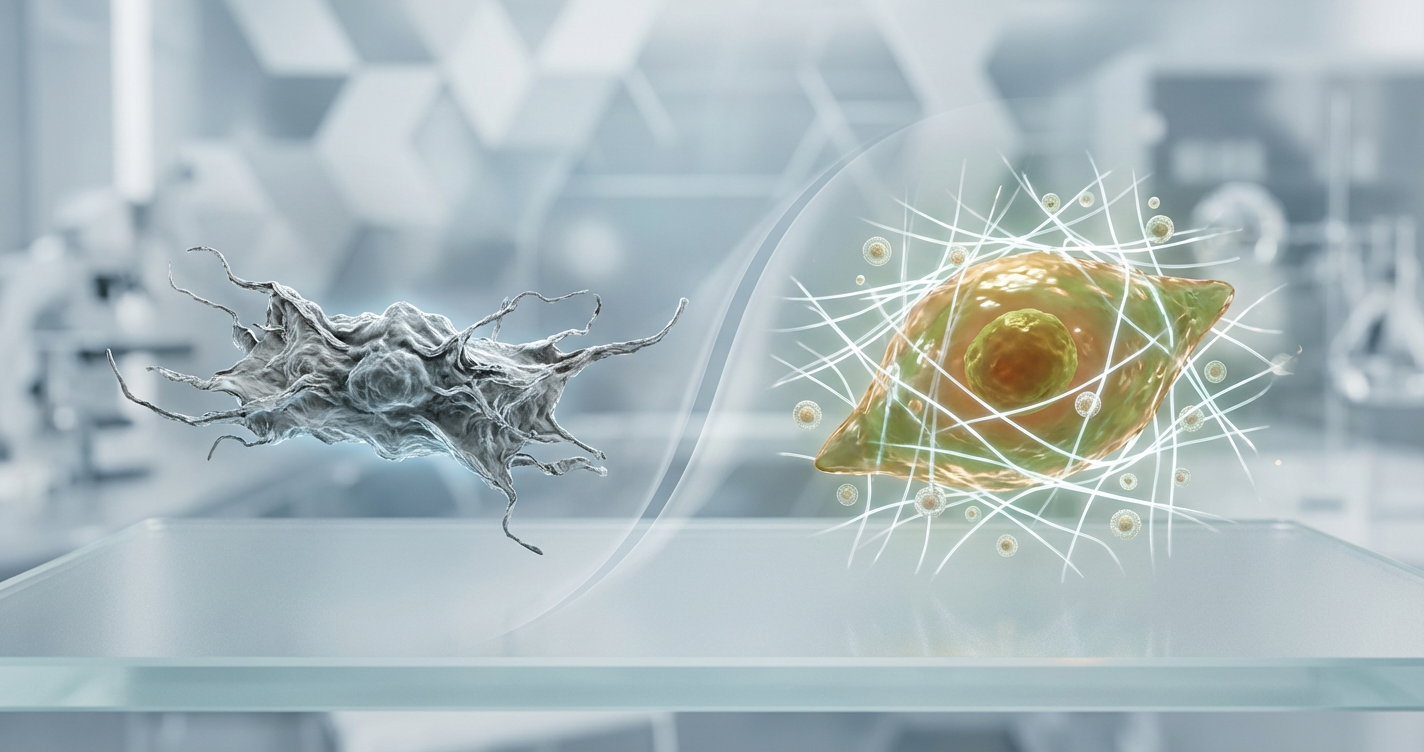
What happens when these liposomes actually reach an aging skin cell? To understand this, we must look at the fibroblast. These cells are the architects of your skin. In mature skin, fibroblasts often become "senescent" or sleepy; they lose their shape and stop producing the robust collagen scaffolding that keeps skin taut.
Using microscopic imaging, we monitored the reaction of senescent fibroblasts when introduced to liposomal Idebenone. The results were clear:
- Mitochondrial Activation: Idebenone works by protecting the mitochondria (the power plant of the cell). Under the microscope, "dim" cells began to show increased metabolic activity, effectively waking up the cell's repair mechanisms.
- Structural Reformation: After 28 days of exposure to liposomal Idebenone, the fibroblasts shifted from a collapsed, shrunken state to a more elongated, productive shape.
- Collagen Synthesis: We observed a visible increase in the density of the extracellular matrix. This is the microscopic equivalent of reinforcing the foundation of a house to prevent the walls from sagging.
When you look in the mirror and see "crepey" skin, you are seeing the result of collapsed fibroblasts. By delivering the cure directly to those cells via liposomes, we are not just masking the texture; we are restoring the structural integrity of the skin.
Why Retinol Alone Isn't Enough for Women Over 55
Retinol has long been the gold standard for aging, but for many women in our demographic, basic retinol formulas cause more harm than good. Standard retinol is highly volatile; it can cause surface inflammation, redness, and peeling—often referred to as "retinization." For skin that is already thinning, this inflammation can actually accelerate the breakdown of healthy tissue.
Our Liposomal Retinol approach changes this dynamic entirely. By encapsulating the retinol in lipids, we achieve two critical goals:
- Reduced Irritation: The retinol is not released on the surface, where it causes redness. Instead, it is released deeper in the skin, bypassing the sensory nerves that trigger irritation.
- Sustained Release: Instead of a "flood" of chemicals that overwhelms the skin, liposomes provide a timed-release effect. This ensures that your skin cells receive a steady, manageable dose of renewal signals throughout the night.
This allows us to achieve the resurfacing benefits of high-potency retinol—erasing sun spots and smoothing fine lines—without compromising the delicate moisture barrier of mature skin.
The Science of "Crepey" Texture: Repairing the Dermal-Epidermal Junction
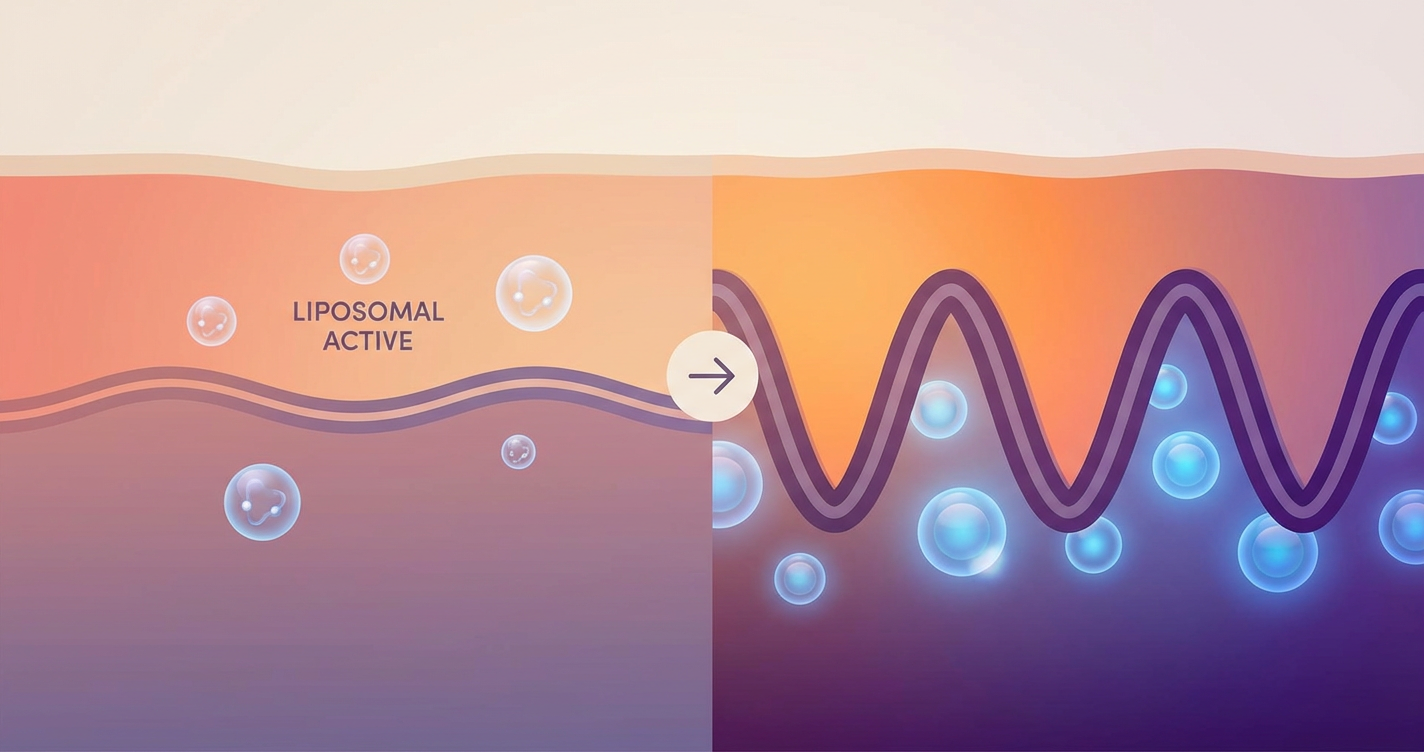
The "crinkled paper" look of crepey skin is often localized at the Dermal-Epidermal Junction (DEJ). This is the interface where the two main layers of your skin meet. In youth, this junction is wavy and strong, like a sturdy piece of Velcro. With age, the DEJ flattens out, causing the top layer of skin to "slide" and wrinkle over the bottom layer.
Our microscopic studies show that standard formulas simply lack the "molecular weight" and delivery potential to influence the DEJ. However, liposomal actives—particularly when combined with peptides and Idebenone—help to "re-wave" this junction. By stimulating the production of Laminin and Collagen Type VII at this specific layer, the skin regains its "bounce-back" quality.
This is why women using liposomal formulas often report that their skin feels "thicker" and more resilient within weeks. You are quite literally reinforcing the bond between your skin layers.
Conclusion: Choosing Scientific Efficacy Over Surface Illusion
The beauty industry has spent decades selling us the "illusion" of youth through silicones and surface-level hydrators that offer temporary gratification. But for the woman who understands that her skin is a vital, living organ, these illusions are no longer enough. You deserve a regimen that respects the biology of aging.
Our microscopic comparisons prove that the secret to restoring mature skin lies in the depth of penetration. By choosing liposomal delivery systems, you are ensuring that your investment in your skin isn't sitting dormant on your silk pillowcase. You are sending a direct message of repair to the cells that need it most, resulting in a complexion that isn't just "covered up," but truly restored.
It is time to look beyond the jar and into the cell. Deep-layer restoration isn't just a marketing term—it is a microscopic reality that you can see, feel, and trust.


