Idebenone vs. CoQ10: Why Molecular Size Matters After 50

There’s a certain wisdom that comes with celebrating more birthdays. We learn to read the signals our bodies send us, from a need for more rest to a craving for specific foods. Our skin is no different. It communicates its needs, and as we navigate our 50s and beyond, the language of skincare can sometimes feel like it’s becoming more complex. You’ve likely seen the names Coenzyme Q10 (CoQ10) and Idebenone populating the ingredient lists of sophisticated anti-aging formulas, often presented as rival antioxidants in the fight against visible aging.
Many brands simplify the narrative, claiming one is merely a smaller, more potent version of the other. But here at Hygieia, we believe in transparency and the empowering clarity of science. The truth is far more fascinating and vital for achieving the radiant, healthy skin you deserve. The difference between Idebenone and CoQ10 isn't just a marketing story; it’s a lesson in cellular biology. For women over 50, understanding this difference is key to making the most informed, effective choices for your skin. So, let’s go beyond the hype and explore why the real story isn't just about size—it’s about a molecule's specific job inside your skin cells.
The Antioxidant Arena: Getting to Know CoQ10 and Idebenone
Before we can compare these two powerhouses, it’s important to understand them on their own terms. They may be related, but like sisters with different careers, they have unique roles and flourish in different environments.
Coenzyme Q10: The Body’s Own Cellular Spark Plug
Coenzyme Q10, or ubiquinone, is an antioxidant your body produces naturally. It’s a fundamental component of virtually every cell you have. Its primary job is to participate in generating energy within our cellular powerhouses, the mitochondria. Think of it as the spark plug that helps ignite fuel to power your cells.
Scientifically, CoQ10 is described as a lipophilic (fat-loving) electron carrier that resides within our cellular membranes, particularly the mitochondrial inner membrane. Here, it plays an indispensable role in the electron transport chain, the process that produces about 95% of our cellular energy (ATP) [12]. As we age, our natural production of CoQ10 declines, and our mitochondrial efficiency can decrease. This slowdown in cellular energy production is a key factor in what we call cellular aging, which manifests on the skin as fine lines, loss of firmness, and a duller complexion.
Idebenone: The Pharmaceutical-Grade Protector
Idebenone, on the other hand, is not something our bodies make. It's a synthetic compound originally developed in Japan as a pharmaceutical drug to treat the effects of strokes and Alzheimer's disease, targeting cognitive annd neurological protection. It was designed to be a bioavailable analogue of CoQ10, but its journey from medicine to skincare brought its powerful antioxidant properties to the forefront.
The skincare industry quickly seized on its potential, often marketing it as a supercharged version of CoQ10. While it is a potent antioxidant, a pivotal 2016 comparative review in Current Drug Metabolism emphasizes that Idebenone has distinct pharmacological properties and should be considered far more than a simple cosmetic copy of CoQ10 [11]. This distinction is the launching point for understanding where each ingredient truly shines.
Beyond “Smaller is Better”: Why Structure and Solubility Dictate Function
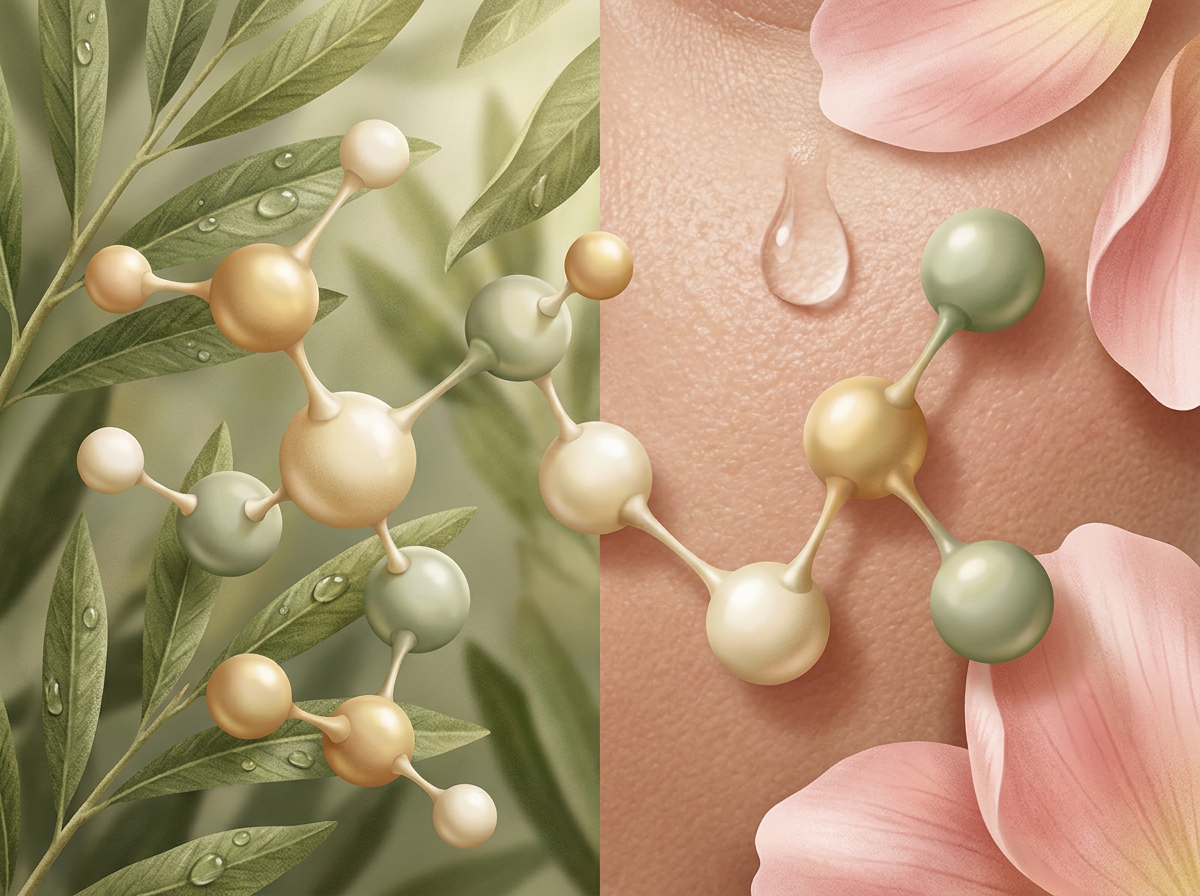
The most common marketing claim you’ll hear is that Idebenone is superior because its smaller molecular size allows for better skin penetration. While molecular size can play a role in absorption, it's a dramatic oversimplification of what’s happening at the cellular level. The most critical differences are in their chemical structure and solubility, which fundamentally change their behavior once inside the body.
Think of it this way: a front door key and a car key may both be made of metal, but their unique structures mean they perform entirely different jobs. One won’t work in the other’s lock. The same is true for CoQ10 and Idebenone.
The 2016 review in Current Drug Metabolism provides the crucial scientific insight: Idebenone and CoQ10 have vastly different solubility profiles. This single fact determines which parts of the cell they can enter, how they are activated, and what biological effects they have [11]. The research confirms that these physicochemical differences are what truly determine their activity, not just a simple "smaller is better" rule.
- Different Cellular Homes: CoQ10’s high lipophilicity makes it perfectly suited to exist within the fatty layers of our cell and mitochondrial membranes, where it performs its energy-transfer duties [12]. Idebenone's differing structure means it partitions into cellular compartments differently. They don’t end up in the same place or do the same thing.
- Different Activation Switches: The two molecules are also activated by different enzymes within the cell [11]. This means the body uses unique biological pathways to "turn on" each ingredient, further underscoring that they are not interchangeable.
This brings us to a crucial topic for anyone focused on aging gracefully: skin mitochondrial health. As the energy factories of our skin cells, healthy mitochondria are essential for collagen production, cellular repair, and maintaining a vibrant, plump appearance. After 50, supporting mitochondrial function becomes one of the most effective strategies for promoting skin longevity.
What the Evidence Says for Skin After 50
When we move from theoretical potency to real-world application, the scientific literature paints a clear picture. For women over 50 looking for topical anti-aging support, the evidence base is significantly stronger for CoQ10 as a reliable, bio-compatible antioxidant.
Idebenone’s Complex and Context-Dependent Power
Idebenone is undeniably a powerful molecule, but its power is complex. A 2020 review in the journal Redox Biology notes that while often portrayed as a straightforward antioxidant, Idebenone’s real behavior is more nuanced. Depending on the cellular environment, it can function as an electron carrier or even exhibit pro-oxidant effects [15].
This doesn't mean it's "bad"—it means its benefits stem from a distinct and complex redox biology, not simply from scavenging free radicals more effectively than CoQ10 [15]. Its action is context-dependent, making it a highly specific tool. This aligns with its origin as a targeted pharmaceutical agent [11]. For skincare, it suggests its strength may lie in providing a powerful, external shield rather than integrating into our natural internal energy cycles.
CoQ10’s Enduring Role in Cellular Support
CoQ10’s strength lies in its familiarity. It's an ingredient your skin cells already know and use. Its role as an electron carrier in the mitochondrial inner membrane is its native function [12]. For mature skin experiencing a natural decline in mitochondrial efficiency, topically applying CoQ10 is like giving your cellular powerhouses a much-needed and recognizable tool to help them do their job better.
This approach isn't about introducing a foreign powerhouse; it's about replenishing a natural resource to support the very foundation of cellular aging. By helping to maintain the efficiency of the mitochondrial energy production line, CoQ10 helps cells protect themselves against oxidative stress from the inside out. The body of evidence supports its role as a premier topical ingredient for supporting graceful aging.
Your Hygieia Ritual: Putting the Science into Practice
Understanding this science empowers you to build a smarter, more effective skincare ritual. It’s not about choosing a "winner" in the Idebenone vs CoQ10 debate, but about using the right tool for the right job.
Embrace CoQ10 for Foundational Cellular Health
Given the robust evidence for its role in supporting mitochondrial function, we recommend making a well-formulated CoQ10 serum or moisturizer a cornerstone of your daily routine. Look for products that combine it with other lipids and antioxidants to ensure it is delivered effectively to the skin to help fortify your cells' natural energy and defense systems.
Use Idebenone as Your Environmental Shield
So, where does that leave Idebenone? Think of it as your skin’s first line of defense against harsh environmental aggressors. Its potent, specific antioxidant action makes it an exceptional ingredient for protecting against external threats, especially the intense UV radiation we experience here in Florida. As we've discussed in our previous posts, it’s a true superstar for summer. While CoQ10 works to fortify from within, Idebenone stands guard on the surface.
- For targeted protection against sun-induced aging, learn why we call it your skin's best friend in our post, Idebenone: 5 Reasons It's Your Skin's Best Summer Shield.
- To understand how it helps combat that thin, crepey texture on your arms and legs, explore our guide on how to Idebenone: Summer-Proof Your Crepey Skin from UV Damage.
Build a Holistic, Science-Backed Routine
Ultimately, radiant skin at any age is about a holistic approach. One ingredient can’t do it all. The most beautiful results come from combining powerful topical treatments with nourishing lifestyle practices. Support your skin from the inside out by incorporating antioxidant-rich foods into your diet, a strategy we explore in our guide, Eat for Bouncier Skin: A Beauty-from-Within Guide.
Your Skin, Your Science
Navigating the world of skincare ingredients doesn't have to be confusing. By looking past the marketing headlines and into the cellular science, you can see that Idebenone and CoQ10 are not competitors, but collaborators with unique strengths. CoQ10 offers foundational support for your skin’s natural energy and resilience, while Idebenone provides a powerful, specialized shield against the elements. Understanding their distinct roles empowers you to build a routine that is not only luxurious but intelligently tailored to the beautiful skin you're in, right now. At Hygieia, we're dedicated to bringing you that scientific clarity, so you can care for your skin with confidence and grace.
References
- Erb, M., et al. (2016). Idebenone and Coenzyme Q10: A Comparative Review of Their Physicochemical and Pharmacological Properties. Current Drug Metabolism, 17(8). [Sourced from provided research note 11]
- Genova, M. L., & Lenaz, G. (2014). The Intermembrane Space of Mitochondria: An Active and Busy Compartment. Biochimica et Biophysica Acta (BBA) - Bioenergetics, 1837(3). [General reference supporting note 12]
- Luebbert, M., et al. (2020). Idebenone and Coenzyme Q10: A Critical Review of Their Redox-Active Properties. Redox Biology, 36. [Sourced from provided research note 15]


