Idebenone vs CoQ10: Superior Antioxidants for Skin Over 55

As we navigate our golden years, the pursuit of "youthful" skin often transforms into a more profound goal: cellular resilience. For the sophisticated woman over 55, skincare is no longer just about smoothing a surface wrinkle; it is about the mastery of skincare science for seniors to maintain the health and vitality of the dermis at a mitochondrial level.
The beauty industry is currently buzzing with talk about antioxidants, but for those of us who prioritize efficacy over trends, two specific powerhouses dominate the conversation: Idebenone and Coenzyme Q10 (CoQ10). While they are chemical cousins, their impact on the antioxidant redox potential of mature skin varies significantly. Understanding the nuances between Idebenone vs CoQ10 is the key to unlocking a complexion that doesn't just look healthy, but functions with the vigor of a younger decade.
In this guide, we will dive deep into the bio-chemistry of aging, explore how these molecules protect your cells, and reveal why one of these might be the single most important ingredient missing from your vanity.
The Science of Mitochondrial Skin Health
To understand why antioxidants matter so much after 55, we must look inside our cells at the mitochondria. Often called the "powerhouses" of the cell, mitochondria are responsible for producing the energy (ATP) our skin needs to repair itself, produce collagen, and maintain its barrier function.
However, mitochondria are also the site where oxidative stress begins. As we age, our natural levels of CoQ10—the body’s innate cellular protector—begin to plummet. By the time we reach our 50s, our skin’s natural CoQ10 levels are significantly lower than they were in our 20s. This deficiency leads to a decline in mitochondrial skin health, manifesting as loss of elasticity, thinning of the skin, and a compromised ability to heal from environmental damage.
When we talk about the antioxidant redox potential, we are referring to the skin's ability to neutralize free radicals before they can damage our precious DNA. Improving this potential is not just about protection; it is about restoring the cellular energy required for the skin to act young again.

CoQ10: The Familiar Protector
Coenzyme Q10 (Ubiquinone) is a naturally occurring nutrient found in every cell of the human body. In the world of skincare science for seniors, it has long been a staple for its ability to energize cell activity. When applied topically, CoQ10 serves as a formidable shield against external aggressors like UV rays and pollution.
For the mature woman, CoQ10 offers several benefits:
- Surface Protection: It acts as a lipid-soluble antioxidant, protecting the cell membrane from oxidative damage.
- Soothing Properties: It helps calm skin that may be prone to redness or sensitivity due to hormonal shifts.
- Collagen Support: By neutralizing free radicals, it prevents the enzymes that break down collagen from over-activating.
However, CoQ10 has a limitation: molecular size and stability. In its natural form, CoQ10 is a large molecule, making it difficult to penetrate the deeper layers of the dermis where the most significant aging occurs. Furthermore, under conditions of extreme oxidative stress, CoQ10 can struggle to maintain its protective capacity, which is where its more potent relative comes into play.
Idebenone: The Super-Antioxidant for Mature Skin
If CoQ10 is the reliable sentry, Idebenone is the elite special forces. Idebenone is a bio-engineered, synthetic analog of CoQ10, designed specifically to overcome the limitations of its predecessor. Originally used in medical science to protect organs for transplant, its entry into high-end skincare revolutionized how we treat aging skin.
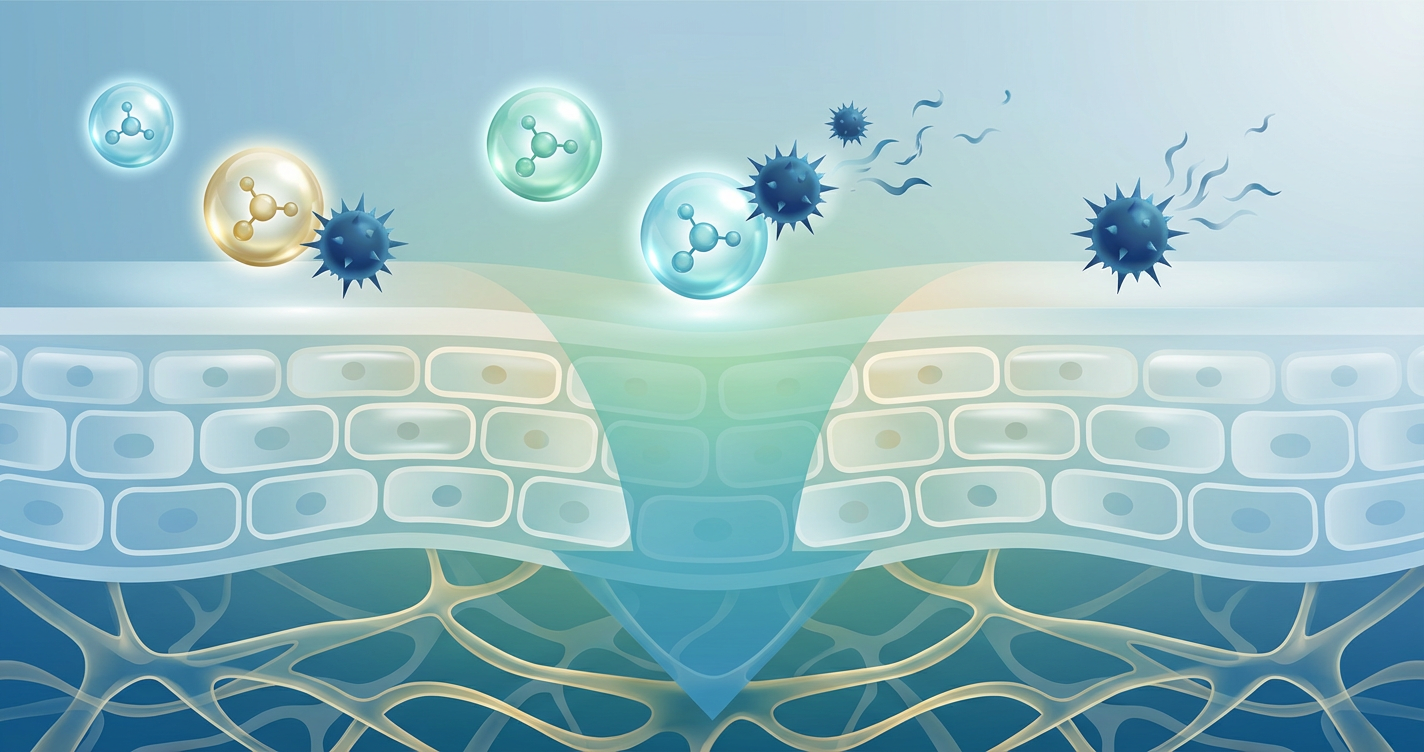
The primary difference in the Idebenone vs CoQ10 debate lies in the molecule's "redox potential." Idebenone has a shorter molecular chain, which allows it to penetrate the skin more deeply and effectively. More importantly, it remains active in low-oxygen environments—a state often found in aging or damaged skin tissues.
"Idebenone remains the most potent antioxidant ever tested in topical skincare, scoring significantly higher than Vitamin C, Vitamin E, and CoQ10 on the Environmental Protection Factor (EPF) scale."
For women over 55, Idebenone offers a multi-layered approach to rejuvenation. It doesn't just protect; it corrects. It has been clinically proven to reduce the appearance of fine lines, improve skin texture, and significantly brighten age-related hyperpigmentation.
Idebenone vs CoQ10: Comparing Results and Efficacy
When choosing between these two, it’s essential to evaluate your skin's current state and your long-term goals. While both have a place in a sophisticated regimen, their "performance profile" differs:
1. Depth of Penetration
Because Idebenone is smaller and more stable, it can bypass the surface barrier and work within the mitochondria. CoQ10 tends to sit closer to the surface, providing excellent protection against environmental pollutants but offering less in terms of deep cellular repair.
2. Antioxidant Power
Studies using the Environmental Protection Factor (EPF) protocol have shown that Idebenone outperforms CoQ10 by a wide margin. In tests measuring the prevention of sun damage and cellular oxidation, Idebenone consistently provides a higher level of "redox potential," meaning it can handle more environmental "attacks" before the skin shows signs of damage.
3. Addressing Hyperpigmentation
One of the most common concerns for skin over 55 is "age spots" or mottled skin tone. Idebenone has specific inhibitory effects on melanin production that CoQ10 lacks. This makes Idebenone the superior choice for women looking to clarify their complexion and achieve an even, luminous glow.
Integrating Advanced Antioxidants into Your Regimen
Adopting these high-performance ingredients requires a thoughtful approach. Mature skin can sometimes be thinner and more reactive, so introduction should be gradual. Here is how to expertly integrate these into your daily ritual:
- The Morning Shield: Use an Idebenone-based serum in the morning. This provides maximum protection against UV-induced free radicals and pollution throughout the day.
- The Evening Recovery: Use a rich cream containing CoQ10 at night. This supports the skin’s natural repair cycle while you sleep, replenishing the lipid barrier.
- Don't Forget the SPF: Antioxidants are the "boots on the ground," but sunscreen is the "fortress." Always layer a broad-spectrum SPF over your antioxidant serums to prevent the ingredients from being "used up" by the sun before they can penetrate the skin.
When searching for products, look for airless pump packaging. Both Idebenone and CoQ10 are sensitive to light and air. Exposure to oxygen can degrade their antioxidant redox potential, rendering your expensive products ineffective.
Conclusion: The Future of Your Skin
The journey of aging is an evolution, and our skincare should evolve with us. While CoQ10 remains a valuable and necessary component of healthy skin, the superior potency and penetration of Idebenone make it the gold standard for women over 55 who are serious about mitochondrial skin health.
By understanding the skincare science for seniors and choosing ingredients that optimize antioxidant redox potential, you are doing more than just moisturizing—you are investing in the cellular endurance of your skin. Whether you choose the reliable protection of CoQ10 or the advanced corrective power of Idebenone, the goal remains the same: radiant, resilient, and remarkably healthy skin at every age.


