Leg Crepey Skin: From Long Pants to Sundresses

If you’ve ever stood in front of your closet, looked longingly at a breezy sundress, and then reached for your trusty long pants instead, you are not alone. That quiet moment of hesitation—of wondering if your legs look “too crepey,” “too wrinkled,” or “too different” than they did ten years ago—is one so many women over 50 know intimately.
Crepey skin on the legs can feel like it’s stealing a piece of your confidence. But it doesn’t have to stay that way. This is the story of how I went from hiding my legs under fabric to feeling comfortable, even joyful, in sundresses again—and the science-backed tools that helped along the way.

From Covering Up to Showing Up: The Emotional Side of Leg Crepey Skin
My journey didn’t start with skincare products. It started with feelings.
Somewhere in my late 50s, I began to notice that the skin on my thighs and knees looked different—thinner, finely wrinkled, and almost crinkly in certain lighting. Dermatologists describe crepey skin as skin that looks like tissue paper: thin, loose, and lined with tiny wrinkles, often due to loss of collagen, elastin, and moisture in the skin.[1][9] On my legs, it showed up as soft, sagging texture, especially when I bent my knees.
At first, I brushed it off. “It’s just aging,” I told myself. But slowly, my wardrobe changed. Maxi skirts replaced knee-length ones. Lightweight pants became my default, even in summer. Beach trips meant carefully draping towels over my legs the moment I sat down.
What surprised me most wasn’t the physical change—it was how much it affected how I felt in my body. I still felt vibrant, capable, and deeply myself. Yet the skin on my legs didn’t seem to match that feeling, and it subtly shifted my behavior.
“Aging skin doesn’t take away your beauty—it simply invites a new kind of care.”
One day, staring at my reflection in a sundress I almost didn’t buy, I realized something vital: I didn’t actually want perfect legs. I wanted comfortable legs. Legs I felt proud to live in. Legs that could carry me confidently through summer without hiding.
That realization became my turning point. Instead of asking, “How do I make this go away completely?” I began asking, “What can I realistically improve—and how can I learn to love the rest?” That’s where the science, and a gentle leg firming routine, came in.
Why Leg Skin Changes After 50: The Science Behind Crepey Legs
To move from long pants to sundresses, I first needed to understand what was happening beneath the surface. Knowing why crepey skin develops helped me choose treatments that actually made a difference—and manage my expectations with compassion.
The Collagen & Elastin Story
Our skin’s firmness and “bounce” comes largely from two key proteins: collagen and elastin. Collagen provides structure and thickness; elastin helps skin stretch and spring back.[14][17] Over time, natural aging, hormonal shifts, and environmental stressors reduce both, especially after menopause.
Dermatologists note that crepey skin is often a sign of this deeper structural change: thinning of the dermis (the support layer of the skin) and reduced collagen and elastin fibers.[1][11][17] On the legs, this can show up as:
- Fine, “crinkly” lines, especially around knees and inner thighs
- Skin that feels thinner or more delicate
- A looser, sagging texture when you bend or sit
Sun Exposure: The Silent Accelerator
One of the biggest contributors to crepey skin—on legs and elsewhere—is UV exposure from the sun.[3][10][12] UV rays break down collagen and elastin, leading to thinner, less resilient skin over time.[3][10][17] Even if your legs weren’t in the sun as much as your face, years of summer dresses, shorts, or beach days add up.
Dermatologist Dr. Rao notes that most crepey skin is driven by chronic sun exposure and recommends daily sunscreen and protective clothing to prevent and slow the process.[3] Another dermatology review emphasizes that UV radiation is the number one cause of premature skin aging, accelerating crepey texture and loss of firmness.[17]
Hormones, Weight Changes, and Lifestyle
Beyond the sun, several other factors quietly influence leg crepey skin:
- Hormonal changes: Around menopause, estrogen levels drop. Estrogen helps maintain collagen, elastin, and skin thickness, so lower levels can lead to thinner, less elastic skin and increased dryness.[9][17]
- Weight fluctuations: Rapid weight gain or loss stretch and relax the skin, and over time can lead to laxity and a crepey appearance, especially on thighs and knees.[5][9][17]
- Smoking and pollutants: Smoking damages collagen and elastin, while environmental pollutants increase oxidative stress in the skin.[9][11][17]
- Dehydration and poor nutrition: Lack of moisture, antioxidants, and essential nutrients can impair skin repair and make crepey texture more visible.[8][9][11]
In short: if you’re wondering how to address crepey skin on legs, know this—what you’re seeing is a natural mix of time, sun, hormones, and life experiences written on your skin. It’s not a failure. It’s a biography. And like any story, we can soften certain chapters.
A Reality Check: Can Crepey Skin Disappear Completely?
One thing dermatologists are clear about: there is no way to permanently erase crepey skin, because we cannot fully reverse the aging process or completely rebuild the original collagen structure.[5][13] But the good news is equally clear: we can significantly improve texture, firmness, and hydration—and, with the right routine, create smoother legs after 50 that feel noticeably more supple and strong.[7][10][13]
For me, accepting that “better” was both possible and enough made the journey feel less pressured and more empowering.
My Leg Firming Routine: The Daily Ritual That Changed Everything
Here’s the heart of my story: the simple, consistent routine that helped me feel ready to trade long pants for sundresses. You don’t need perfection or a dozen products—you need a gentle, science-backed approach you can stick with.
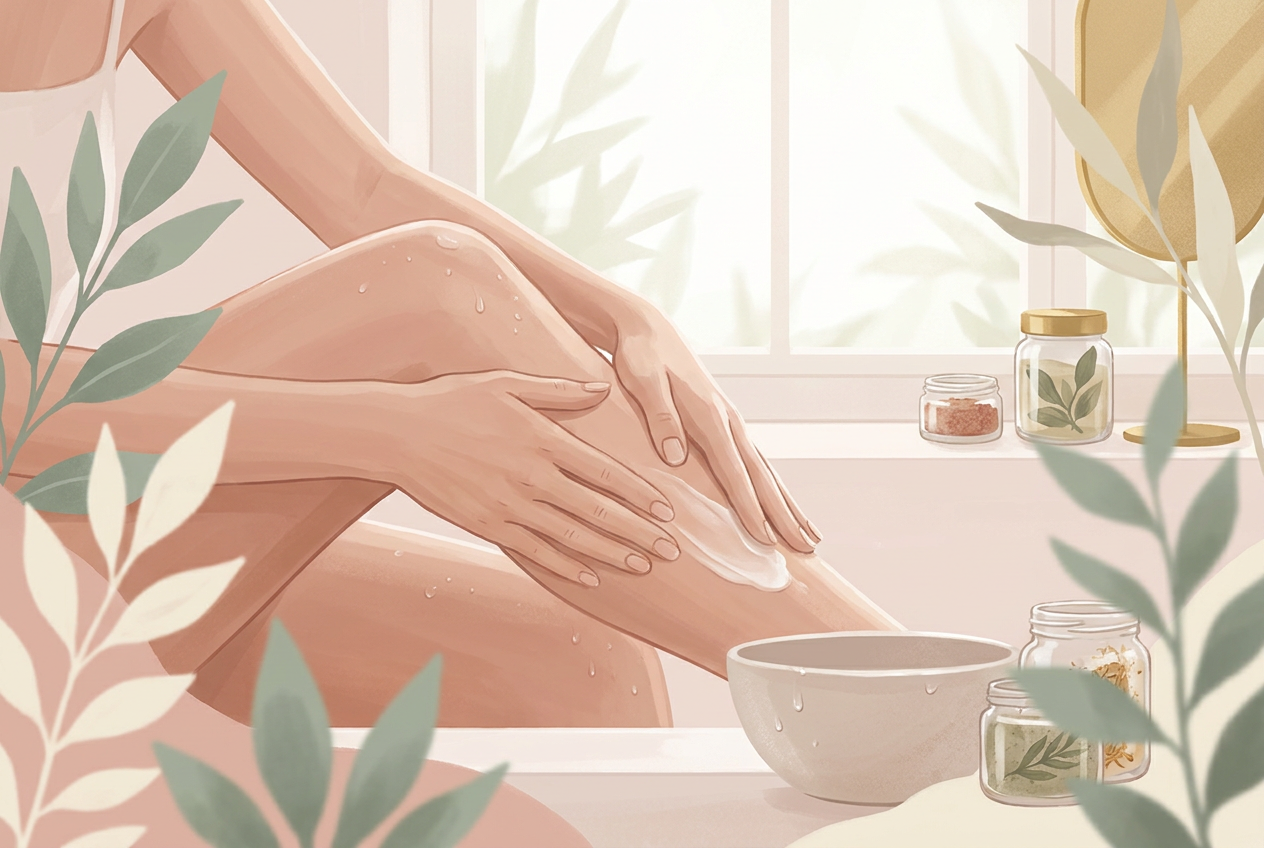
Step 1: Gentle Exfoliation for Smoother Texture
One of the first shifts I made was adding gentle exfoliation to my legs 1–2 times per week. Exfoliation removes dead skin cells and can help reduce the look of fine lines and roughness, allowing other ingredients to penetrate more effectively.[3][4][9]
Dermatologists often recommend:
- Alpha hydroxy acids (AHAs) such as lactic acid or glycolic acid, which help smooth texture and stimulate cell turnover without harsh scrubbing.[3][9][14]
- Mild physical exfoliation (like a soft washcloth) used gently, never aggressively, to avoid damaging already-thin skin.[3][9]
After 50, your skin is more delicate, so it’s important to choose formulas designed for body use and mature skin. Over time, these exfoliants can soften crepey texture on the surface and provide a more even canvas for your moisturizer.[3][9][14]
Step 2: Deep, Consistent Hydration—Your Daily Non-Negotiable
If you’re looking for the best lotion for crepey legs, don’t just reach for the thickest cream. Look for formulas that combine deep hydration with supportive active ingredients for visible firming.
Dermatologists emphasize that moisturizing creams and lotions can significantly improve the look of crepey skin on arms and legs when they contain the right ingredients.[13] The most helpful components include:
- Humectants like hyaluronic acid and glycerin, which attract and hold water in the skin, plumping and softening its appearance.[1][9][17]
- Emollients such as plant oils and butters (like shea or jojoba), which smooth and soften the skin’s surface.[11][13]
- Barrier-supporting lipids (ceramides, fatty acids) to help prevent moisture loss and keep the skin resilient.[9][11]
Many experts note that applying moisturizer or body oil alone can visibly improve crepey skin’s appearance by plumping the surface and adding sheen.[10][13] What mattered most in my routine was consistency: I committed to applying a hydrating leg lotion every morning and evening, treating it like brushing my teeth—non-negotiable self-care.
Step 3: Targeted Actives for Firmness & Renewal
Hydration made my legs feel better right away, but the deeper changes came from adding targeted actives known to support collagen, elastin, and cell turnover. Dermatologists frequently recommend:
- Retinoids (vitamin A derivatives): Topical retinoids help increase cell turnover, stimulate collagen production, and improve texture over time.[3][7][14] They’re widely used for crepey skin on both face and body.
- AHAs like lactic or glycolic acid: In addition to smoothing, AHAs can promote collagen growth and improve overall tone.[3][9][14]
- Peptides: These short chains of amino acids can signal skin cells to support collagen and elastin, helping with firmness and resilience.[14][13]
- Antioxidants (vitamin C, vitamin E, botanical extracts): These help combat oxidative stress and support collagen integrity.[3][10][13]
One dermatologist advises finding a body moisturizer that includes either a retinoid or an exfoliating acid to simplify your routine while targeting crepey texture.[16] I took that advice to heart and chose a leg treatment that combined gentle exfoliation with hydration and peptides. Over several months, the skin on my thighs looked noticeably smoother and less “crinkled,” especially in bright light.
Step 4: Daily Sun Protection for Legs (Yes, Even if You Wear Pants)
This was my biggest mindset shift: treating my legs like my face when it comes to sun care.
Experts are consistent: minimizing sun exposure and using SPF 30 or higher is one of the most effective ways to prevent and manage crepey skin.[3][7][10][17] Even if your legs are only exposed occasionally, those times still add up, especially in strong midday sun.
My new rule became:
- SPF 30+ on legs whenever they’re bare during the day
- Choosing sundresses and skirts with a comfortable length, plus shade whenever possible
- Accepting that protection doesn’t mean hiding—it means caring
That simple change not only helped maintain my progress, it also gave me peace of mind: I was investing in the future texture of my skin, not just reacting to the present.
Step 5: Movement, Muscle, and Lifestyle Support
One of the most empowering discoveries I made was that my leg firming routine didn’t end at the bathroom counter. Lifestyle choices—especially movement and strength training—play a real role in how skin looks and feels.
Research cited by dermatologists shows that resistance training and regular exercise can help improve dermal collagen and overall skin integrity.[6][17] Building muscle under the skin gives the legs shape and support, which can make crepey texture less noticeable and help you feel stronger and more grounded in your body.
Other supportive lifestyle shifts include:
- Staying hydrated: Drinking enough water supports skin moisture from within and can help reduce dryness that exaggerates crepey texture.[8][9][11]
- Nourishing nutrition: A balanced diet rich in antioxidants, healthy fats, and protein supports collagen and elastin.[8][9][11]
- Managing stress and sleep: Chronic stress and poor sleep can raise cortisol and disrupt skin repair.[9][17]
- Quitting smoking: Smoking is known to damage collagen and elastin and accelerate crepey skin.[9][11][17]
Putting these pieces together—topical care, sun protection, movement, and hydration—created a holistic leg firming routine that did more than change my skin. It changed how I felt in it.
Visible Changes: What “Better” Looked Like for Me
When you’re dealing with crepey skin, it’s easy to hope for dramatic overnight transformations. In reality, most dermatologists say improvements are gradual and require consistent care over months, not days.[7][9][13] Understanding this helped me celebrate subtle wins instead of feeling discouraged.
Month 1–2: Comfort and Hydration
The first changes I noticed weren’t visual—they were sensory. My legs felt less dry and tight, and my skin didn’t “drink up” lotion as desperately. That deep comfort made it easier to keep going with my leg firming routine.
Visually, the skin had a softer sheen and looked healthier, even though the fine lines were still present. This matched what dermatologists describe: moisturizers and body oils can quickly improve crepey skin’s appearance by smoothing and plumping the surface.[10][13]
Month 3–4: Texture and Tone
After a few months of regular exfoliation, targeted actives, and daily sun protection, the surface texture of my legs began to change. The tiny “crinkles” around my knees softened, and the overall tone looked more even.
While the deepest structural changes in collagen take longer, topical retinoids, AHAs, and peptides can gradually improve texture and subtle firmness.[3][7][14] My legs weren’t suddenly 25 again—but they did look like a more radiant, cared-for version of my current age.
Month 5 and Beyond: Confidence Shift
The most meaningful change was internal. One morning, I reached into my closet and chose a sundress without hesitation. I didn’t scrutinize my legs in harsh lighting or tug at the hem to add an extra inch. I simply got dressed and went about my day.
Were the fine lines still there? Yes. Did my legs look smoother than they had a year before? Absolutely. But more importantly, they felt like mine again—strong, cared for, and worthy of being seen.
“The goal isn’t to erase your story from your skin. It’s to care for it so lovingly that you feel proud to share it.”
Practical Tips You Can Start Today
If you’re ready to move from long pants to sundresses, here are actionable steps you can take today to start supporting smoother legs after 50 and addressing crepey skin on legs with grace and science.
1. Create a Simple Leg Care Ritual
- Choose a gentle body cleanser that doesn’t strip natural oils.
- Add a leg exfoliant (AHA-based or very gentle physical) 1–2 times per week.
- Commit to applying a hydrating body lotion morning and evening, focusing on thighs, knees, and calves.
- Look for formulas with humectants, emollients, and supportive actives like AHAs, peptides, or gentle retinoids.
2. Treat Your Legs to Daily Sun Protection
- Apply SPF 30 or higher to your legs whenever they will be exposed to sunlight, even for short errands.[3][7][10]
- Embrace shade and breathable clothing as supportive, not limiting.
- Pair sunscreen with antioxidant-rich body care for extra protection against oxidative stress.[3][10][13]
3. Add Movement That Makes You Feel Powerful
- Incorporate resistance training (such as squats, lunges, or gentle weight training) 2–3 times per week to support muscle and collagen.[6][17]
- Choose movement you enjoy—walking, dancing, yoga—so it feels like pleasure, not punishment.
- Celebrate strength gains, not just skin changes.
4. Support Your Skin From Within
- Focus on hydration: keep a water bottle handy and sip throughout the day.[8][9]
- Enjoy meals rich in antioxidants, healthy fats, and protein to support collagen and overall skin health.[8][9][11]
- Prioritize sleep and stress management as acts of skin care as much as self-care.[9][17]
5. Shift Your Self-Talk
- Notice when you criticize your legs harshly—and gently replace those thoughts with gratitude for their strength.
- Try this affirmation: “My legs are worthy of light, movement, and joy exactly as they are today.”
- Allow improvement and acceptance to coexist: you can care for your skin and love it, even if it isn’t “perfect.”
Where Hygieia Fits In: Your Leg-Loving Routine
At Hygieia Skin Care, we believe that every stage of your skin’s journey deserves thoughtful, science-backed, and deeply nurturing care. Our focus on clean, effective ingredients and mature skin needs means your legs get both the results and the respect they deserve.
If you’re building a leg firming routine, you can pair what you’ve learned here with some of our existing resources:
- For deeper hydration strategies (especially if your legs feel chronically dry), explore Deeply Hydrate Skin Over 50: 4 Science-Backed Ways for moisture-boosting tips.
- If you’re noticing crepey texture elsewhere—like your décolletage—our guide Sun Damage vs. Crepey Skin: Repair Your Decolletage can help you connect the dots between sun exposure and skin changes.
With every serum, lotion, and treatment, our intention is the same: to meet you where you are, honor the story written on your skin, and offer tools that help you feel more at home in your body.
Your Invitation: From Long Pants to Sundresses
If you’re reading this in long pants, wondering whether you’ll ever feel fully comfortable baring your legs again, consider this your gentle invitation.
You don’t have to wait for perfection. You don’t have to erase every line. You don’t even have to love your legs unconditionally today. You simply have to take one small, caring step:
- Apply a nourishing lotion with intention.
- Add SPF the next time you wear a dress.
- Take a short walk and notice how capable your legs feel beneath you.
Over time, these tiny acts add up to something powerful: skin that looks smoother, feels more hydrated and supported, and reflects the love you’re finally willing to give it. That’s how you move from hiding to revealing—from long pants to sundresses—with confidence born not from perfection, but from care.
If you’re ready to start, choose one ritual today—an evening leg massage with your favorite lotion, a decision to wear a midi dress instead of full-length pants, a promise to treat your legs as kindly as you treat your face. Your skin may be changing, but your beauty, your presence, and your right to feel radiant in the summer sun are unwavering.
You’ve earned every line, every curve, every chapter written on your legs. Now it’s time to celebrate them—one sundress at a time.


