6 Daily Habits to Prevent Crepey Body Skin

Does Your Body Skin Feel Thinner Overnight?
If you’ve ever looked at your arms or legs and thought, “When did my skin start looking so thin and crinkly?”, you are not alone. Many women over 50 notice crepey body skin—that fine, loose, tissue-like texture—first on the upper arms, thighs, and lower legs. The good news: science shows that simple, consistent daily habits can visibly improve and help prevent crepey skin on the body, especially when you focus on a targeted crepey skin routine over 50.[1][10]
Below, you’ll find six evidence-backed habits that support firmer, smoother, more resilient skin—without harsh treatments or unrealistic promises. Think of this as your gentle roadmap for how to treat crepey skin and protect it for years to come.
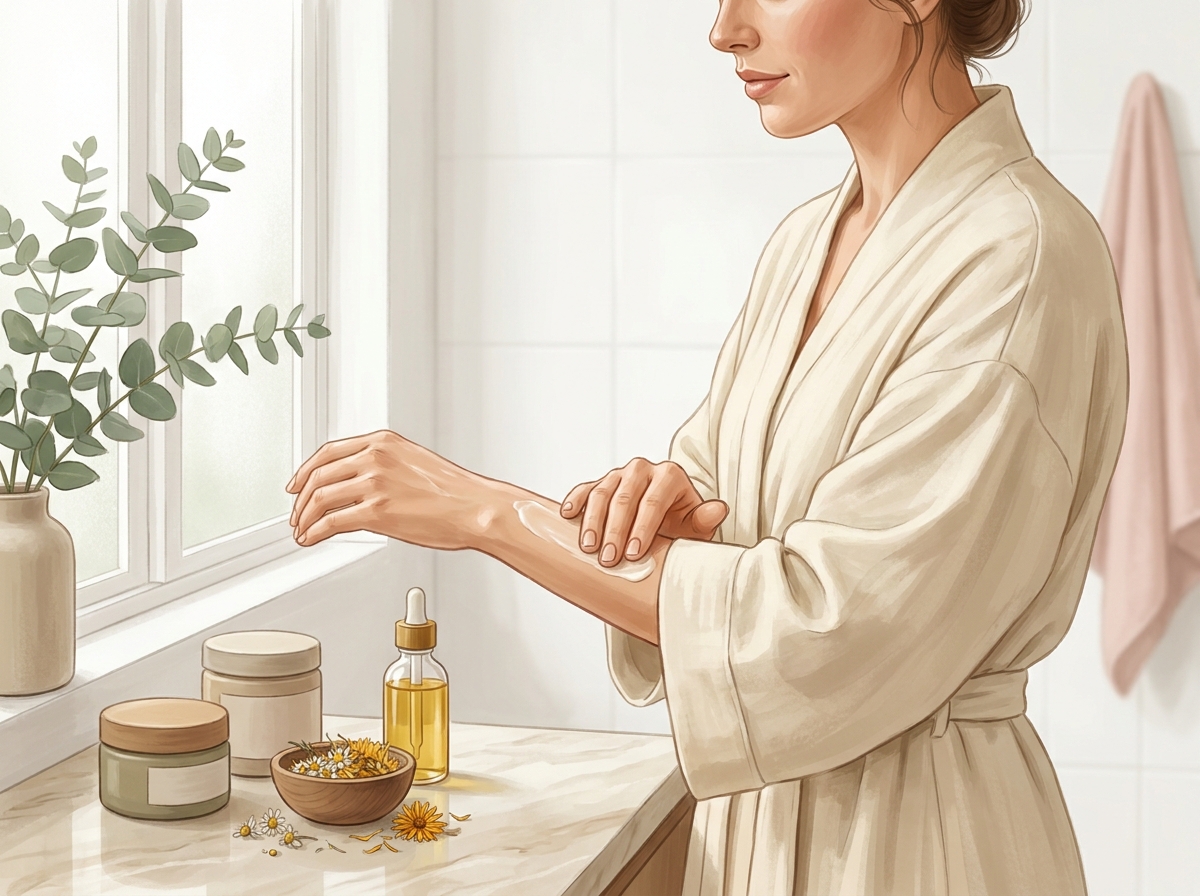
1. Commit to Twice-Daily Body Moisturizing (Not Just “When You Remember”)
One of the most powerful ways to prevent crepey skin on legs and arms is also the simplest: moisturize your body twice a day. In elderly individuals over 65, an 8‑week routine of twice‑daily hypoallergenic moisturizers significantly improved hydration of the outer skin layer and visible dryness compared with conventional care.[6] Dryness accelerates that thin, crinkled look, so consistent moisture is non‑negotiable.
Think of your body moisturizer as a daily “drink of water” for your skin barrier. When the barrier is well hydrated, it’s more flexible, less prone to tiny surface wrinkles, and better able to hold onto the plumpness that makes skin look youthful rather than crepey.[6]
- Apply a rich body cream or lotion morning and night, especially on arms, thighs, and lower legs.
- Use gentle, upward strokes instead of tugging or rubbing aggressively.
- Be patient: clinical improvements in mature dry skin are commonly seen over 8–12 weeks of regular use, not overnight.[1][6]
2. Choose Urea + Ceramide Formulas for Mature, Dry Body Skin
Not all moisturizers are created equal—especially for women over 50. Research highlights urea and ceramides[10] Ceramides are naturally occurring lipids that help seal in moisture, while urea gently exfoliates and deeply hydrates.
A study by Danby and colleagues in adults over 60 found that an emollient containing 5% urea, ceramides (CER NP), and lactate significantly improved stratum corneum hydration and barrier function, supporting its use as first‑line therapy for mature xerosis.[10] Another study in adults over 65 using 10% urea cream showed progressive clinical improvement in dryness and associated itch.[10]
- Look for body lotions with about 5–10% urea to balance hydration and gentle smoothing.
- Seek out ceramide-containing formulas to reinforce the skin’s protective barrier.
- Use them consistently on legs, arms, and trunk; this is one of the best body routine choices for mature skin over 50.[10]
Science-backed tip: Over 50, especially post-menopause, urea + ceramide body care can noticeably soften crepey texture and decrease flakiness when used twice daily for several weeks.[10]
3. Upgrade to a Firming Body Moisturizer for Upper Arms
If you’re specifically wondering how to treat crepey skin on your upper arms, a targeted firming body moisturizer can make a measurable difference. A randomized, double‑blind, split‑body, placebo‑controlled trial published in the Journal of Drugs in Dermatology in 2021 studied women with mild to moderate sagging and crepey upper-arm skin.[1]
Participants applied a specialized firming moisturizer to one arm and a regular placebo moisturizer to the other, twice daily for 12 weeks. The firming product improved all measured skin parameters—clinical grading, elasticity, and texture—more than placebo at 12 weeks, with good tolerability and no serious adverse events reported.[1][2]
- Choose a body cream designed for firming and photodamaged skin, especially for arms and thighs.
- Use it twice daily for at least 12 weeks to give your skin time to respond.[1]
- Combine with gentle massage to boost circulation and support better absorption.
We explore crepey upper-arm and leg skin in more depth in our post “Leg Crepey Skin: From Long Pants to Sundresses”—a great companion read if these areas are your main concern.
4. Practice Gentle Cleansing to Protect Your Skin Barrier
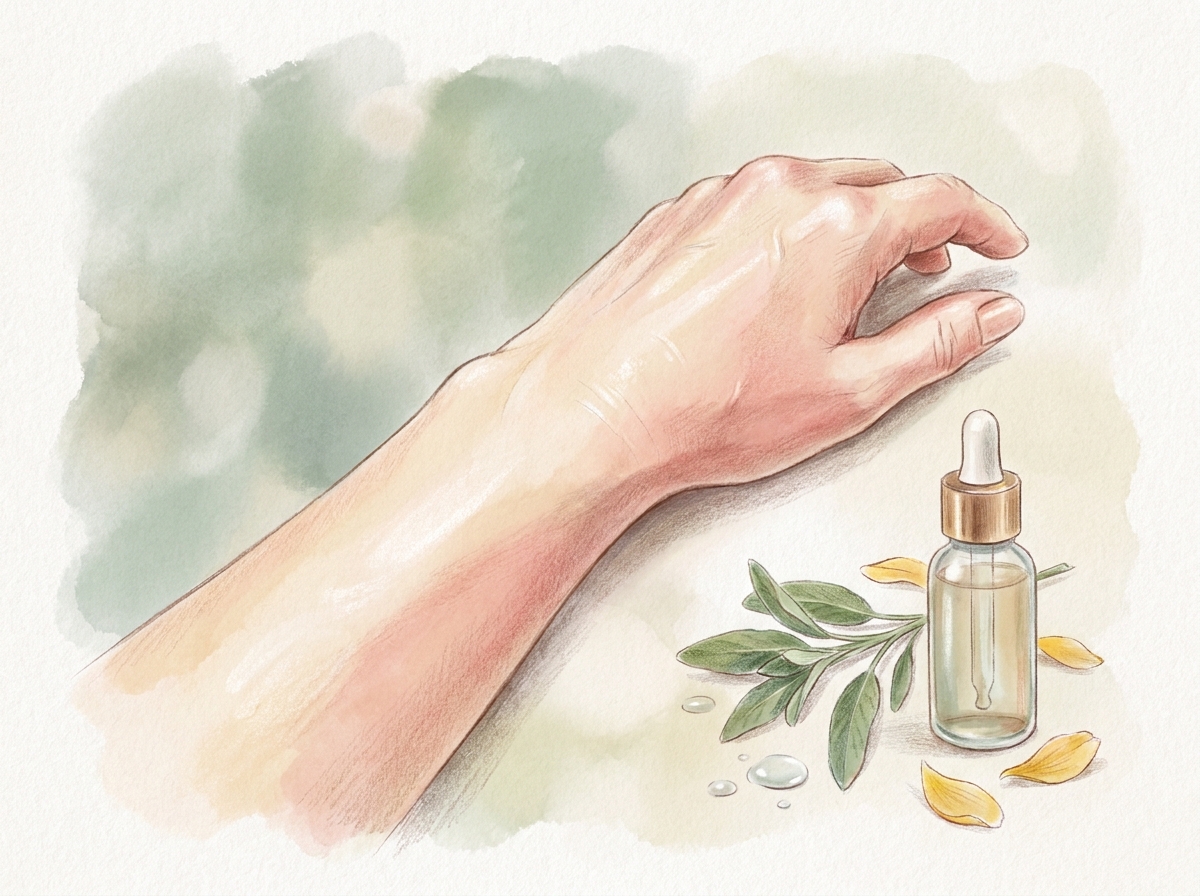
Cleansing is often overlooked in conversations about crepey skin, but harsh cleansers can quietly chip away at your skin barrier, leaving it drier, itchier, and more fragile over time. A global perspective on mature skin care published in 2024 emphasizes gentle cleansers and moisturizers as the cornerstone of treating and maintaining mature, dry skin.[10]
Over-washing with strong soaps or very hot water strips away protective lipids and natural moisturizing factors. This makes the skin more prone to the fine, crinkled appearance we associate with crepey texture.[10]
- Use a mild, fragrance-conscious body cleanser instead of harsh bar soaps.
- Keep showers warm—not steaming hot—to avoid further dehydration.
- Apply body moisturizer within 5 minutes of stepping out of the shower to “lock in” water.[10]
For more on how nighttime habits influence skin recovery, you might also enjoy “Sleep Your Way to Smoother Skin: Overnight Repair Gap”, which explores how skin renews itself while you rest.
5. Make Daily Sun Protection a Non-Negotiable Habit
Sun damage is one of the biggest drivers of thinning, crepey skin on the body, particularly on photodamaged areas like the upper arms and lower legs. The firming body moisturizer study specifically targeted photodamaged upper-arm skin, highlighting how UV exposure contributes to laxity and crepey texture over time.[1]
While the research above focuses most heavily on moisturizers, dermatology literature in general consistently links chronic sun exposure with collagen breakdown, loss of elasticity, and surface wrinkling. Protecting your body skin from daily UV exposure is therefore a crucial part of any crepey skin routine over 50.
- Apply broad-spectrum SPF to exposed body areas every morning, even for short errands.
- Reapply if you’re outdoors for more than two hours, especially in direct sun.
- Combine SPF with physical protection: lightweight long sleeves, hats, and shade.
For the face and neck—where sun can also cause crepey changes—see our routine-focused article “Retinol & Vitamin C: Evening Routine for Brighter Skin Over 50”.
6. Treat This as Self-Care, Not a Battle
Perhaps the most important habit of all: approach your body routine as an act of care, not a fight against aging. Studies on mature skin emphasize that gentle, regular routines—moisturizers, cleansers, and targeted treatments—work best when they’re sustainable and comfortable for the individual.[6][10] You’re building resilience, not chasing perfection.
- Set a simple, enjoyable routine: cleanse gently, moisturize twice daily, protect from the sun.
- Celebrate gradual changes: smoother shins, less itch, softer upper arms.
- Remember that consistency over months creates the most meaningful improvements in crepey texture.
Your skin has carried you through every season of life. These habits are about honoring it—helping it feel comfortable, supported, and as radiant as possible at every age.
Your Next Step: Build Your Crepey Body Skin Routine
If you’re ready to prevent crepey skin on legs and arms and support a healthier, more radiant body glow, start with one or two habits today:
- Pair a gentle cleanser with a urea + ceramide body lotion, used twice daily.
- Add a firming moisturizer to your upper arms, giving it at least 12 weeks.
- Make SPF for your body as automatic as brushing your teeth.
At Hygieia Skin Care, we’re here to help you create a routine that feels like a daily kindness to yourself—science-backed, clean, and deeply nurturing. When you’re ready, explore our body-care offerings and curate a ritual that makes your skin feel supported, not judged.
References
[1] Journal of Drugs in Dermatology, 2021. Randomized, double-blind, split-body, placebo-controlled trial of a firming body moisturizer on crepey, photodamaged upper-arm skin (NCT04065035).[1][2]
[2] Clinical trial record: Double-blind, split-body, placebo-controlled study of an arm-firming moisturizer, 12-week duration, women with mild–moderate sagging/crepey skin.[2]
[6] Cleveland Clinic Journal of Medicine, study on twice-daily hypoallergenic moisturizers for 8 weeks in elderly individuals (>65) showing improved hydration and visible dryness compared with conventional care.[6]
[10] Fluhr et al., 2024. “A global perspective on the treatment and maintenance of mature skin using gentle cleansers and moisturizers,” Journal of the European Academy of Dermatology and Venereology. Includes Danby 2016 study (5% urea + ceramides + lactate emollient in adults >60) and Lacarrubba 2021 study (10% urea cream in adults >65) showing significant improvements in xerosis, barrier function, and itch.[10]


