Crepey Skin: 24-Hour Repair Routine for Arms & Legs Over 50

Maybe you’ve had this moment: you’re slipping on a dress or shorts, catch a glimpse of your arms or legs in the mirror, and think, “When did my skin get so thin and crinkly?” That soft, tissue-paper look we call crepey skin can feel like it showed up overnight—but it’s really the result of years of sun, movement, hormones, and just…life.
The good news? Your skin is changing, not giving up. With the right 24-hour routine, you can support real crepey skin repair on your arms and legs—day and night—without spending hours in the bathroom or turning your routine into a science project.
This guide is all about that rhythm: what your skin needs in the daylight (protection, hydration, and support) and what it craves at night (repair, renewal, and deep moisture). Think of it as a simple, doable plan for skincare over 50 that respects your time, your energy, and your body.
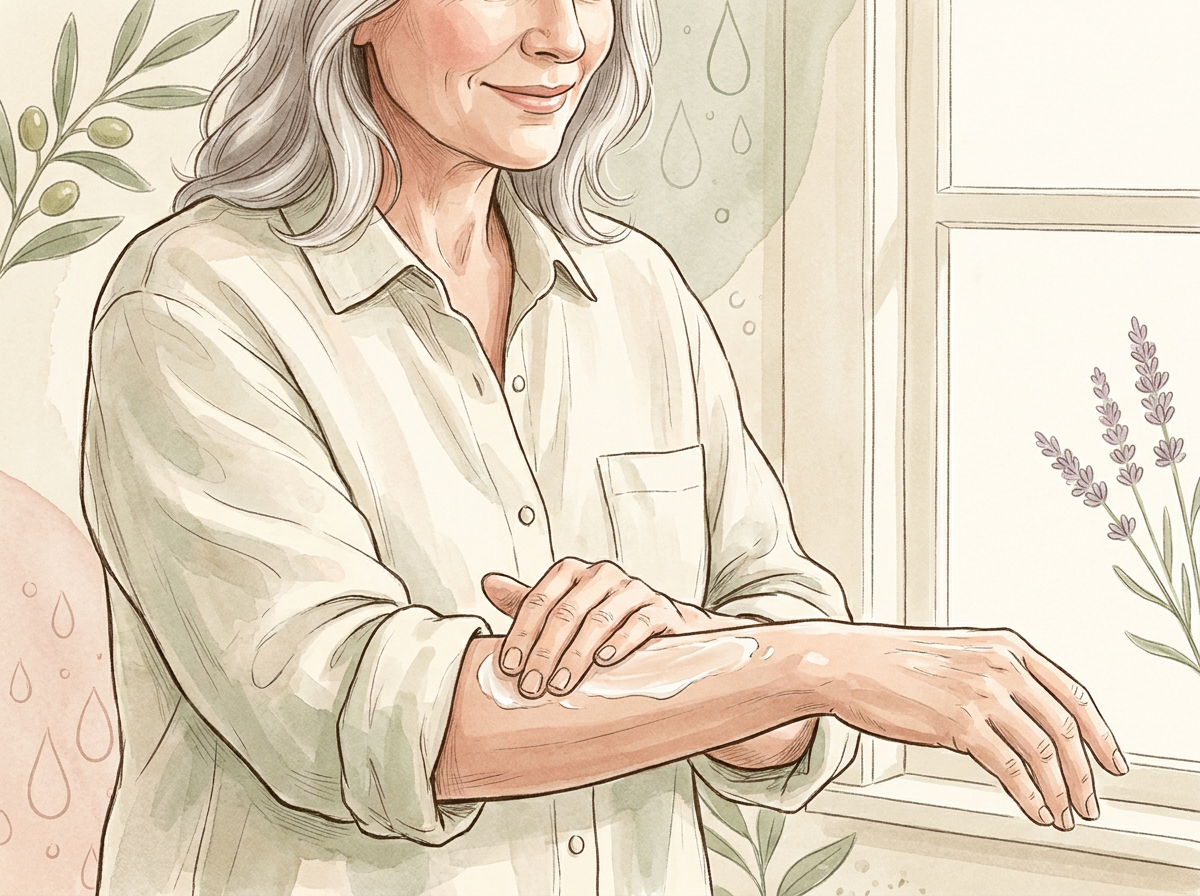
Why Crepey Skin Shows Up on Arms & Legs After 50
Before we talk routines, it helps to know what you’re working with. Crepey skin isn’t just “dry” or “wrinkled” skin. It’s a combination of a few deeper shifts happening in the background.
What’s Really Going On Under the Surface?
- Collagen & elastin loss: As we age, we naturally produce less collagen (for firmness) and elastin (for stretch and snap-back). Dermatology research consistently links this decline to thinner, more lax skin over time.
- Sun damage catching up: UV exposure breaks down collagen and elastin and accelerates crepiness, especially on “high exposure” spots like arms, hands, and lower legs where sunscreen was often skipped in younger years.
- Thinning skin barrier: The outer layer of skin becomes less efficient at holding on to moisture. This leads to dryness, rough texture, and that “crinkled paper” look, especially when you bend your elbows or knees.
- Hormonal shifts: Declining estrogen after menopause is linked to reduced skin thickness and hydration, which can amplify crepiness on the body.
Dermatologists often recommend a combination of exfoliation (to smooth and signal renewal), retinoids (for collagen support), and rich moisturizers (for barrier repair and plumping) to help improve crepey skin on the body.[6]
We dive into how to use those tools safely and effectively—especially in a nighttime body routine—below.
Morning: Your Daytime Defense Plan for Crepey Arms & Legs
Daytime is all about guarding the progress you’re making at night. Think: protect, hydrate, support. If you only do three things for your arms and legs in the morning, let it be these.
Step 1: A Quick, Kind Cleanse (Or Just a Rinse)
If you shower in the morning, choose a gentle, low-foaming body wash that doesn’t leave your skin feeling tight. Hot water and harsh cleansers can strip the natural oils your skin needs for elasticity and comfort.
- Choose fragrance-free or lightly scented formulas if your skin is sensitive.
- Skip loofahs and rough scrubs in the morning—save exfoliation for targeted nights.
If you’ve showered at night, a quick lukewarm rinse—or even just a gentle splash on arms and legs—is often enough in the morning.
Step 2: Hydrating Within 3 Minutes – “Moisture Lock” Window
After you step out of the shower, you have a short window where your skin is still slightly damp and more receptive to moisture. Applying your body products within about 3 minutes helps trap that water in the skin barrier.
For moisturizing crepey legs and arms during the day, aim for:
- Humectants like glycerin or hyaluronic acid to draw water into the skin.
- Emollients like plant oils or squalane to soften and smooth the surface.[3]
- Occlusives like shea or cocoa butter to seal moisture in.
This combination is especially helpful when your skin barrier is feeling thin, fragile, or itchy.
Step 3: Daily Body SPF on Exposed Areas
UV protection is the single most powerful daytime step for crepey skin repair—because it stops new damage from piling on top of the old. Dermatologists consider broad-spectrum sunscreen non-negotiable for any anti-aging routine.[1]
- Apply a body SPF 30 or higher to your arms, hands, chest, and legs whenever they’ll be exposed.
- Reapply every 2 hours if you’re outdoors, swimming, or sweating.
- Pair with clothing: lightweight long sleeves, UV-protective fabrics, and shade whenever possible.
If you’re curious about how sun and antioxidants work together on aging skin, we explore that in detail in Idebenone: 5 Reasons It's Your Skin's Best Summer Shield.
Step 4: Optional Daytime “Body Serum” Layer
If you like an extra step and your skin tends to be dry or crepey, you can add a lightweight “body serum” under your lotion on arms and legs. Look for:
- Antioxidants (like vitamin C or idebenone) to help defend against daytime free radical damage.
- Niacinamide for barrier support and more even tone.
- Aloe or panthenol for soothing and hydration.
Think of this like elevating your body care to the same level as your facial routine—but in a way that still feels easy and enjoyable.
Night: The Repair Shift – Your Nighttime Body Routine for Crepey Skin
Night is when your skin quietly does its best work. Research shows that while you sleep, your skin’s repair processes increase and cell turnover ramps up.[2][7] That makes your nighttime body routine the perfect time to focus on crepey skin repair for your arms and legs.
“Your nighttime skincare routine is where the work happens… your skin actually goes into repair mode as you sleep.”[7]
Step 1: Gentle Cleansing & Optional Soak
In the evening, focus on removing sweat, sunscreen, and pollutants without stripping your skin:
- Use warm—not hot—water in the shower to avoid further drying your skin.
- Choose a creamy, non-stripping cleanser for the body.
- If you enjoy baths, adding a little plant oil (like squalane) to the water can help you step out with softer, more hydrated skin.[3]
This step helps your active ingredients absorb better and reduces the risk of irritation.
Step 2: Smart, Gentle Exfoliation (2–3 Nights a Week)
For crepey arms and legs, exfoliation is less about “scrubbing hard” and more about encouraging cell turnover in a controlled way. Dermatologists often recommend a combination of chemical exfoliants and barrier support for smoother, more radiant body skin.[6]
For body skin over 50, you might consider:
- Lactic acid (a gentle AHA) to dissolve dead cells and boost hydration.[3]
- Gluconolactone or other polyhydroxy acids for extra-sensitive skin.
A few helpful guidelines:
- Use chemical exfoliants 2–3 times per week on arms and legs, not nightly, to avoid over-thinning the skin.[6]
- Skip physical scrubs with large, scratchy particles—they can create micro-tears in delicate, crepey skin.
- On exfoliation nights, keep the rest of your routine simple and soothing.
Step 3: Nighttime Retinol or Retinoid for Body (1–3 Nights a Week)
Retinoids are one of the most studied ingredients for boosting collagen and improving skin texture. Body-focused retinol products are becoming more common because they can help with crepey skin on areas like the upper arms and thighs.[6]
Dermatologist guidance for body retinol often includes:
- Start with 1–2 nights a week on arms and legs.[6]
- Use a pea-size to thin layer per area; more isn’t better.
- Do not apply on the same night as strong exfoliation—alternate “exfoliation nights” and “retinol nights.”[6]
- Always follow with a generous layer of moisturizer to minimize dryness or flaking.
Consistency matters more than perfection. Even a gentle, well-tolerated retinol routine over months can lead to smoother, more resilient-looking skin.
Step 4: Deep Moisture Layer – Non-Negotiable for Crepey Skin
This is where the magic of moisturizing crepey legs and arms happens. Your night cream for the body doesn’t have to be fancy, but it should be:
- Rich enough to feel comforting and stay on the skin a while.
- Loaded with barrier-strengthening ingredients like ceramides, cholesterol, and fatty acids.
- Hydrating with humectants (glycerin, hyaluronic acid, urea) to pull moisture into the skin.[3]
Some studies highlight that supporting the skin barrier overnight can significantly improve dryness, itchiness, and visible roughness over time.[3] Your goal is to “tuck your skin in” so it stays hydrated and supported all night.
Apply generously over your arms and legs, especially where you see crepiness when you bend—like elbows, inner arms, knees, and thighs.
Step 5: Optional Body Oil “Seal” for Extra Dry or Crepey Areas
If your skin still feels thirsty, consider adding a thin layer of body oil over your cream on the driest areas. Dermatologist Dr. Sam Ellis notes that layering a body oil over moisturizer is a great way to get an immediate glow and boost long-term smoothness.[6]
Look for:
- Lightweight, non-greasy plant oils.
- Formulas designed to complement, not replace, your moisturizer.
Use just enough to create a soft sheen—your skin should feel supple, not sticky.
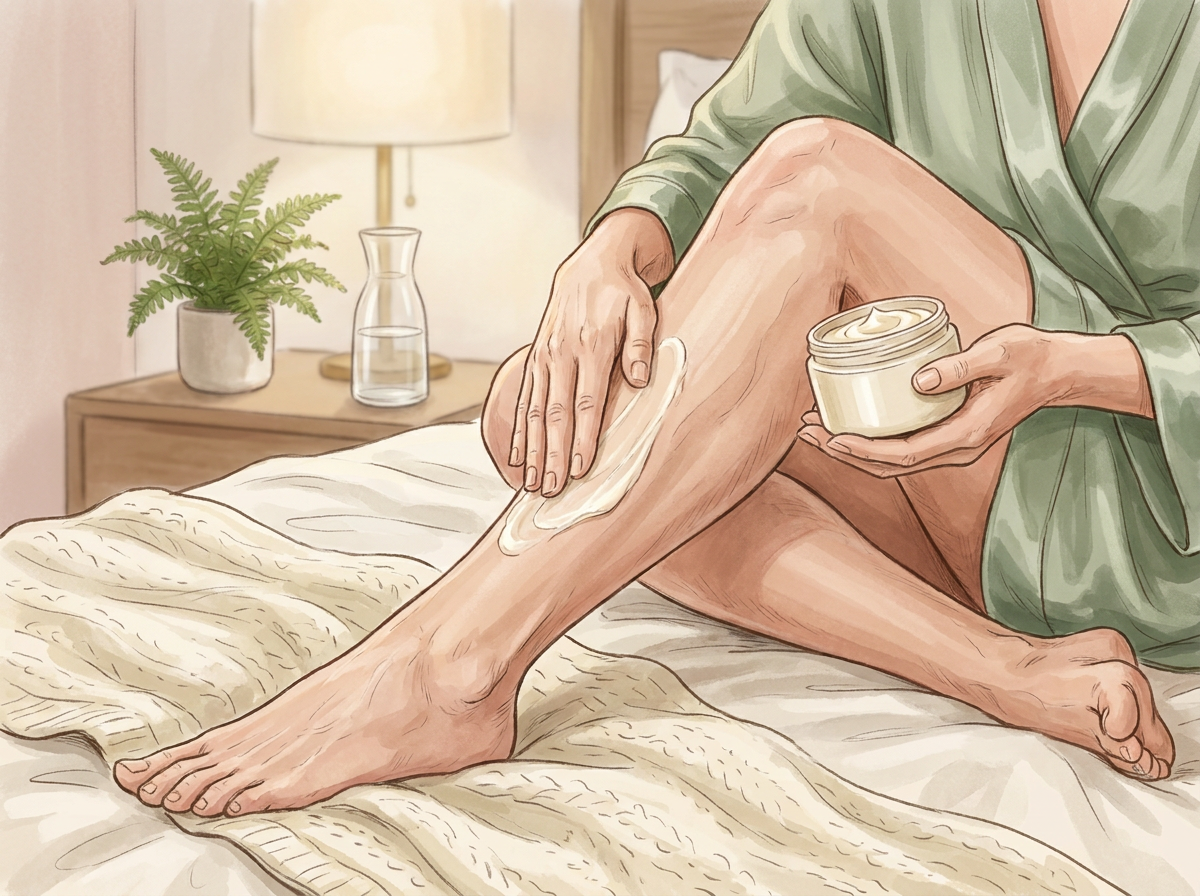
Putting It Together: Your 24-Hour Crepey Skin Routine
Let’s simplify everything into an easy-to-follow daily rhythm. You can always tweak based on your lifestyle, but here’s a balanced starting point.
Morning: Protect & Hydrate
- Shower or rinse: Quick warm (not hot) water; gentle cleanser if needed.
- Within 3 minutes: Apply a hydrating body lotion or cream to arms and legs.
- Body serum (optional): Add an antioxidant-rich layer under your lotion on crepey areas.
- SPF: Broad-spectrum sunscreen on all exposed areas.
Night: Repair & Rebuild
- Cleanse: Shower or bath to remove sunscreen, sweat, and pollutants.
- 2–3 nights/week: Apply a gentle chemical exfoliant to arms and legs, then moisturize.
- 1–3 nights/week: On different nights, apply a body retinol to crepey areas, then a rich cream.
- Every night: Seal with a barrier-supporting body cream; add body oil on top if extra dry.
If you love nighttime rituals, you might enjoy our deeper dive into evening habits that help skin bounce back overnight in 7 Nightly Habits to Firm Crepey Skin While You Sleep.
Lifestyle Tweaks That Make Your 24-Hour Routine Work Harder
Skincare products are powerful, but they’re even more effective when they’re supported from the inside out. A few gentle lifestyle shifts can amplify everything you’re doing on the surface.
Hydration & Nutrition
- Hydrate consistently: Aim for steady water intake throughout the day to support overall skin hydration.
- Eat for collagen support: Foods rich in vitamin C, protein, and healthy fats help your body build and maintain skin structure.
- Anti-inflammatory choices: Colorful fruits and vegetables bring antioxidants that can help counter everyday oxidative stress.
If you’re curious about using food as a beauty tool, you might enjoy Eat for Bouncier Skin: A Beauty-from-Within Guide.
Sleep & Stress
Your skin’s repair work happens mostly at night, and it does its job best when you’re truly resting.
- Prioritize sleep: Aim for 7–9 hours when possible to give your skin time for repair.[2][3]
- Bedtime wind-down: A relaxing bath, herbal tea, or simple stretching can ease the nervous system and help you sleep more deeply.[3]
- Limit screens before bed: Blue light and late-night scrolling can interfere with melatonin and your natural sleep cycle.[3]
Movement & Circulation
- Gentle exercise: Walking, yoga, or light strength training boosts circulation, which supports nutrient delivery to the skin.
- Self-massage: When applying your body cream at night, use slow, upward strokes. This not only feels grounding but can also help with circulation and product absorption.[3]
Making It Feel Like Self-Care, Not Homework
The most effective routine is the one you’ll actually enjoy doing. Especially in our 50s and beyond, skincare can feel less like “fixing” and more like reconnecting with ourselves.
A few ways to make your nighttime body routine feel like a ritual instead of a chore:
- Keep it visible: Store your body cream and retinol where you’ll see them—right by your pajamas or on your nightstand.
- Pair it with a habit: Apply your products right after brushing your teeth or after your evening tea. Habit-stacking makes consistency easier.
- Engage your senses: Choose textures and scents that feel comforting—light botanical notes, silky creams, or fast-absorbing oils.
- Go slow for 60 seconds: Give yourself one minute to massage your arms or legs and simply notice how they feel. That gentle attention is powerful.
Remember: crepey skin developed over years; real change is gradual. Instead of looking for overnight miracles, look for small wins—skin that feels more comfortable, looks less parched, and gradually appears smoother and more resilient.
Your Next Steps: Build Your 24-Hour Crepey Skin Ritual
You don’t need to overhaul your life to start seeing a difference in your crepey arms and legs. Start small, stay kind to your skin, and build from there.
Today, you might choose to:
- Add SPF to your arms and legs whenever they’re exposed.
- Apply a richer body cream within 3 minutes of your shower.
- Pick two nights this week to focus on a nighttime body routine with exfoliation or retinol plus deep moisture.
Over the coming weeks, that simple 24-hour rhythm of daytime protection and nighttime repair can help your skin look and feel more comfortable, more supported, and more like yours again—just in a new, beautifully seasoned chapter.
If you’d like to keep exploring science-backed, kind-to-your-skin options for skincare over 50, especially for crepey texture, bounce, and radiance, you’ll find more resources and ingredient deep-dives throughout our blog, including Idebenone vs. CoQ10: Why Molecular Size Matters After 50. Your skin is still very much alive, responsive, and capable of change—and you deserve a routine that helps it thrive around the clock.


