Dry Brushing for Crepey Skin: A Tutorial for Women Over 55

The Honest Truth About Dry Brushing for Crepey Skin
It’s a ritual that feels as ancient as it is elegant. You’ve likely seen the beautiful, natural-bristle brushes in serene bathrooms, promising everything from boosted circulation to smoother, more radiant skin. For those of us navigating the changes in our skin after 55, particularly the arrival of fine, crepe-like texture on our arms and legs, the question is natural: Is dry brushing the simple, secret weapon we’ve been missing? It’s a captivating thought—a few minutes of invigorating strokes to brush away the years.
But here at Hygieia, we believe that true beauty empowerment comes from a place of warmth, wisdom, and scientific honesty. So, let’s talk about what dry brushing can—and can’t—do for crepey skin, and how to build a body care routine for women over 55 that delivers real, visible results.
What Science Says About Dry Brushing and Mature Skin
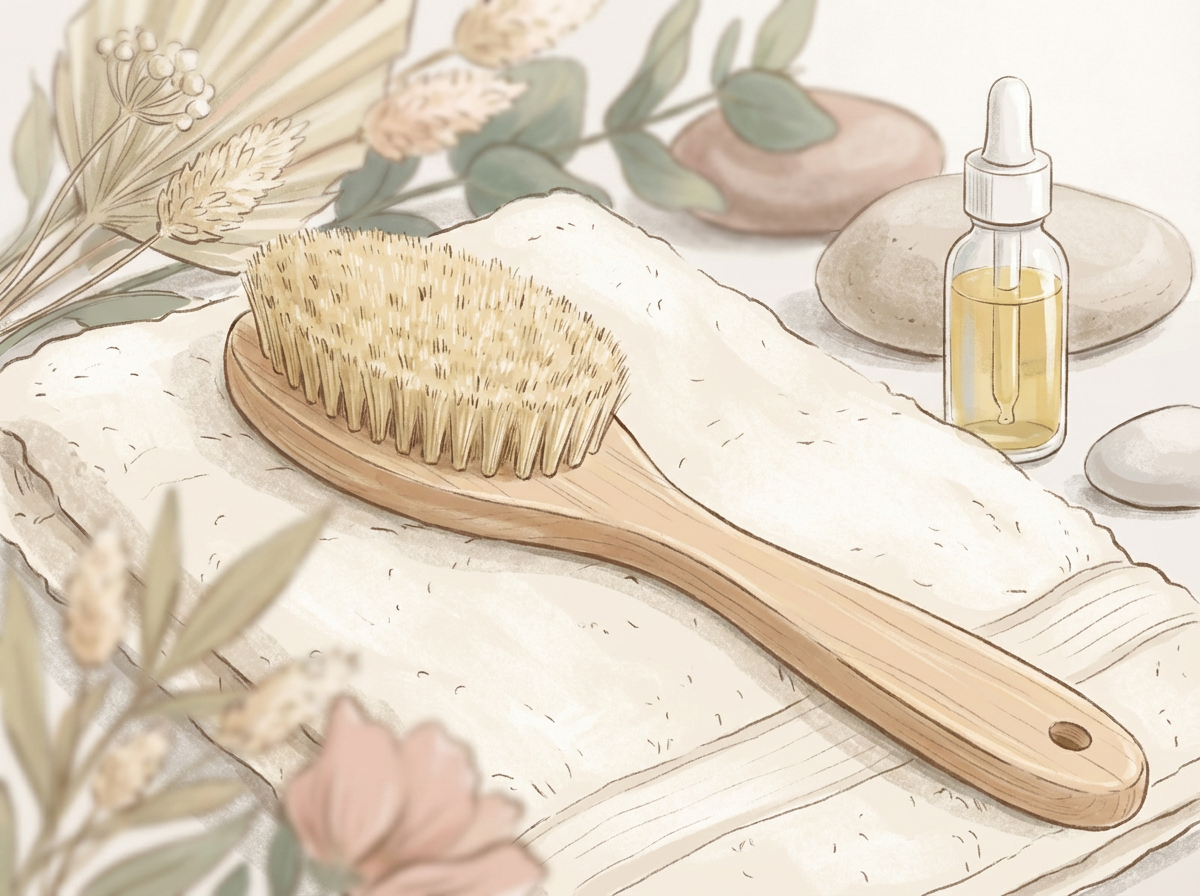
While the act of dry brushing is often lauded for its exfoliating and circulatory benefits, the direct scientific evidence linking it to the improvement of crepey skin is surprisingly scarce. In fact, a review of dermatological studies highlights a lack of specific trials on dry brushing for body skin concerns [15]. This doesn't mean the practice has no value; it simply means we need to frame its benefits honestly.
Think of dry brushing less as a "treatment" and more as a mindful, preparatory ritual. The sensation itself can be wonderfully invigorating—a way to connect with your body and awaken your senses. Research has shown that the perceived pleasantness of brushing is closely linked to the stiffness of the bristles, suggesting the sensory experience is a key part of its appeal [2, 4]. It provides a light, manual exfoliation, sweeping away dull surface cells. However, it does not penetrate to the deeper layers of skin where crepey texture originates.
Why Our Skin Becomes Crepey: A Deeper Look
To truly address crepey skin, we first have to understand its roots. This isn't just surface-level dryness. As we age, our skin undergoes significant structural changes. Studies, like one from Acta Biomaterialia in 2022, show that age-related skin aging leads to a decrease in dermal stiffness and alters the skin's very microstructure [10]. Another 2024 study in Aging Cell found that this increased stiffness in the deeper skin layers disrupts critical support structures, leading to the thinned, fragile appearance we recognize as crepey skin [12].
For many women over 50, this is compounded by mature xerosis, or chronic dry skin, which results from an impaired skin barrier [9]. This fragility, sometimes called "dermatoporosis," makes skin more susceptible to bruising and poor healing, highlighting the absolute need for gentle care and powerful barrier support [7]. Harsh scrubbing or over-exfoliation can do more harm than good.
A Gentle Dry Brushing Tutorial: How to Prep Crepey Legs and Arms
Approached with care, dry brushing can be a beautiful first step in your body care ritual. This exfoliating mature skin tutorial focuses on gentle preparation, not aggressive treatment.
- Choose the Right Tool: Select a brush with soft to medium, natural bristles. The goal is gentle stimulation, not harsh scratching. Remember the science: the feel of the brush is key to a pleasant experience [2, 4].
- Find Your Moment: The ideal time is just before a bath or shower, when your skin is completely dry. This allows you to immediately wash away the exfoliated cells and, most importantly, follow up with hydration.
-
Master the Technique: Upward and Gentle:
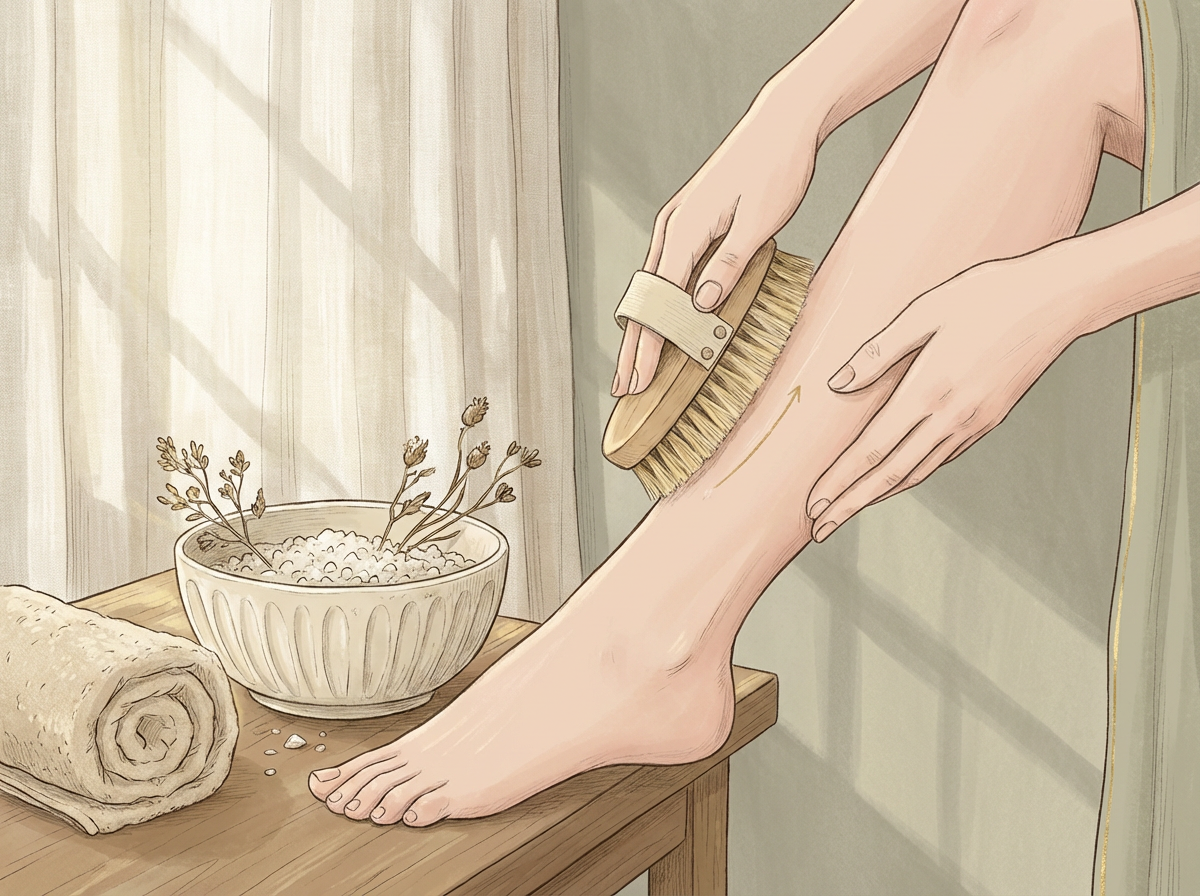
- Start at your feet and work your way up your body.
- Use long, sweeping, upward strokes directed toward your heart. This is traditionally thought to encourage circulation.
- On your legs and arms, use light but firm pressure. Think of it as a gentle caress, not a scrub.
- Use even lighter pressure on your chest and décolletage, where the skin is naturally thinner.
- Crucially: Never brush over broken skin, varicose veins, rashes, or areas of inflammation. Listen to your body and be gentle.
The Most Critical Step: What to Do *After* You Brush
While the brushing is the prelude, this next phase is the main event. What you do after you brush is what will truly work to smooth crepey legs naturally and restore your skin's youthful bounce and resilience. The science on this is overwhelmingly clear.
Step 1: The Gentle Cleanse
Rinse off in a warm—not hot—shower. Hot water can strip your skin of its natural oils, exacerbating dryness. Use a mild, hydrating cleanser. Research from the Journal of Cosmetic Dermatology emphasizes that appropriate washing methods are physiologically beneficial for mature, dry skin [6]. Your freshly stimulated skin is now perfectly prepped, and you want to treat it with the utmost care.
Step 2: The Science-Backed Solution: Radical Hydration
This is your non-negotiable step for transforming crepey skin. Immediately after patting your skin dry, while it's still slightly damp, apply a rich, nourishing moisturizer. This is where scientific research provides a clear and powerful directive.
Scientific Proof: The Power of Moisturizing
A 2020 study in Skin Research and Technology involving participants with moderate to severe dry skin found that applying a moisturizer twice daily for just two weeks led to significant improvements compared to using a cleanser alone [1]. Further research confirms that for mature, dry skin (xerosis), gentle cleansers and effective moisturizers are the primary recommendation to restore the skin's barrier [9]. A remarkable 2025 study in the journal Cosmetics even showed that a simple daily cleansing and moisturizing routine dramatically improved skin integrity in aged-care residents over 55, reducing everything from dryness and itchiness to skin tears and bruising [14].
This is the moment to use products with high-performance ingredients that can bridge what we call The Bioavailability Gap: Liposomal Idebenone Explained, ensuring that powerful antioxidants and hydrators penetrate effectively to do their work. Look for ingredients like humectants (which draw water into the skin), emollients (which soften and smooth), and occlusives (which lock that moisture in).
Your Complete Ritual to Smooth Crepey Skin
Let’s put it all together into a simple, effective ritual that blends mindful self-care with proven science.
- The Ritual of Touch (Optional): Begin with a few minutes of gentle dry brushing to awaken your skin and senses.
- The Gentle Cleanse: Wash with a mild, nourishing cleanser in a warm shower.
- The Power of Nourishment: While skin is still damp, apply a targeted body treatment designed to firm, hydrate, and protect mature skin. This is the step that actively works to diminish the appearance of crepey texture.
Ready to Nourish Your Skin Deeply?
Now that your skin is perfectly prepped, it’s time for the powerhouse formulas that deliver visible change. Discover how to apply these principles to your specific concerns with our expert guides, built on the power of liposomal technology for superior ingredient delivery.
Explore our targeted protocols:
- 5 Steps to Smooth Crepey Skin on Your Legs With Idebenone
- The Ultimate Protocol for Tightening Loose Arm Skin Over 55
Conclusion: A Ritual of Wisdom and Radiance
So, does dry brushing have a place in your routine? Absolutely—as a beautiful, mindful opening act. It’s a moment of self-care that prepares your skin for the true, science-backed heroes of your routine. The path to smoother, more resilient skin isn't about harsh scrubbing, but about a wise, consistent combination of gentle preparation and profound nourishment. By embracing this philosophy, you honor the story your skin tells and empower it with the support it needs to glow with health and vitality for years to come.
References
- Fluhr, J.W., et al. (2020). Daily use of a mild cleanser and moisturizer in a real-world setting improves clinical and self-perceived measures of dry skin in a randomized controlled trial. Skin Research and Technology. [1]
- Delhaye, B. P., et al. (2023). Skin mechanics, not friction, primarily determine the pleasantness of skin-stroking stimuli. Journal of Neurophysiology. [2, 4]
- Kaya, G., & Saurat, J. H. (2018). Dermatoporosis: A Chronic Cutaneous Insufficiency/Fragility Syndrome. Dermatology and Therapy. [7]
- Denda, M., et al. (2022). Age-related decrease of dermal stiffness in human skin. Acta Biomaterialia. [10]
- Matsumura, H., et al. (2024). Mechanically overloaded aged skin environment depletes tissue-resident stem cells. Aging Cell. [12]
- Yamamoto, A., et al. (2021). What are appropriate washing methods? Introducing novel washing methods that are physiologically beneficial for xerotic skin. Journal of Cosmetic Dermatology. [6]
- Rawlings, A. V., et al. (2024). Toiletry practices for people over 50 years to manage mature xerosis. International Journal of Cosmetic Science. [9]
- Buckley, L., et al. (2025). The Impact of a Structured Gentle Cleansing and Moisturising Skin Care Routine on the Integrity of Aged Skin. Cosmetics. [14]
- No significant evidence supports dry brushing for exfoliation or crepey skin improvement... lacks dermatological trials for body skin. [15]
'''


