Leg Crepey Skin: Rebuilding Dermal Density for Firmer Legs

If the skin on your legs has started to look thinner, softer, or finely wrinkled, you are not imagining it. Crepey skin on legs is closely tied to age-related changes in the dermis—the skin’s supportive middle layer—and rebuilding dermal density is the key to improving texture, firmness, and resilience over time. [1][2][3]
As women move through midlife and beyond, the skin on the thighs, knees, and shins often loses some of the collagen, elastin, and structural support that once kept it smooth and springy. In this article, we’ll look at why leg crepiness happens, what the science says about improving it, and how to build a realistic skincare for legs over 50 routine that supports stronger, better-looking skin. [2][3][5]
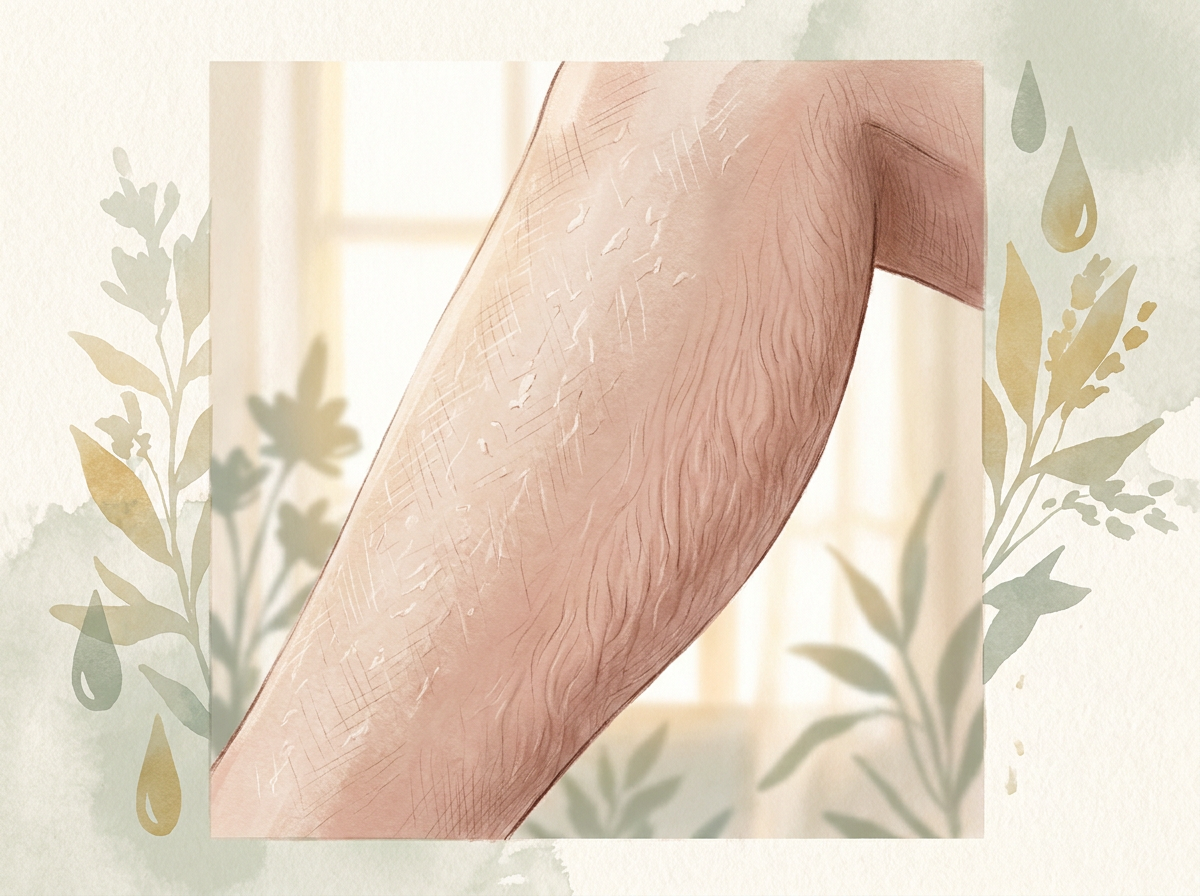
Why leg skin becomes crepey with age
Crepey texture is not just a surface dryness issue. Research shows that aging skin undergoes measurable changes in dermal stiffness, collagen organization, and the deeper fat-and-fiber network that helps skin resist folding and sagging. A 2024 study in Aging Cell reported that dermal stiffness governs the topography of the epidermis and basement membrane in young and old human skin, linking age-related structural changes to visible surface roughness and fine wrinkling. [2]
Another 2022 ex vivo study in the Journal of Biomechanics found a significant age-dependent decrease in dermal stiffness in older human skin samples, supporting the idea that weaker dermal mechanics contribute to laxity and a thinner-looking surface. [3] A 2024 study in Skin Research and Technology also found age-related alterations in the fibers surrounding adipocytes in the subcutaneous fat layer, with reduced viscoelasticity associated with less firm skin support. [5]
For the legs, this matters because the thighs, knees, and lower legs depend on a strong internal support system to stay smooth against daily movement, gravity, and friction. When that support system weakens, skin can start to look crepey on the legs even if it is still moisturized on the surface. [2][3][5]
Crepey skin is usually a structure problem first, and a hydration problem second. That distinction matters because the most effective atrophic skin treatment strategies target both the surface barrier and the deeper collagen framework. [2][3][5]
What dermal density means, and why it matters for firmer legs
Dermal density refers to the quality and concentration of the skin’s supporting matrix, especially collagen and elastin fibers, along with the tissue architecture that gives skin its bounce and thickness. When dermal density declines, skin becomes easier to crease, less resilient after movement, and more prone to that delicate “paper-thin” appearance many women notice on the knees, shins, or inner thighs. [2][3][5]
One useful way to think about this is to picture the dermis as the mattress beneath the bedsheet. If the mattress loses structure, the sheet above it will show every dip and fold. In real skin, that loss of structure can show up as crepiness, even when the outer layer is being cared for well. [2][3]
Ultrasound research also supports the idea that leg skin changes with age and sex. A 2021 study in Journal of Clinical Medicine and a 2022 reference-curve study on skin ultrasound thickness and stiffness reported that dermal thickness and stiffness at the thigh and leg are influenced by age and gender, with women generally showing thinner and less stiff dermis at multiple body sites, including the thighs and legs. [8][14]
For women over 50, this helps explain why the same moisturizer that once kept skin looking supple may no longer be enough on its own. As dermal density declines, leg skin often needs more targeted support. [2][3][8][14]

The most evidence-based ways to improve crepey skin on legs
The good news is that the science does support several strategies for improving the look and feel of crepey leg skin. The strongest evidence points to topical retinoids, consistent hydration and barrier care, exfoliation used thoughtfully, and in-office energy-based treatments such as ultrasound and radiofrequency for selected cases. [1][3][6][9]
1. Topical retinoids can support collagen remodeling
Retinoids are among the most studied ingredients for aging skin because they help stimulate cell turnover and support collagen production. Cleveland Clinic notes that topical retinol creams may help reduce the crepey look of aging skin, and Medical News Today similarly reports that topical retinoids may improve elasticity and increase collagen production. [6][9]
In practical terms, this means a body product with a retinoid can be a useful part of a leg skin tightening routine, especially when used consistently over time. For women with sensitive skin, starting slowly is usually best: a few nights per week, then increasing as tolerated. [6][9]
2. Moisturizing and barrier repair help protect fragile skin
Hydration does not rebuild collagen by itself, but it makes a real difference in how crepey skin looks and feels. Cleveland Clinic notes that keeping skin well hydrated with a good moisturizer helps prevent injury that creates or worsens crepiness, and Providence emphasizes moisturizing right after showering while the skin is still slightly damp. [5][6]
Dermatology guidance cited in WeDerm recommends creams containing retinoids, hyaluronic acid, ceramides, and niacinamide to help repair the barrier and lock in moisture. [3] Hyaluronic acid is especially useful because it helps bind water in the skin, which can make legs look smoother and more plump on the surface. [3][7][10]
3. Exfoliation can improve texture when used gently
Exfoliation can help remove dull surface buildup that makes crepey skin on legs look more obvious. Mindbodygreen notes that both chemical and physical exfoliants can be helpful for crepey skin, including the legs, and Cleveland Clinic points to alpha hydroxy acids such as lactic acid or glycolic acid as options that can support smoother texture. [1][6]
That said, mature skin often does best with gentle, consistent exfoliation rather than aggressive scrubbing. Over-exfoliating can worsen dryness and make crepiness appear more pronounced, so it is smarter to use low-to-moderate strength body exfoliants a few times per week and follow with a rich moisturizer. [1][6][7]
4. Sunscreen remains essential, even on the legs
UV exposure is one of the biggest drivers of collagen breakdown and visible aging. Multiple clinical sources emphasize daily broad-spectrum sunscreen with SPF 30 or higher, along with sun-protective clothing and shade when possible, to reduce further damage. [3][5][6][9][12]
This matters for legs because they often get sun exposure in shorts, dresses, swimsuits, or while driving. Even if your main concern is atrophic skin treatment or texture repair, protection from new UV injury is what helps preserve progress. [5][6][9][12]
5. In-office tightening options may help when crepiness is more advanced
For women seeking more noticeable leg skin tightening, dermatology literature and expert guidance often include energy-based treatments such as ultrasound and radiofrequency as options for improving laxity. The research summary provided here notes that evidence-based options to improve dermal thickness and skin tightness on the thighs and legs include topical retinoids and energy-based tightening, especially ultrasound and radiofrequency, alongside general dermal-health strategies. [3][6][9]
These treatments are not the first step for everyone, but they may be worth discussing with a board-certified dermatologist if the skin has become significantly thin or lax. They are especially relevant when the goal is to support deeper structural change rather than only surface smoothing. [3][6][9]
A practical skincare for legs over 50 routine
A great routine does not have to be complicated. What matters most is consistency and choosing products that support both the barrier and the dermis. The following approach blends what the science suggests with what is realistic for daily life. [1][3][5][6]
Morning
- Apply a hydrating body moisturizer after bathing or before dressing if skin feels tight. Look for ingredients such as glycerin, hyaluronic acid, ceramides, niacinamide, or emollient oils that help reduce transepidermal water loss. [3][5][6][10]
- Use sunscreen on exposed legs whenever you will be outdoors. Choose broad-spectrum SPF 30 or higher and reapply if you are outside for extended periods. [3][5][6][9][12]
- Wear soft, protective clothing when practical, especially during peak sun hours, to reduce further collagen damage. [5][6][9]
Evening
- Cleanse gently to remove sweat, sunscreen, and environmental buildup without stripping the skin barrier. [6][10]
- Use a retinoid body product a few nights per week at first, then build up slowly if your skin tolerates it. [6][9]
- Seal in moisture with a richer cream or body lotion, especially on the thighs, knees, and shins. [3][5][7][10]
Two to three times per week
- Exfoliate gently with an AHA body lotion or a soft physical exfoliant if your skin is not irritated. [1][6][7]
- Massage moisturizer into the legs using upward strokes to help distribute product evenly and encourage a mindful routine. While massage is not a substitute for clinical treatment, it can support application consistency and a healthy self-care ritual. [9][11]
- Support collagen from within with balanced nutrition, adequate protein, sleep, and resistance training, since overall tissue health affects skin quality. Mindbodygreen and dermatologist commentary both note that supporting collagen production and regular exercise may help promote tighter, firmer-looking skin. [1][11]
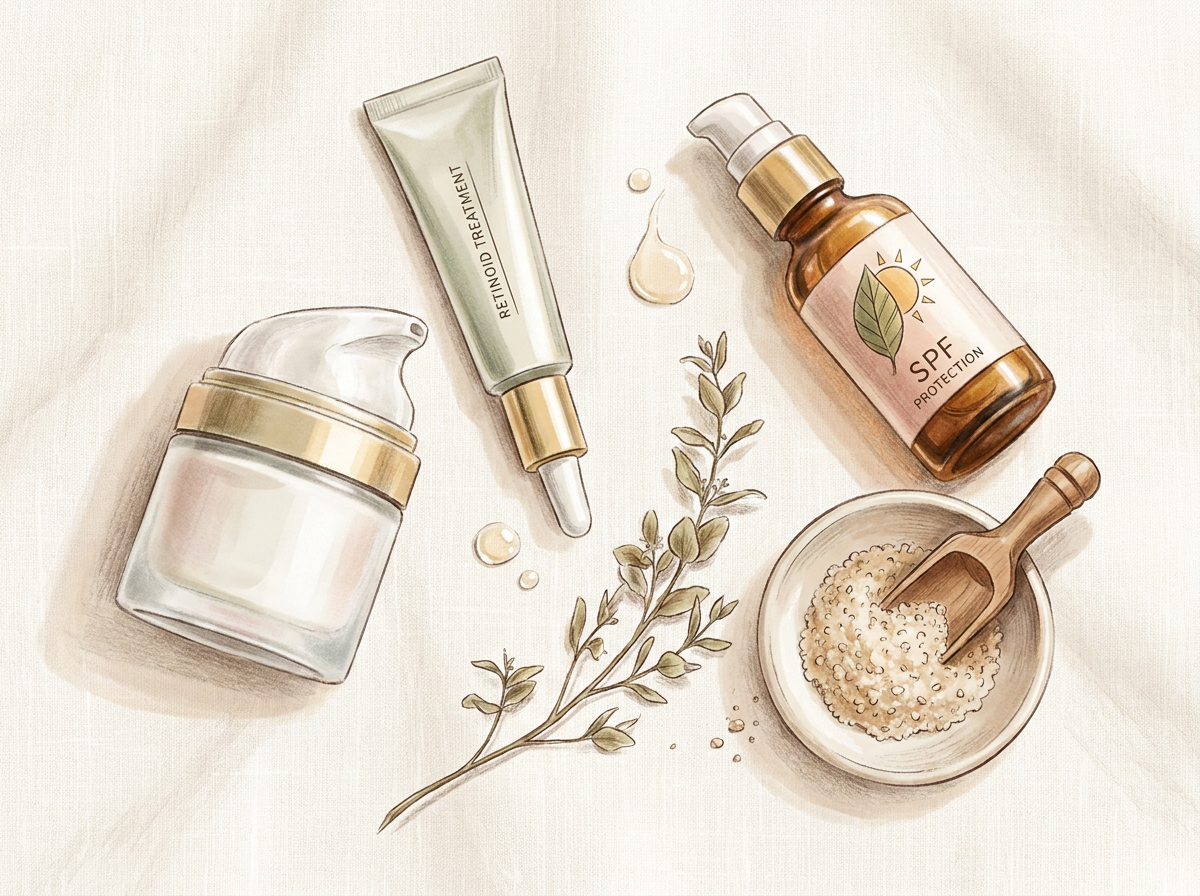
Common mistakes that can make leg crepiness look worse
Many women are doing several things right already, but a few habits can quietly make crepiness more visible. Knowing what to avoid is just as helpful as knowing what to add. [3][5][6]
- Skipping body sunscreen on sunny days, especially on the shins and thighs. [3][5][6][9][12]
- Using harsh scrubs too often, which can damage already fragile skin. [1][6]
- Moisturizing only occasionally instead of applying consistently after bathing. [3][5][6]
- Expecting one ingredient to do everything, when crepey skin usually responds best to a combined strategy. [1][3][6][9]
- Ignoring overall skin-support habits like sleep, hydration, movement, and stress management, which can influence skin integrity. [9][11][12]
For women who want visible improvement, the winning formula is usually not “more aggressive.” It is more often more consistent. Crepey skin responds best when you combine protection, replenishment, and collagen-supporting treatment over time. [1][3][6][9]
When to consider professional treatment
If your legs have become significantly lax, or if you want more visible improvement than skincare alone can provide, a dermatologist can help you decide whether an in-office option makes sense. The research provided here supports ultrasound and radiofrequency as evidence-based tightening approaches, especially when the goal is to improve dermal thickness and firmness beyond what topical care can achieve. [3][6][9]
Professional treatment may be especially worth considering if you notice one or more of the following:
- Skin that folds easily and stays creased for a long time [2][3][5]
- Marked thinning over the knees or inner thighs [8][14]
- Crepiness that is paired with sun damage or uneven texture [3][5][6][9]
- Little response after several months of consistent home care [1][6][9]
A board-certified dermatologist can also help distinguish ordinary age-related crepiness from conditions that may need different care. That matters because the best atrophic skin treatment is the one matched to the actual cause of the thinning and texture change. [2][3][5][6]
What rebuilding dermal density can realistically do
Rebuilding dermal density is not about erasing age. It is about helping the skin function and look its best by supporting the structures that give it resilience. The scientific evidence suggests that the most realistic goals are improved smoothness, better hydration, less visible fine wrinkling, and a firmer feel over time—not an overnight transformation. [2][3][5][6]
That is still meaningful. When the dermis is better supported, leg skin tends to reflect light more evenly, crease less sharply, and feel more comfortable in motion. For many women over 50, that translates into greater confidence in shorts, skirts, dresses, and swimsuits without chasing perfection. [2][3][5][8][14]
Crepey skin on legs is common, but it is not untouchable. With the right combination of sunscreen, hydration, gentle exfoliation, and collagen-supporting actives, you can help your skin look smoother and more resilient at any age. [1][3][6][9]
Take the next step with a smarter body-care routine
If you are ready to build a more effective routine for leg crepiness, start with one simple shift this week: add a targeted body moisturizer or retinoid to your evening routine and pair it with daily sunscreen on exposed legs. Then keep going with gentle consistency, because the skin on your legs responds best to repeated care, not quick fixes. [1][3][5][6][9]
At Hygieia Skin Care, we believe science-backed body care should feel supportive, not intimidating. For more ideas on smoothing and caring for mature skin below the neck, you may also enjoy our post on Smooth Crepey Neck & Chest Skin After 50 with Body Tools, which explores how to care for delicate skin that needs both structure and kindness. [3][4]
References
[1] Mindbodygreen, How To Treat & Prevent Crepey Skin Anywhere On The Body.
[2] Aging Cell (2024), Dermal stiffness governs the topography of the epidermis and the underlying basement membrane in young and old human skin.
[3] Journal of Biomechanics (2022), ex vivo layer-by-layer analysis of human dermis showing age-dependent decreases in dermal stiffness.
[4] Hygieia Skin Care blog, The Science Behind Crepey Skin: Collagen, Elastin, and How to Rebuild Them.
[5] Skin Research and Technology (2024), study on fiber structure around adipocytes and skin viscoelasticity.
[6] Cleveland Clinic, Crepey Skin: Causes and Treatment.
[7] Vogue, An Expert's Guide to Crepey Skin and How to Treat It.
[8] Journal of Clinical Medicine (2021), high-frequency ultrasound assessment of skin thickness and stiffness in relation to age and gender.
[9] Medical News Today, Crepey skin: Treatment, causes, and how to treat it.
[10] The Inkey List, What Causes Crepey Skin: Science-Backed Solutions That Work.
[11] YouTube dermatology expert discussion on crepey skin management, including sun protection, hydration, and exercise-related skin support.
[12] US Dermatology Partners, What Causes Crepey Skin?
[14] Reference-curve study on skin ultrasound thickness and stiffness at Rodnan sites, published in a rheumatology-focused journal (2022).


