The Lipid Barrier: A Guide to Restoring Elasticity in Thin Skin

That Feeling of Fragile Skin? Your Lipid Barrier Is Speaking to You
There’s a shift that happens, often quietly and gradually. You notice that your skin doesn’t seem to “bounce back” the way it used to. It feels less plump, a bit more fragile, and perhaps you’ve seen a fine, tissue-paper-like texture emerge on your arms, chest, or legs. It’s a common experience for women over 50, and while we often talk about wrinkles, this change in texture—this thinning and loss of resilience—points to something deeper: the health of your skin’s lipid barrier.
Think of your skin barrier as the gatekeeper of your skin’s health. It’s a complex, beautiful system responsible for that supple, hydrated glow we associate with youth. But as we navigate our 50s and beyond, this crucial barrier can become compromised, leading to the very changes we see in the mirror. The good news? With the right knowledge and an intelligent approach to skincare, you can absolutely restore its strength and recapture your skin’s radiant resilience. This isn’t about erasing time; it’s about empowering your skin to be its healthiest, most vibrant self, right now.
What Exactly Is the Lipid Barrier?
To understand how to fix it, we first need to appreciate what it is. Imagine the outermost layer of your skin, the stratum corneum, as a brick wall. The “bricks” are your skin cells (corneocytes), and the “mortar” holding it all together is a delicate, fatty mixture of lipids.
This lipid mortar is primarily composed of three key players:
Ceramides: These are the most abundant lipids, making up about 50% of the mortar. They are waxy molecules crucial for holding water and ensuring the barrier is structured and strong.
Cholesterol: Not to be confused with the cholesterol in your blood, skin cholesterol helps maintain fluidity and elasticity, allowing your skin to move and flex without cracking.
Free Fatty Acids: These lipids help maintain the skin’s naturally acidic pH, which is essential for warding off harmful bacteria and supporting overall barrier function.
A healthy lipid barrier performs two vital jobs:
It keeps the good stuff in: It locks in water, preventing the dreaded Transepidermal Water Loss (TEWL) that leads to dehydration, dryness, and a lackluster appearance.
It keeps the bad stuff out: It acts as a protective shield against environmental aggressors like pollution, UV radiation, and irritants that accelerate skin aging.
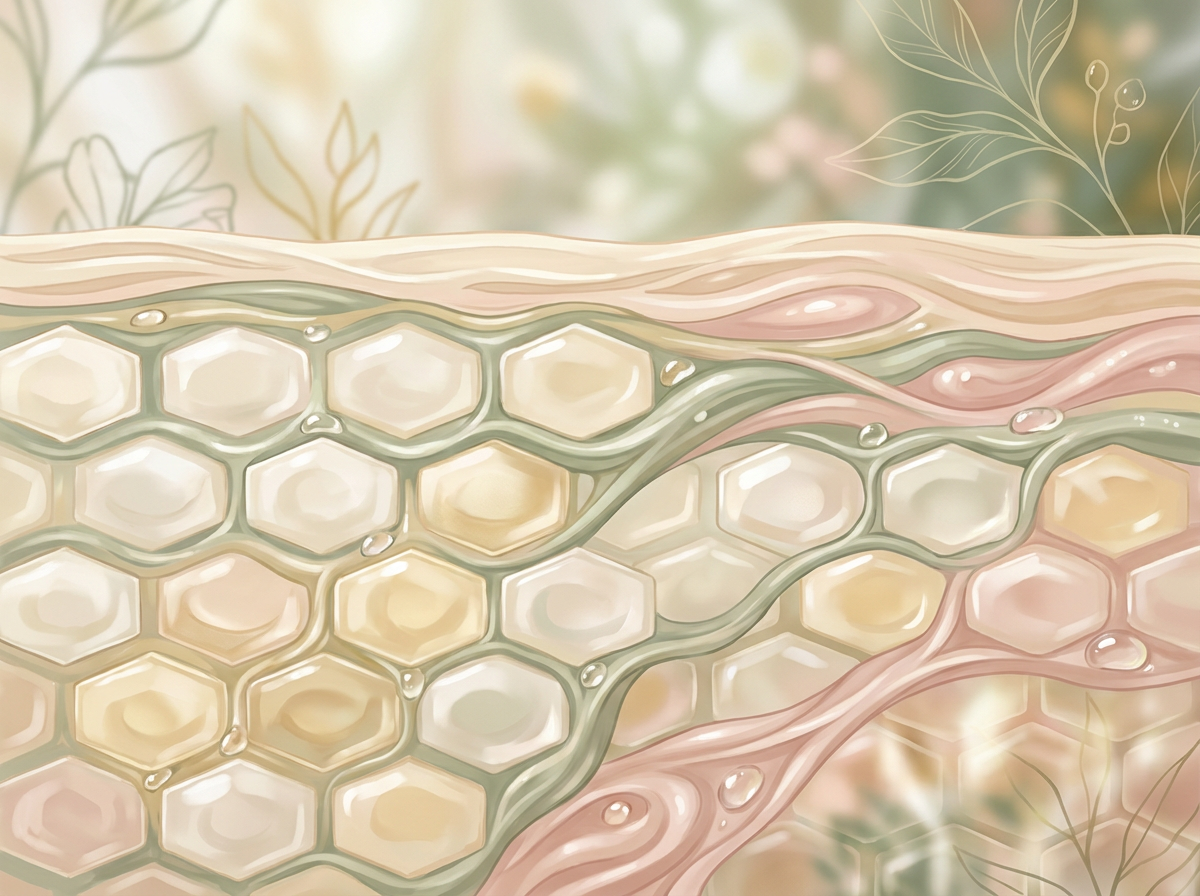
When this mortar begins to crumble, your skin’s entire support system is weakened. It becomes less able to hold onto moisture and defend itself, resulting in the tell-tale signs of thinning, irritation, and that papery texture often described as crepey skin.
The Scientific Breakthrough: Repairing the Mortar with Precision
For years, skincare focused on simply slathering on heavy creams to provide a temporary, occlusive layer. But modern science has revealed that for true, lasting repair, we must replenish the barrier with the very components it has lost, and—crucially—in the right proportions. This is where the concept of lipid barrier repair becomes a game-changer for mature skin.
The 3:1:1 Ratio: A Blueprint for Barrier Recovery
Breakthrough research has shown that the most effective formulations for barrier repair mimic the skin’s natural lipid composition. A physiological molar ratio of 3 parts ceramide, 1 part cholesterol, and 1 part free fatty acids has been identified as the gold standard for restoring stratum corneum function.
A 2024 study published in the journal Pharmaceutics explored this very concept. Researchers found that a hydrogel containing a nanostructured lipid carrier loaded with ceramides and cholesterol at this physiological ratio provided an incredible 2.8-fold higher skin hydration on test models compared to an identical gel without the lipids. The lipid-loaded formula significantly enhanced the skin’s occlusion and barrier repair capabilities.[3]
This isn’t just about adding moisture; it’s about giving your skin the exact raw materials it needs to rebuild its own protective wall. A clinical study featured in a 2022 issue of Pediatric Dermatology confirmed that this type of Barrier Repair Therapy (BRT) can effectively restore barrier function and even reduce inflammation, performing comparably to some topical corticosteroids as an adjunct therapy for compromised skin conditions.[1, 6]
For mature skin prone to dryness, the results are equally compelling. Research on a ceramide-dominant moisturizer using the 3:1:1 ratio, published in Cureus in 2024, showed it could reduce transepidermal water loss (TEWL) by approximately 10% and sustain skin hydration for up to 72 hours, directly supporting the skin’s ability to mend itself.[9] This is the essence of treating thin, crepey skin at its source.
Beyond Replenishment: Sparking Your Skin’s Innate Lipid Production
While topical lipids provide an immediate fix, the next frontier in skin elasticity science involves encouraging our skin to ramp up its own ceramide synthesis. This is where innovative, science-backed botanicals come into play.
One of the most exciting developments comes from research into Prinsepia utilis, a resilient plant whose extracts show remarkable barrier-restoring properties. A 2025 study in Scientific Reports discovered that a polysaccharide from this plant was able to significantly boost the skin’s production of vital proteins. In lab models of human skin cells, it upregulated CERS3 (Ceramide Synthase 3), an enzyme directly responsible for creating the most important long-chain ceramides for barrier integrity. Simultaneously, it reinforced the "tight junctions" (proteins like ZO-1 and Occludin) that seal the gaps between skin cells.[2]
This means we are not just patching the mortar; we are giving the construction crew the tools to start mixing their own. Further research published in the Journal of Ethnopharmacology confirmed that topical application of these plant extracts restored barrier integrity in both acutely and chronically damaged skin models by activating the pathways for lipid synthesis and protein formation.[4] This dual-action approach—providing lipids externally while stimulating internal production—is the key to long-term skin resilience and elasticity.
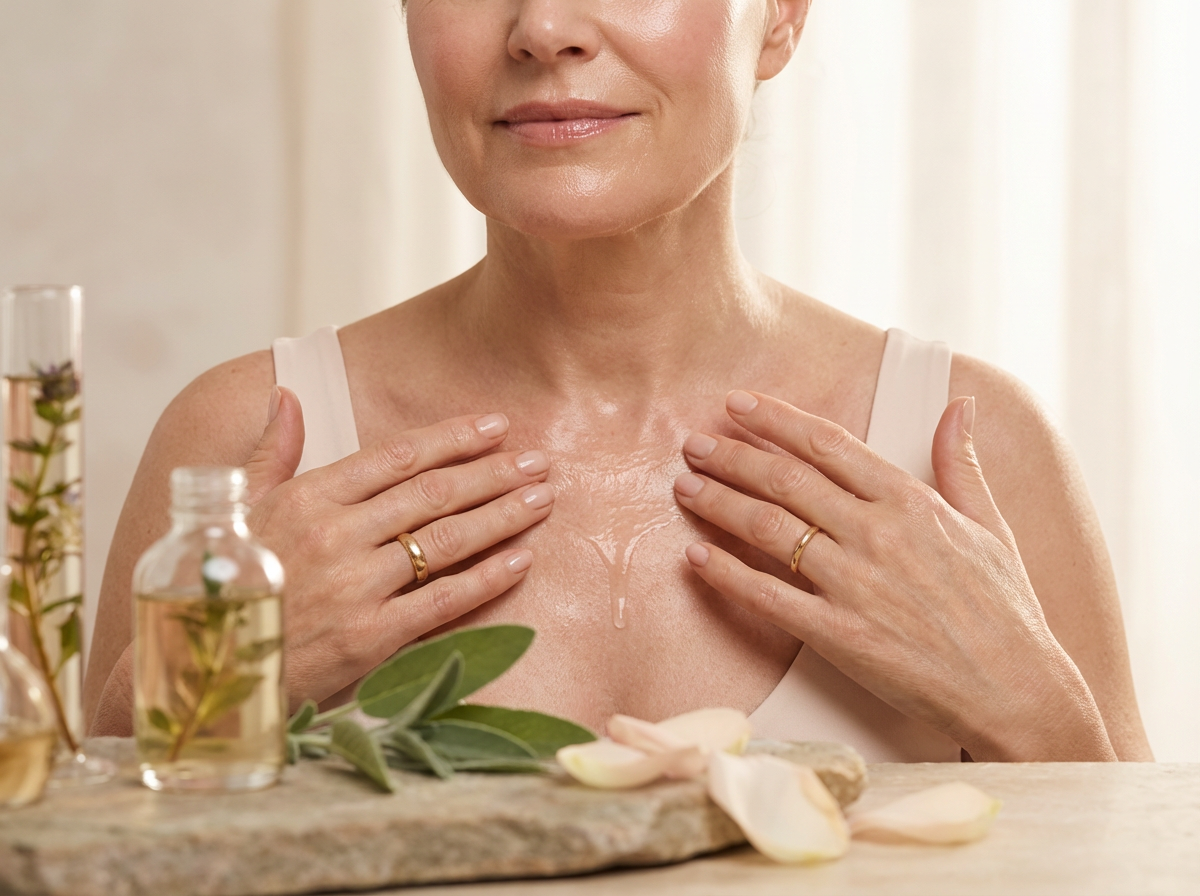
Your 4-Step Ritual for Rebuilding a Strong, Elastic Barrier
Understanding the science is empowering, but putting it into practice is transformative. Here are actionable steps you can take today to begin your lipid barrier repair journey.
1. Cleanse with Compassion
Harsh, stripping cleansers that leave your skin feeling “squeaky clean” are the enemy of a healthy lipid barrier. They strip away the very oils you’re working so hard to replenish. Opt for a gentle, pH-balanced cream or oil-based cleanser that effectively removes makeup and impurities without disrupting your skin’s delicate mortar. Your skin should feel soft and comfortable after washing, never tight or dry.
2. Become an Ingredient Detective: Seek the Lipid Trio
This is the most critical step. Turn your serum and moisturizer bottles around and look for the powerhouse team: ceramides, cholesterol, and fatty acids. While many products now boast "ceramides," the most advanced formulations will contain the full trio. As the science shows, their combined effect, ideally in a balanced ratio, is what truly rebuilds the barrier and improves skin elasticity science from the outside in.[11] Nano-delivery systems, as noted in a 2022 review in Pharmaceutics, can further enhance the delivery of these essential lipids into the stratum corneum where they are needed most.[14]
3. Embrace Barrier-Boosting Botanicals and Antioxidants
Complement your lipid trio with ingredients that support your skin’s internal processes and protect it from further damage. Look for products containing:
Prinsepia Utilis Polysaccharides: As discussed, these innovative extracts can help your skin produce its own ceramides, offering a sustainable path to barrier health.[2, 4]
Liposomal Idebenone: This powerful antioxidant is a superb partner in any anti-aging routine. It helps neutralize free radicals that degrade collagen and compromise barrier function. As we’ve discussed in our post, The Science of Glycation, protecting your collagen is just as important as building your barrier. Consider its benefits for delicate areas like the neck, as detailed in our guide to treating neck aging.
4. Support from the Inside-Out
A resilient barrier is also supported by a healthy lifestyle. Ensure your diet includes healthy fats from sources like avocados, nuts, and olive oil. Stay hydrated throughout the day to support your skin’s water reserves. Finally, diligent sun protection is non-negotiable. UV radiation is one of the primary culprits in breaking down the lipid barrier and accelerating the signs of aging.
Ready to Rebuild Your Resilience?
Thinning skin and loss of elasticity are not inevitable endpoints. They are signals from your body asking for a different kind of care—a smarter, more targeted approach that works *with* your skin’s natural biology, not against it. By focusing on lipid barrier repair with the scientifically-validated trio of ceramides, cholesterol, and fatty acids, you are doing more than just moisturizing. You are rebuilding your skin’s fundamental architecture, restoring its ability to hold moisture, defend against damage, and regain its supple, elastic feel.
It’s a shift from merely treating symptoms to nurturing profound skin health. A strong barrier is the foundation for a radiant, resilient complexion at any age.
Ready to transform your routine? Explore our collection of science-backed serums and moisturizers specifically formulated to restore and support your delicate lipid barrier.
References
Elias, P. M., & Wakefield, J. S. (2022). Unmet needs in pediatric dermatology part 1: The pediatric epidermal barrier, and the role of barrier repair therapy in atopic dermatitis. Pediatric Dermatology, 39(Suppl 1), S4-S14.
Li, H., et al. (2025). Polysaccharide from Prinsepia utilis Royle processing by-products restores skin barrier function via PPARα. Scientific Reports, 15(1), 1960.
Zorzi, G. K., et al. (2024). Harnessing Botanical Lipids in Nanostructured Lipid Carriers for Advanced Skin Barrier Restoration. Pharmaceutics, 10(7), 466.
Li, H., et al. (2024). Water extracts from oil-cakes of Prinsepia utilis Royle alleviate acute and chronic skin barrier disruption. Journal of Ethnopharmacology, 329, 118493.
Gade, N. M., et al. (2022). Therapeutic Potential of Topical Corticosteroids in Conjunction with Barrier-Repair Therapy in Atopic Dermatitis. Journal of the European Academy of Dermatology and Venereology, 36(S1), 5-11.
Pillai, R., & D’Souza, P. (2024). Oryza Ceramax in Dermatologic Care: A Multi-Pathway Approach to Skin Hydration and Barrier Repair. Cureus, 16(5), e392997.
Del Rosso, J. Q. (2018). The Role of Epidermal Barrier Function in the Treatment of Dry, Sensitive, and Compromised Skin. The Journal of Clinical and Aesthetic Dermatology, 11(6), 30-32.
Blunder, S., et al. (2018). The "Ceramide-Less" Stratum Corneum of Filaggrin-Deficient Mice Shows Altered Lipid Organization and Water Holding Capacity. Journal of Investigative Dermatology, 138(2), 250-259. This is a related reference to show the importance of Ceramides.
Ivanova, E., & Dobreva, M. (2022). Nanocarriers for delivery of ceramides in age-related skin diseases: A review. Pharmaceutics, 14(1), 183.
'''


