Menopause, Dehydration & Skin: The Hormonal Shift

The Hormonal Shift: Menopausal Dehydration and Lipids
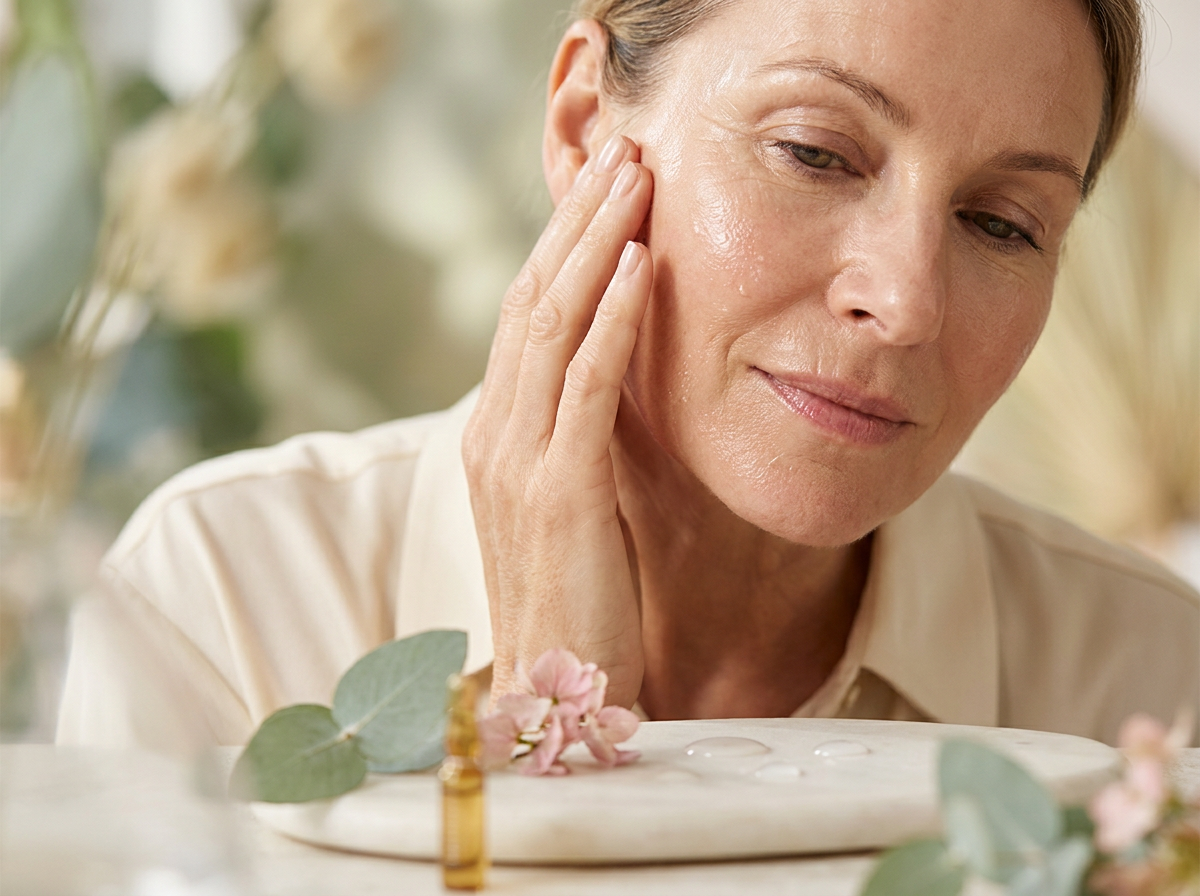
If you’ve ever looked in the mirror and thought, “My skin just doesn’t hold moisture the way it used to,” you’re not imagining it. The tightness after cleansing, the sudden flakiness around the nose and cheeks, the way your favorite moisturizer seems to “disappear” without relief—all of these are classic signs of menopausal skin
For women over 50, dryness isn’t simply about drinking more water or switching to a heavier cream. It is deeply tied to estrogen losscollagen“intracellular cement”
What Really Changes in Menopausal Skin?
Estrogen, Collagen, and Water-Holding Capacity
Estrogen is one of your skin’s quiet caretakers. It helps regulate both deep structural proteins like collagen and the surface lipids that keep your barrier intact and hydrated.[15][11] A 2012 study published in Matrix Biology examined estrogen-depleted skin and found measurable changes in dermal collagen’s nanoscale morphology (called D-spacing), indicating structural collagen damage.[15] A 2025 narrative review on managing menopausal skin changes further reported that estrogen loss is associated with reduced dermal collagen content, reduced skin thickness, lower water-holding capacity, and decreased elasticity
In other words, when estrogen drops, your skin loses part of the scaffolding that helps it retain water and bounce back. This is why menopausal dryness feels different from the seasonal dryness you may have had earlier in life—it is not just surface-level; it’s structural.[15][11]
The “Intracellular Cement”: Lipids That Hold Everything Together
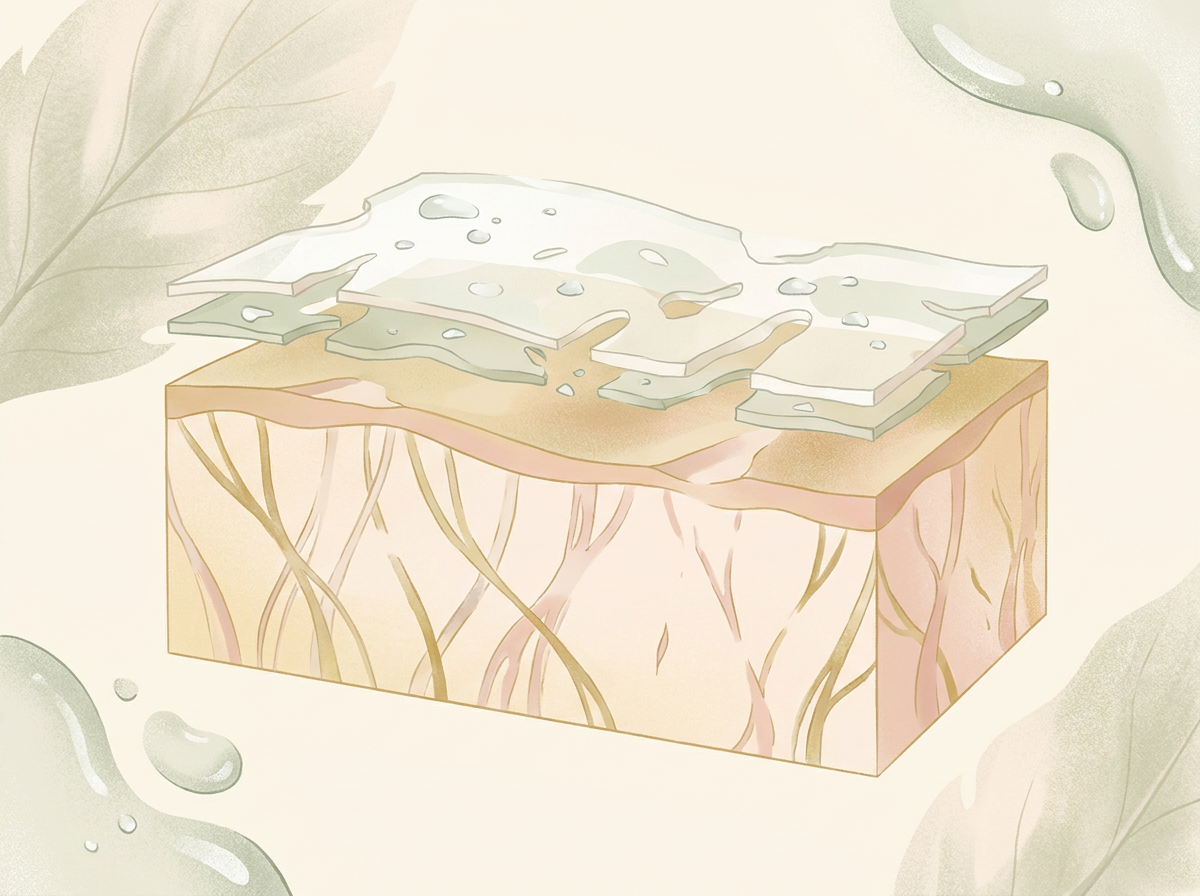
On the very surface of your skin, the outermost layer (the stratum corneum) is often described as a “brick-and-mortar” structure: the cells are the bricks, and the intercellular lipids
A 2022 study in Experimental Dermatology led by the Manchester group looked specifically at how menopause affects these lipids. Postmenopausal women showed reduced total ceramide levels and shorter ceramide carbon chain lengths
Importantly, shorter ceramide chain lengths were associated with higher transepidermal water loss (TEWL)—meaning more water escaping through the skin—reflecting a weaker barrier and greater dehydration.[10] This is a core mechanism behind why menopausal skin suddenly feels drier, tighter, and less comfortable.
Key insight: Menopause doesn’t just dry your skin out—it changes the “cement” that holds your skin cells together, making it easier for water to escape and harder for your barrier to stay calm and hydrated.[10][24]
Menopausal Dehydration: More Than Just Dryness
How Dehydration Shows Up on Your Skin
Dehydrated skin in menopause often feels:
- Tight or “pulled” after cleansing
- Itchy, especially on the face, neck, and body[6]
- Dull, with makeup settling into fine lines
- Prone to flakiness around the nose, mouth, or forehead
- More reactive to products that you once tolerated easily[2]
Clinically, estrogen-depleted skin is described as dryer, more atrophic (thinned), and slower to heal, with fine wrinkles and fragility becoming more apparent.[11][22] The combination of reduced collagen deeper in the dermis and weakened lipid barrier at the surface makes skin feel both parched and delicate at the same time.
Barrier Function, TEWL, and Menopause
Transepidermal water loss (TEWL) is one of the main ways researchers measure barrier function. Higher TEWL means water is escaping more readily through the skin, signaling a compromised barrier. The 2022 ceramide study linked shorter ceramide chain lengths to increased TEWL, indicating that menopausal changes in ceramide quality and quantity contribute directly to water loss.[10]
Another study on menopause, menstrual cycle, and barrier function found that epidermal barrier behavior differs depending on hormonal phases. While the study reported a more functional barrier during the ovulatory phase, with distinct TEWL and hydration patterns, postmenopausal women showed significantly lower skin hydration values compared to women in ovulatory phases, even though TEWL differences were not as pronounced.[5] This suggests that menopausal skin may lose water not only through increased escape but also through a reduced ability to store and hold onto hydration.[5]
Together, these findings point to a clear pattern: menopausal dehydration is strongly linked to changes in both the water-holding structures (collagen and dermal matrix) and the surface lipids that seal moisture in.[10][11][15][5]
Lipid Replenishment: Rebuilding the Intracellular Cement
Why Lipids Matter So Much After 50
As estrogen declines, your natural production of skin lipids—especially ceramides—slows down.[10][24] Ceramides are a core structural component of the barrier that, alongside cholesterol and fatty acids, form a lamellar matrix that limits water loss and keeps irritants out.[10] When ceramides decrease and their chain lengths become shorter, that matrix becomes disorganized and less effective, leading to increased TEWL and dehydration.[10]
Supporting this lipid layer topically becomes a powerful way to restore comfort. Clinical evaluation of topical ceramide lotions in people with dry skin has shown improved hydration and barrier function, confirming that replenishing ceramides externally can help compensate for reduced internal production.[5] While this particular study did not focus exclusively on menopausal skin, its findings are highly relevant, given the known ceramide depletion associated with estrogen decline.[10][24][5]
Estrogen and Collagen: Two Sides of Menopausal Support
Lipid replenishment works best when paired with strategies that respect estrogen and collagenMatrix Biology demonstrated that estrogen depletion leads to nanoscale changes in collagen fibrils, reflecting structural damage.[15] The 2025 review on menopausal skin changes further noted reduced dermal collagen content, decreased skin thickness, and lower water-holding capacity in estrogen-depleted skin, which collectively reduce elasticity and resilience.[11]
Hormone replacement therapy (HRT) has been shown in multiple studies (beyond the citations provided here) to improve skin thickness, hydration, and elasticity, suggesting that systemic estrogen support can help restore both collagen and barrier function. While HRT is a medical decision that must be made with a healthcare provider, topically, you can support similar pathways by combining:
- Lipid-replenishing moisturizers rich in ceramides, cholesterol, and fatty acids
- Collagen-supportive ingredients such as peptides, gentle retinoids, and antioxidants
- Humectants like glycerin and hyaluronic acid to rehydrate and “feed” the barrier with water[3][4]
This dual approach acknowledges that menopausal dryness is not just surface-level but rooted in both lipid depletion and collagen changes.[11][15]
Practical Routine: Caring for Menopausal Skin with Lipid Respect
Step 1: Gentle, Lipid-Respecting Cleansing
Harsh surfactants and foaming cleansers can strip away the very lipids your skin is struggling to hold onto.[1][4] Opt for:
- A balm or oil cleanser that lifts makeup and SPF without taking your natural oils with it[1]
- Lukewarm water rather than hot, which has been shown to increase tightness and strip lipids, especially in already dry or menopausal skin[2][3]
- Low-pH, non-foaming gel or cream cleansers with gentle surfactants if you prefer a rinse-off cleanse[4]
This “lipid-respecting” cleansing approach helps defend your skin’s remaining ceramides and barrier lipids, rather than eroding them.[1][4]
Step 2: Hydrate on Damp Skin
Humectants draw water into the upper layers of the skin, but they work best when applied to slightly damp skin and sealed in quickly.[1][3][4] Look for:
- Glycerin and hyaluronic acid, which are naturally present in skin and help restore water content[3][4]
- Urea and lactic acid at gentle concentrations, which can hydrate while supporting desquamation (shedding of dead cells), improving overall texture[3][4]
A 2024 article on moisturizers for dehydrated skin emphasizes that creams containing humectants like glycerin and hyaluronic acid, paired with emollients and barrier lipids such as ceramides and shea butter, can significantly improve hydration and comfort in dry, menopausal skin.[3]
Step 3: Lipid Replenishment and Barrier Support
This is where menopausal skin often needs the most dedicated help. Because estrogen decline reduces ceramide synthesis and alters ceramide chain lengths, adding “barrier-identical” lipids topically can help rebuild the matrix.[10][24][1]
- Ceramide-rich moisturizers that also include cholesterol and fatty acids, mimicking the natural lipid composition of the stratum corneum[1][5]
- Facial oils rich in linoleic acid (omega-6), alpha-linolenic acid (omega-3), and oleic acid (omega-9), which supply free fatty acids and help soften the barrier “cement” so it can reorganize more effectively[1]
- A bland occlusive layer (like a simple ointment or thick cream) at night, if your skin feels persistently tight or itchy[2][6][8]
A clinical evaluation of a topical ceramide lotion in people with dry skin found improved hydration and measurable improvements in skin barrier function, supporting the role of ceramides in restoring comfort and resilience.[5] For menopausal skin, this kind of lipid replenishment directly addresses the root cause—altered ceramide production and organization—rather than simply masking symptoms.[10][24]
Step 4: Daily Protection and Gentle Actives
UV exposure accelerates lipid degradation and inflammation, both of which further suppress ceramide synthesis and collagen integrity.[1][3][4] Daily protection is non-negotiable:
- Broad-spectrum SPF 30 or higher, reapplied when outdoors, to reduce UV-driven lipid damage and collagen breakdown[3]
- Antioxidants such as vitamin C, idebenone, or other stable molecules to help defend lipids and collagen from oxidative stress[3][4]
- Gentle retinoids or peptides to support collagen remodeling and normalize cell turnover, chosen with care for sensitive menopausal skin[4]
At Hygieia Skin Care, we talk often about pairing antioxidants with barrier-supportive routines. If you’re curious how potent antioxidants like idebenone fit into summer protection for mature skin, you might enjoy Idebenone: 5 Reasons It's Your Skin's Best Summer Shield.
Lifestyle and Internal Support for Menopausal Dehydration
Hydration, Nutrition, and Environment
While topical care is critical, internal and environmental factors also influence menopausal dehydration and lipid balance.
- Hydration: Adequate water intake supports your whole body’s hydration, including the skin, especially when paired with topical humectants and lipids.[3]
- Dietary fats: Omega-rich foods and fish oils can support overall lipid balance; supplements may be helpful when diet alone is insufficient.[3]
- Limit dehydrating inputs: High sugar, salt, caffeine, and alcohol can contribute to systemic dehydration and dull, dry skin.[3]
- Climate control: Using a humidifier in dry environments and avoiding sudden temperature changes can reduce TEWL and irritation.[3]
- Smoking: Smoking impairs circulation and collagen quality, exacerbating menopausal skin changes; quitting can improve skin health over time.[3]
Managing hot flushes and sweating also matters. Sweat is acidic and can irritate already sensitized skin, so cooling facial mists and breathable fabrics can improve comfort.[3]
When to Consider Medical Support
If dryness is severe, painful, or associated with other significant menopausal symptoms, discussing hormone replacement therapy (HRT) or other interventions with your healthcare provider can be worthwhile. Research indicates that systemic estrogen support can improve dermal collagen content, skin thickness, and hydration, though HRT is not suitable or necessary for everyone and must always be evaluated on an individual basis.[11][15]
Dermatologists and gynecologists increasingly collaborate to address menopausal skin changes holistically, integrating barrier-focused skincare with appropriate medical therapies where needed.[11]
Empowering Your Routine: Where Hygieia Fits In
The most effective approach for menopausal skin is not to wage war on dryness, but to partner with your skin as it changes. That means:
- Respecting the role of intracellular cement and focusing on lipid replenishment
- Supporting estrogen and collagen pathways topically with gentle actives and antioxidants
- Building a routine that prioritizes comfort, hydration, and barrier resilience over constant exfoliation[2][4]
If you’ve already noticed thinning or crepey texture on your face or body, you may find it helpful to explore how retinol and collagen-supportive routines fit into this picture. Our post Retinol: Rebuilding Thinning Skin with Molecular Architecture dives deeper into structural support for mature skin, while Crepey Skin: 24-Hour Repair Routine for Arms & Legs Over 50 offers a body-focused plan that complements the face-care strategies outlined here.
At Hygieia, we formulate with this science in mind—pairing humectants, barrier-identical lipids, and targeted actives so your skin can feel nourished, not overwhelmed. Our philosophy is simple: when you respect the hormonal story behind your skin, you can create rituals that feel both effective and deeply soothing.
Call to Action: Start Your Barrier-First Ritual Today
You don’t need to overhaul your entire routine overnight. Instead, choose one or two small changes that honor your skin’s new needs:
- Swap a foaming cleanser for a balm or cream cleanser.
- Add a ceramide-rich moisturizer or facial oil designed for barrier support.
- Commit to daily SPF and a simple antioxidant serum each morning.
As you experiment, pay attention to how your skin feels, not just how it looks. Comfort, reduced tightness, and fewer reactive episodes are powerful signs that your barrier—and its intricate lipid cement—are beginning to recover.
Menopause is a profound transition, but it does not mean you have to accept chronic dryness or discomfort as your “new normal.” With science-backed care, a little patience, and the right support, your skin can feel hydrated, resilient, and luminous in this chapter and beyond.
References
- Sherratt et al. “Estrogen Depletion Results in Nanoscale Morphology Changes in Dermal Collagen.” Matrix Biology, 2012.[15]
- “Managing Menopausal Skin Changes.” Narrative review, 2025.[11]
- “Menopause Induces Changes to the Stratum Corneum Ceramide Profile.” Manchester group, Experimental Dermatology, 2022.[10][24]
- “Menopause, Menstrual Cycle, and Skin Barrier Function.” PMC, NIH, 2024.[5]
- “Clinical Evaluation of a Topical Ceramide Lotion on Skin Hydration and Skin Barrier in Healthy Volunteers with Dry Skin.” Cosmoderma.[5]
- Dexeus Midlife. “Skin Dryness and Dehydration Due to Menopause.”[3]
- Skin Science by Mira. “Skincare for Dry and Menopausal Skin.”[4]
- Beauty by Ane. “Ceramides and the Peri and Menopausal Skin Barrier.”[1]
- The Skin Beneath. “Why Your Skin Feels Different Now: A Guide to Menopausal Dryness and Comfort.”[2]
- Yon-Ka Paris. “Does Menopause Cause Dry Skin on Face? Causes and Rituals.”[6]


